


VegNET Wide Bay Burnett: Staying ahead of the mite: managing varroa in Australian horticulture
8 September 2025
VegNET Tas: Sprouting success – the Wolferts’ journey to farming Brussels sprouts in Tasmania
8 September 2025
Reading Time: 4 minutes
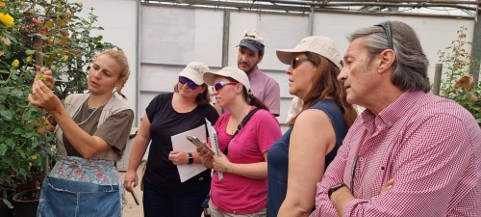
Dr Toni Chapman in Europe for the Xylella Professional Workshop. ©T. Chapman NSW DPIRD.
VegNET NSW held two very successful field days at Local Land Services (LLS) Demonstration Farm at Richmond Lowlands, NSW. The first, the Asian Vegetable Innovation Field Day, was held on 17 June specifically for Australian Chinese growers. The second field day was held on 18 June, called Weeds, Bugs and Brassica Field Day. Over 100 participants attended over the two days that saw topics and trials in herbicides, soil health, food safety and new Primary Production & Processing Standards, Level Up Hort, biosecurity, integrated pest management, and foliar diseases in brassicas.
NSW VegNET RDO Sylvia Jelinek worked closely with presenting researchers Dr Sukhvinder Pal (SP) Singh and Dr Toni Chapman from the NSW Department of Primary Industries and Regional Development (DPIRD) to ensure up to date and relevant information is communicated to growers and stakeholders. Fostering relationships with industry is important in linking growers and researchers so the important work is done for the greatest industry benefit. Sylvia sat down with Toni Chapman, plant bacteriologist from NSW DPIRD, to talk more about researcher-VegNET collaboration and relationship advantages.
Researcher highlight – Dr Toni Chapman
Dr Toni Chapman is a researcher and bacteriologist for NSW DPIRD at the Elizabeth Macarthur Agricultural Institute, positioned within the Plant Biosecurity Research and Diagnostic Unit, and working closely with the Plant Health Diagnostic Service (PHDS), with undergraduate studies completed at Western Sydney University and continuing to Wollongong University for her PhD. Her day-to-day work involves research projects, development of diagnostics for endemic and exotic plant bacteria; as well as plant bacterial diagnostics for the PHDS. Toni has a strong understanding of plant bacterial diseases and crop management and is trained in field and laboratory pathology
Some recent and current Hort Innovation projects
The current Hort Innovation Australia funded research project Management of foliar bacterial diseases in vegetables (VG22001) has a trial site at the LLS Demonstration Farm with the assistance of the NSW VegNET RDO and NSW DPIRD Somersby site. This trial is investigating the persistence of two bacterial pathogens, in plant debris both above and below ground.
The target pathogens are Xanthomonas campestris, which causes black rot in brassicas, and Pseudomonas syringae, which causes numerous diseases in vegetable crops. A previous trial testing the longevity of X. campestris causing black rot in cauliflowers went for 12 months, where viable X. campestris was still detected at the 12-month sampling point. These current trials go for 18 months, with silverbeet infected with P. syringae and cauliflowers infected with X. campestris. Sampling occurs every month for the isolation of the bacteria to determine its viability.
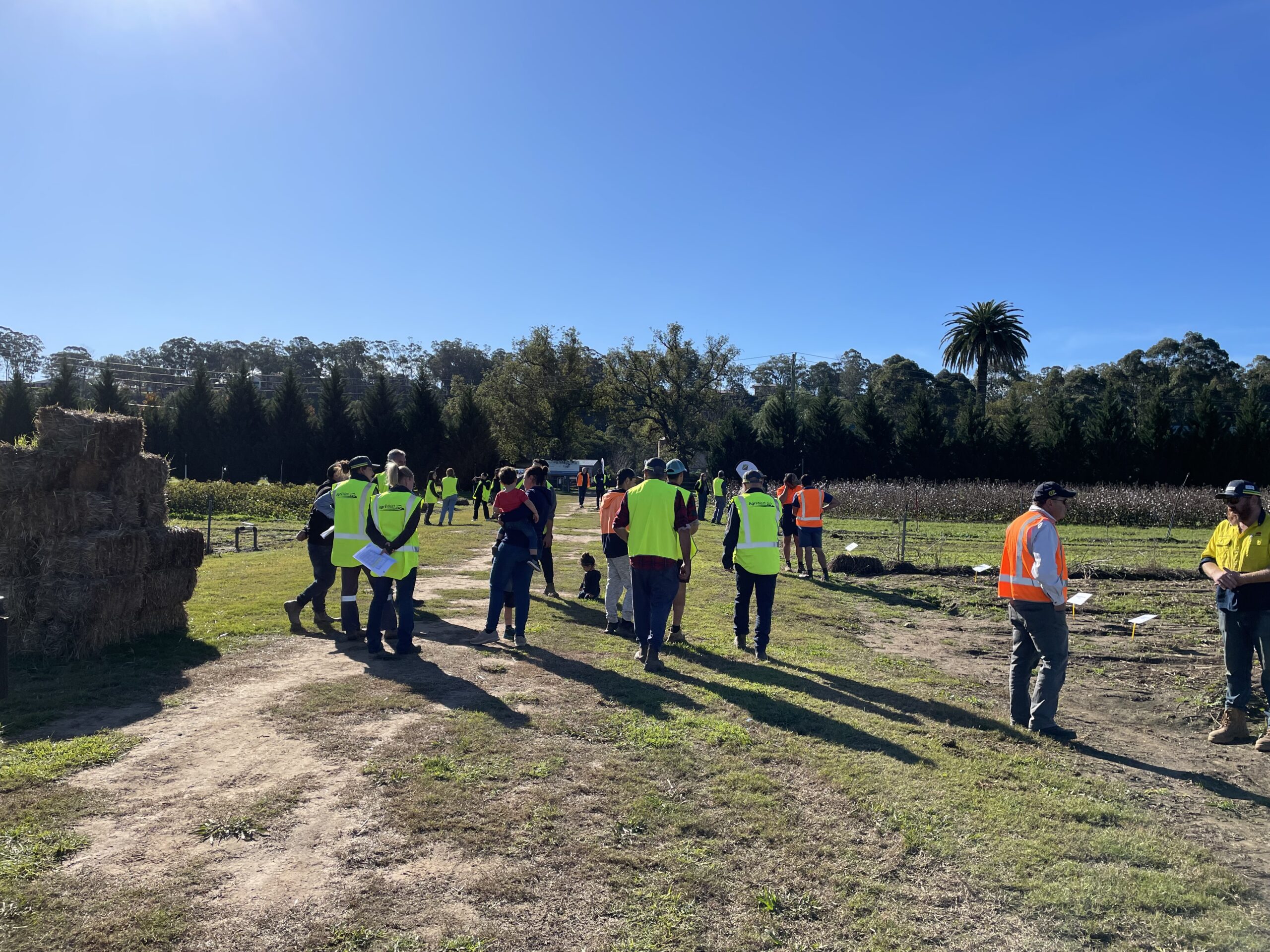
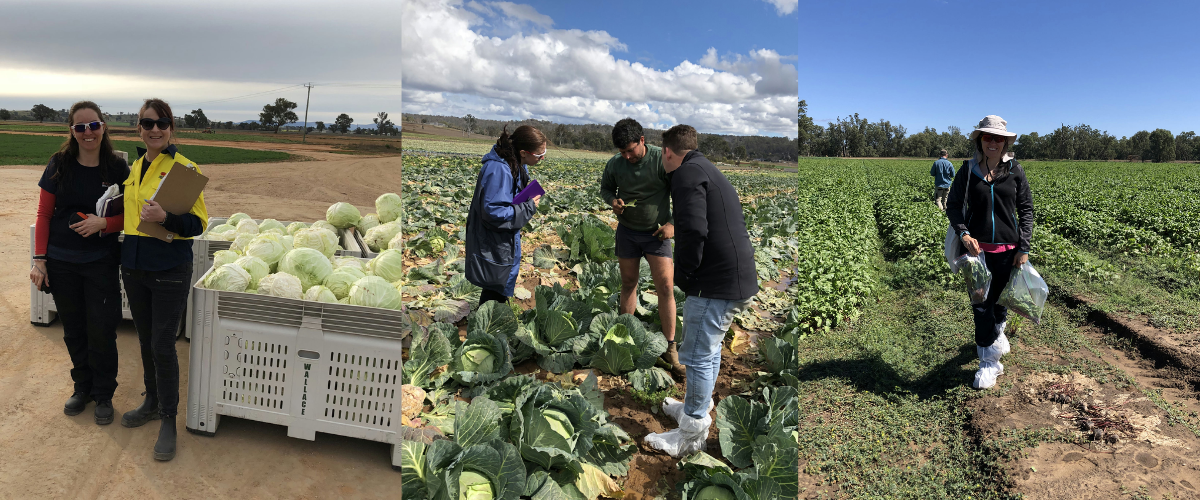
Participants in the field at the ‘Weeds, Bugs and Brassica Field Day’ in June 2025
Prior to this current project, from 2018 to 2023, the Area wide management of vegetable diseases: viruses and bacteria (VG16086) project was undertaken. This project aimed at developing area wide management (AWM) strategies to address high-priority viral and bacterial diseases affecting vegetable crops. These diseases impact producers nationally, collectively costing millions of dollars each year. A wide range of activities occurred over the duration of the program. The activities were led by the Queensland Department of Primary Industries as well as NSW DPIRD, who delivered separate parts of the program. Sylvia assisted this project by involving growers and organising trips to the Central Tablelands of NSW and sampling over periods of time in different regions and seasons.
One of Toni’s greatest scientific achievements is being a part of the Hort Innovation project Improving preparedness of the Australian horticultural sector to the threat potentially posed by Xylella fastidiosa – a severe biosecurity risk (MT17006). From 2017 to 2023, this multi-industry investment updated the National Diagnostic Protocol for Xylella fastidiosa, Australia’s number one biosecurity pest, to ensure that Australia is adopting world’s best practice methods. This work sets Australia up for quick and effective detection of the serious threat to Australia and New Zealand and to facilitate a swift and sure response.
Toni’s highlight was working with international experts in Spain, Italy and France, involving both field surveillance activities for the identification of plants infected with Xylella spp. across both native and production crops. There was also a laboratory component in each of the different countries to learn how to isolate and identify Xylella spp. from different plant hosts. This allowed Toni to develop unique skills that were previously unobtainable in Australia, making her an expert in Xylella spp. in Australia. This knowledge has been shared through the delivery of professional workshops. Knowledge from this trip and new diagnostics have been used to develop a new National Diagnostic Protocol for Xylella spp. which is in final approval stages with the Subcommittee for Plant Health Diagnostics.
DR TONI CHAPMAN
Quick questions, big answers
How did you become involved in the vegetable industry?
“When I joined the research team at NSW DPIRD 15 years ago, I already had a background in bacteria and assisted in research and diagnostics. Through a great mentoring relationship with Dr Len Tesoriero, I have learned both field and laboratory pathology.”
What do you enjoy most about being involved in the vegetable industry?
“I love working with growers and identifying problems and giving growers management options. I truly love being able to help them.”
What is your proudest achievement as a researcher?
“All the little things, the two-way workshops with growers and agronomists, helping the individuals, brainstorming together to problem solve and find successful workarounds.”
Where do you see yourself and future research initiatives going forward?
“The same as now but looking at biological controls and faster turn-a-round times for diagnostics and potential in-field diagnostics.”
FIND OUT MORE
Please contact Sylvia Jelinek on 0427 086 724 or sylvia.jelinek@lls.nsw.gov.au.