


AUSVEG to update seed potato growers at Victorian PMTV forum
23 October 2025Celebrity Cook-Off challenge launches pledge for increased vegetable consumption
3 November 2025
AUSVEG’s General Manager of Public Affairs and Communications Lucy Gregg recently penned an op-ed that informed a Weekly Times article on workforce shortages in the vegetable industry. The full op-ed is published below to provide additional data and context.
While data may show that more backpackers are visiting Australia and alleviating workforce shortages across the country, that’s not the reality for vegetable growers in rural and regional Australia.
In fact, when you look at grower feedback to AUSVEG’s latest vegetable industry survey, it’s clear workforce shortages are not easing, but actually worsening.
AUSVEG’s recent 2025 Vegetable Industry Sentiment Report paints an alarming picture of grower confidence, with implications for Australia’s future food security, as two in five vegetable growers consider leaving the sector in the next year.
Alongside compliance overload, poor retail prices and unsustainable production costs, workforce shortages are always among growers’ top challenges.
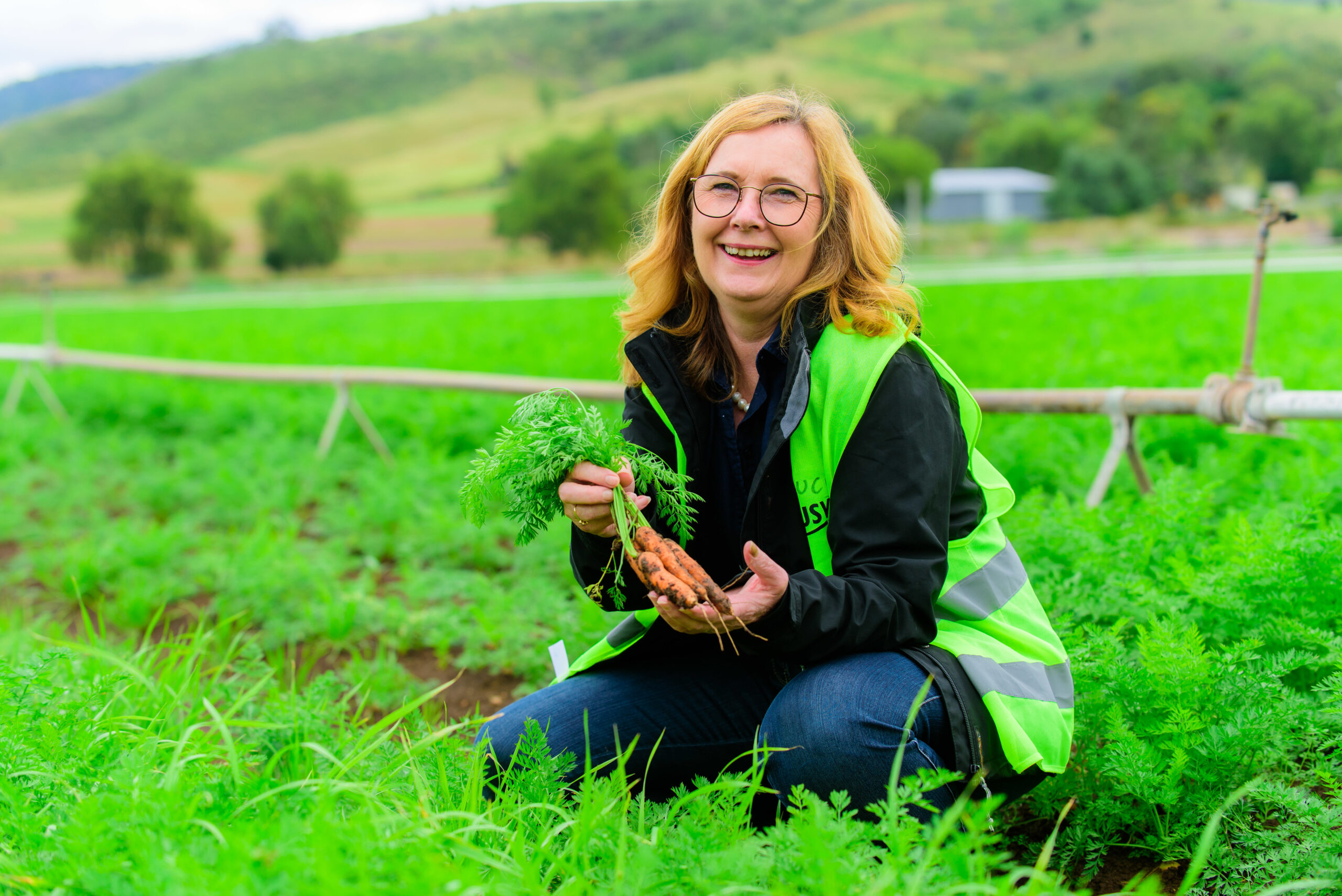
Lucy Gregg – General Manager of Public Affairs and Communications, AUSVEG
In our July survey, over 60 per cent of vegetable growers reported workforce shortages – approaching double the 36 per cent reporting the same issue a year ago. Only two per cent expect improvement this year, and a third think shortages will get even worse.
These shortages aren’t just in lower-skilled, seasonal roles – but right across the spectrum of positions needed to operate a modern vegetable growing business. In our latest survey, 92 per cent of growers faced shortages in full-time roles, and 87 per cent in part-time positions.
Those permanent roles typically encompass skilled and semi-skilled positions, with over 60 per cent of businesses describing their shortages here as “drastic”. The most vacancies were in management, supervisory, and leading hand roles. These are key positions responsible for overseeing the farm’s daily production, commercial, workforce and compliance operations, providing the base on which a business can continue to operate.
Vegetable growers in rural and regional Australia are also facing fierce competition for skilled workers from other industries, such as mining and other agricultural sectors. This pushes wages even higher, when surging costs are a key reason so many growers are considering leaving.
Our survey data shows labour averages 38 per cent of a growers’ production costs, and up to 70 per cent in more labour-intensive crops. Beyond the cost, productivity also suffers when roles go unfilled on vegetable farms. Outputs and decision making slow due to workforce gaps, and less experienced staff requiring more training and supervision.
If the Government is legitimate about increasing productivity in the national economy, then the vegetable industry’s workforce crisis needs to be addressed.
AUSVEG continues to propose solutions, at the same time as strongly advocating that the industry needs a suite of workforce options, and that no one solution will fit across the entire diverse vegetable and horticulture sector. In our recent engagements with Government on productivity, we proposed a national strategy to address regional and rural workforce shortages – and have also long emphasised the need for adjusted and expanded visa options to ensure employment pathways, not only for seasonal workers, but also for more skilled and longer-term positions.
Driven by margin squeeze and workforce shortages, the vegetable industry needs to continue adopting mechanisation and ag-tech innovations to reduce reliance on workforce. However, high production costs and lack of operating profit is hampering ag-tech uptake as growers’ capacity to make capital investments and adopt innovations has diminished.
The vegetable industry is the nutritional staple in the diet of all Australian’s, but that can’t continue without people. The cost of inaction on this workforce crisis will not be borne by growers alone, but by every Australian household.
Lucy Gregg, General Manager – Public Affairs, AUSVEG