


Plus One Serve launches Retail Setting Action Plan
9 December 2025
Smarter water and nutrient use in capsicum: Bundaberg trial moves into second season
9 December 2025
Reading Time: 5 minutes
BY JULIE O’HALLORAN AND JANAINA FABRIS
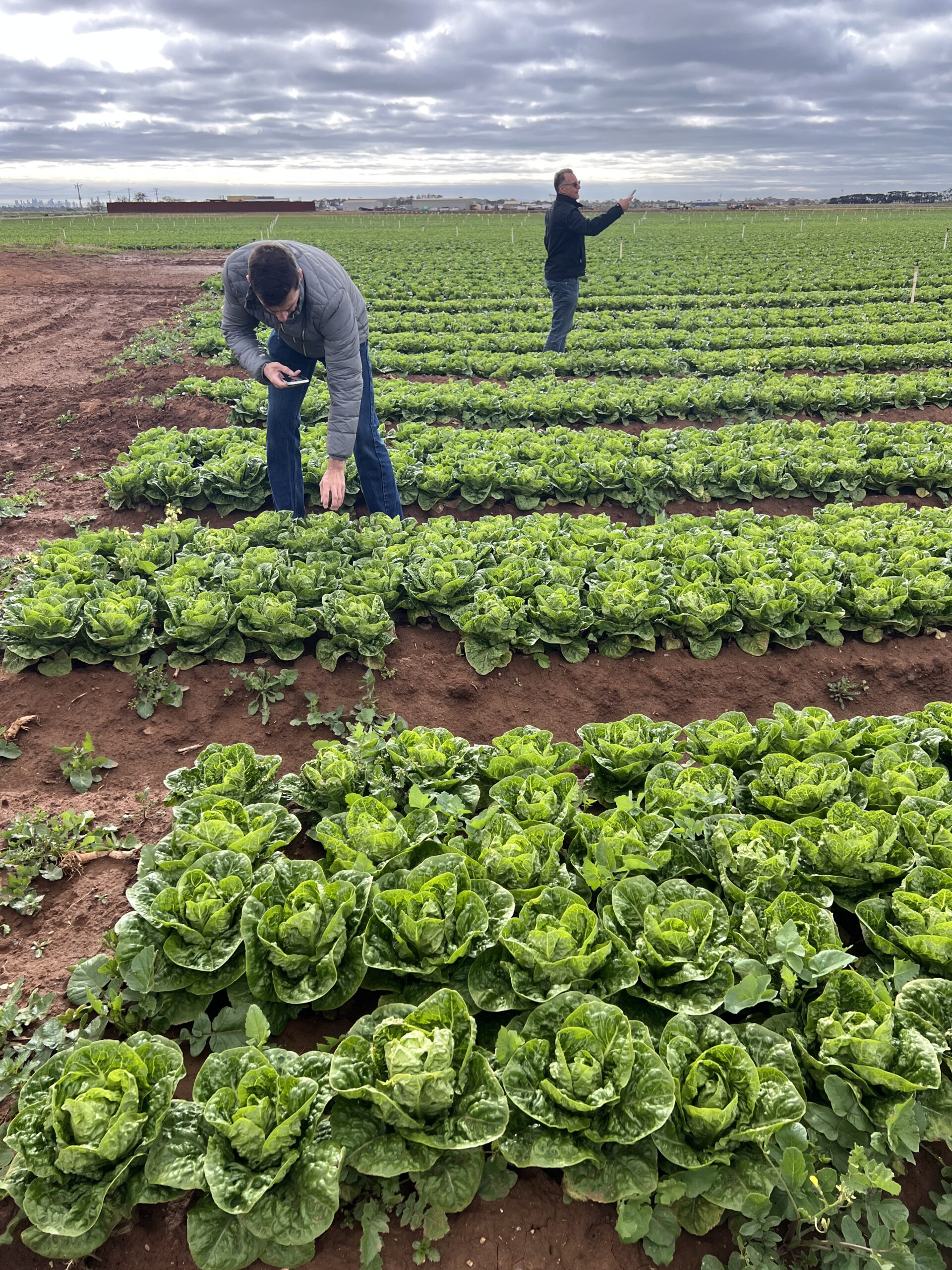
Pascal Labrecque (SamiAgtech) and Karl Thomas (CYTHE)
For many vegetable crops still reliant on manual harvesting, mechanised harvesting is seen as the holy grail in terms of automation and mechanisation.
Labour availability and costs remain a significant challenge for Australian vegetable growers. According to the latest AUSVEG Industry Sentiment Report 2025, labour accounts for 38% of overall production costs and the largest single cost component. Given that 60% of growers surveyed also indicated that they were experiencing workforce shortages, these figures highlight the importance of exploring mechanisation and automation options to improve labour cost and supply issues.
Mechanised and robotic harvesting is a step closer to reality for Australian vegetable systems with a one-year Hort Innovation levy-funded program, Evaluating mechanical harvest solutions in Australia. Led by the Queensland Department of Primary Industries (DPI), the program aims to connect global mechanical harvesting manufacturers to the Australian market, to enable direct discussions with growers and agribusinesses and to map out a pathway to support optimised technology integration on farm.
Automated and mechanised harvesters have the potential to transform vegetable production systems through reduced labour requirements and improved harvest consistency. These advanced machines use sensors, robotics and AI to select, harvest, and handle crops with precision.
The first of at least two harvester manufacturer tours to Australia was held in October 2025.
DPI’s Principal Development Horticulturist Julie O’Halloran was one of the facilitators of the recent mechanised harvester manufacturer tour to Australian vegetable growing regions.
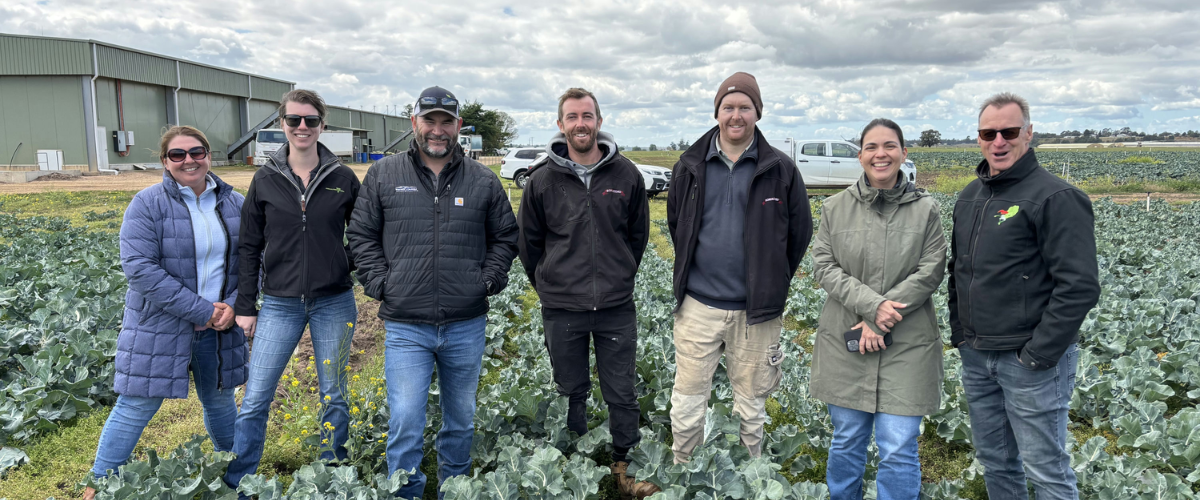
The tour featured farm visits and discussions with 12 broccoli and lettuce growers from across Gippsland and Werribee in Victoria as well as the Lockyer Valley in Queensland.
“The aim in bringing these manufacturers to Australia is multifold. We want to get a deeper understanding of the status of development of these technologies and the capabilities of these
machines,” Julie said.
“As with many of these technologies it is more than likely that the farming system will need to adapt to suit the technology rather than the technology being flexible enough to suit every individual farming system.
“We wanted the manufacturers to see firsthand the planting densities, configurations, soil types and topography that comprise Australian vegetable systems and discuss how our systems align with the technologies.”
“Facilitating discussion between growers and the manufacturers was key to highlighting some of the challenges and considerations for successful harvester integration on farm.”
Technology manufacturers that participated in this initial tour included Pascal Labrecque from Sami Agtech, based in Canada, who have a broccoli and cos (romaine) lettuce robotic harvester in development, and Karl Thomas from CYTHE™, out of the USA, who are developing a robotic broccoli harvester.
The timing of this tour also coincided with the 2025 Gatton AgTech Showcase.
“It was great to be able to align this harvester manufacturer tour with the DPI-led Gatton Agtech Showcase so that Karl and Pascal could participate in a dedicated harvester panel session as part of the AusAgriTech speaker program,” Julie said.
“This national event provided further opportunities for the visiting harvester manufacturers to connect with growers from around the country and share insights on the technology and Australian farming systems.”
The opportunity for Australian vegetable systems
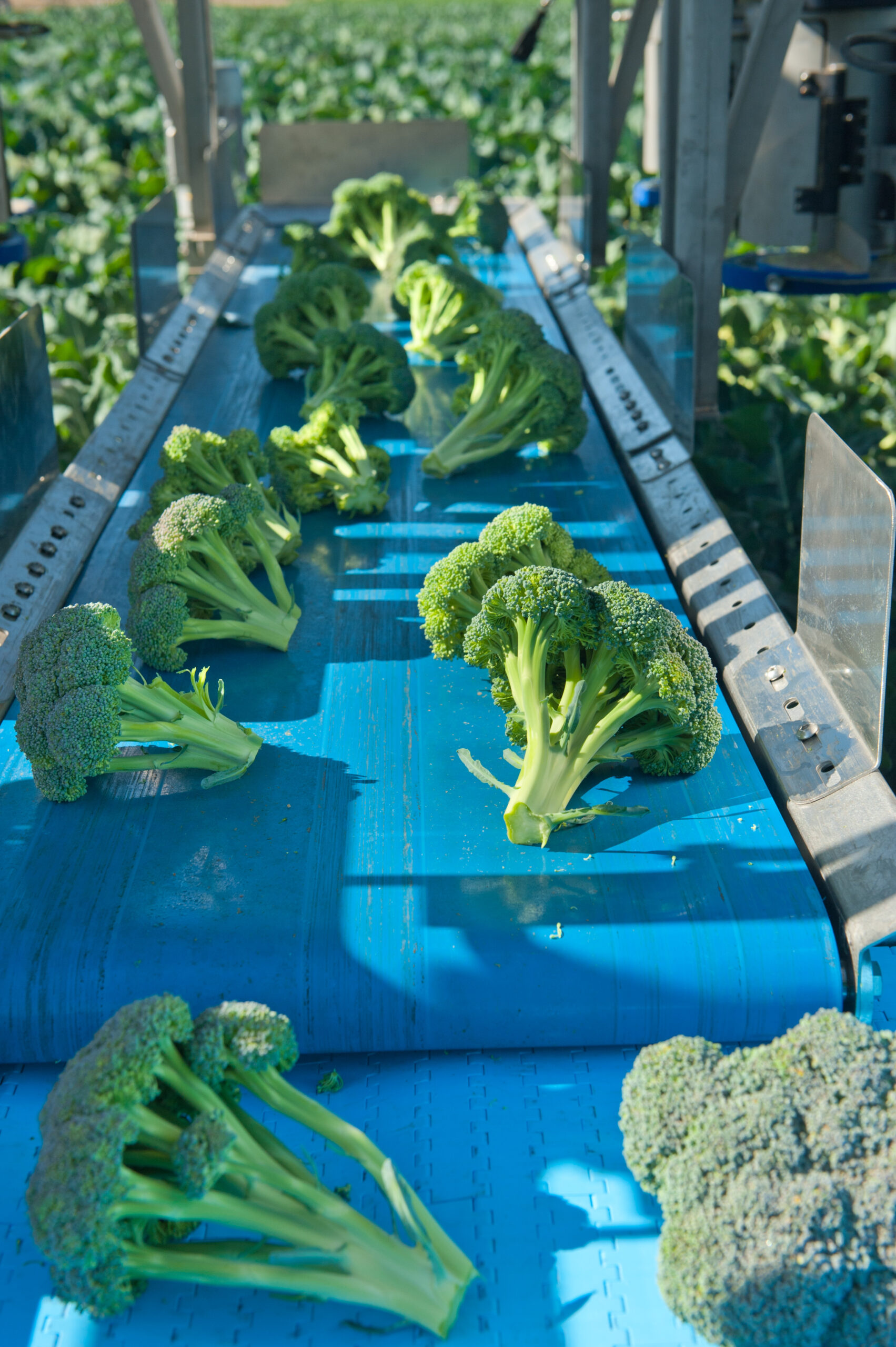
Broccoli crowns collected on the product belt of the CytheTM robotic harvester during field operations in California.
The tour highlighted that Australian systems are well suited to integrate these technologies, though their full potential remains to be demonstrated.
Following farm visits in Victoria and Queensland, Karl Thomas, General Manager with CYTHETM, found Australian growers have a lot of the same issues that he sees with people in the EU, UK and the United States.
“People are trying to manage their labour costs and through the introduction to growers via DPI and the Harvester program, I found the growers very receptive to having us come in and were very free with information and looking for more information on how they can introduce technology into their operations.”
“I don’t think there would be much change needed in the local agricultural community to introduce our technology. I know some of the Australian farmers were concerned about the size of their market and whether they can adopt technology made for the US down here. But based on what I’ve seen, the growers have plenty of field, plenty of requirement and sufficient field size to support technology.”
Pascal Labrecque also commented on the readiness of Australian vegetable systems for these agtech solutions.
“What we’ve seen in the fields here in Australia, the fields are ready for automated harvesting,” Pascale said.
“The way things are planted has a bit more spacing, the varieties used, and the weight it is packed at, is really ready for the kind of technology we are offering. The growers I’m seeing are looking for innovation, they just don’t have access to it today.”
Australia is a long way from where these technologies are currently being developed and represents a relatively smaller market compared to the US, Canada and the EU. However, these insights underscore the significant potential for integrating global agtech solutions into Australian vegetable systems.
Getting the ROI right
Also joining the group was Ben Palone of the Western Growers Association, based in California, USA. Western Growers have been involved in the harvest automation area for some time and are a key partner in the harvester program. Ben’s participation has provided valuable international insights and has helped connect the Australian industry to global efforts underway to develop mechanised harvesting.
DPI’s Julie O’Halloran said any AgTech investment, including these harvesting technologies, has to consider the return on investment (ROI).
“Ben was able to provide insights based on his experience working with these manufacturers to demonstrate their technologies with US growers. Through his role with Western Growers Association, Ben has experience in evaluating the true cost and return on investment of agtech integration on farm.”
This tour highlighted the importance of understanding Australian vegetable systems in assessing the potential for integration into these farming systems.
Ben explained how the visit allowed deeper understanding of the operations of Australian growers including labour use, costs, configuration, and scale.
“It’s great to be boots on the ground seeing how growers are actually growing their vegetables here in Australia,” Ben said.
“We’ve been meeting with all the different types of growers, seeing how they grow different types of crops, how they use labour, what the cost of that labour is, how many acres they cut a week, a month, a year. Really trying to get into the grower’s operation, to understand everything they do so I can be a better advocate and help them understand what technologies will help them in automated harvest.”
A key deliverable of the harvester program will be developing a comprehensive roadmap for the successful integration of these technologies into Australian vegetable systems. The insights from this tour will form the basis for this roadmap.
The DPI continues to look globally at the AgTech sector and its benefits for Australia with Julie attending Agritechnica in Germany in November 2025 and running a tour to the UK and The Netherlands in June 2026 with funding from Hort Innovation.
The Queensland Department of Primary Industries would like to acknowledge the generosity of the growers who hosted farm visits: Bulmer Farms, Bonaccord Ingram, Busch Organics, Fresh Select, Windolf Farms, and Rugby Farms.