


Lessons from Europe: What Australia’s vegetable industry can take home from the EU study tour
27 February 2026
New Hort Innovation funded carrot project
27 February 2026
Reading Time: 5 minutes
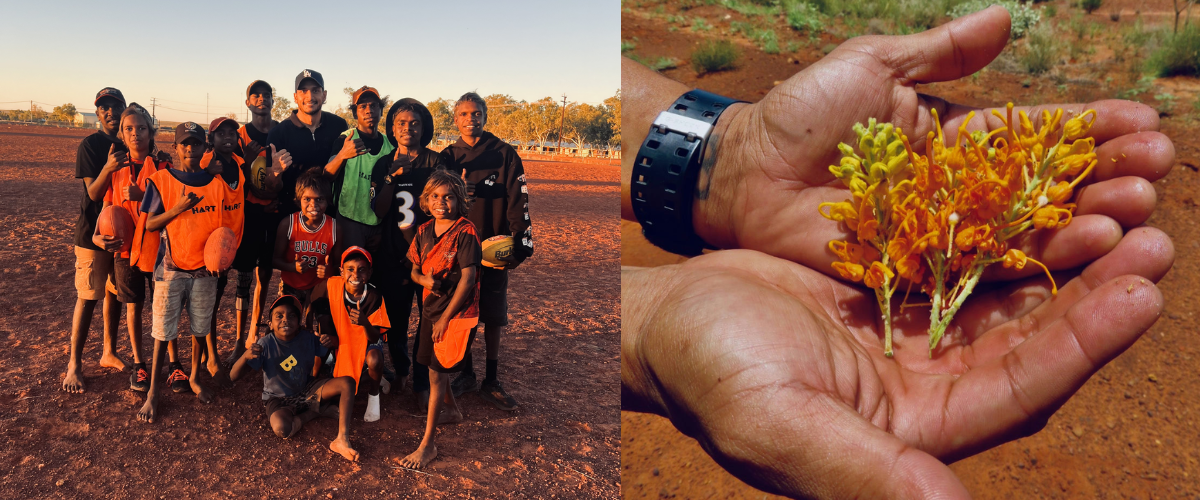
Marlon Motlop, NT, Gulumeorrgin Larrakia Country with Family.
Marlon Motlop is a proud Larrakia/Gulumeorrgin, Kungarrakany Erub/Darnley man who grew up in Darwin in the Northern Territory surrounded by Australian Native Foods.
“I had a very fortunate and lucky upbringing,” Marlon said.
“My experience with Australian Native Foods was more from a cultural standpoint. It was around hunting, fishing and collecting, and gathering with family through traditions and cultural practice.”
It wasn’t until 2017 when he began working with his cousin that he was introduced to the commercialisation of Australian Native Foods. This exposure to the industry helped Marlon find his passion of sharing and celebrating the story of Aboriginal Australia with Native Foods.
Marlon spent five years working as the director of The Native Co, a company that grows native herbs in controlled environments with the vision of making Native Produce accessible to everyday Australians. From there, Marlon founded Native Kitchen Australia, which focuses on innovative ways to sell Native Produce, particularly warrigal greens and saltbush, into the Melbourne and Sydney markets.
“Through the Native Kitchen Australia space, I was able to really work on stakeholder and business relationships and really focus on the storytelling aspect of the Native Food sector and celebrate Aboriginal and Torres Strait Islander history and culture within those business deals and relationships,” Marlon said.
This inspired Marlon to move into an advisory and consulting role within the Native Foods space, working closely with First Nations corporations on Healthy Country Plans and incorporating agriculture and food sustainability and security within those economic plans.
Research objectives
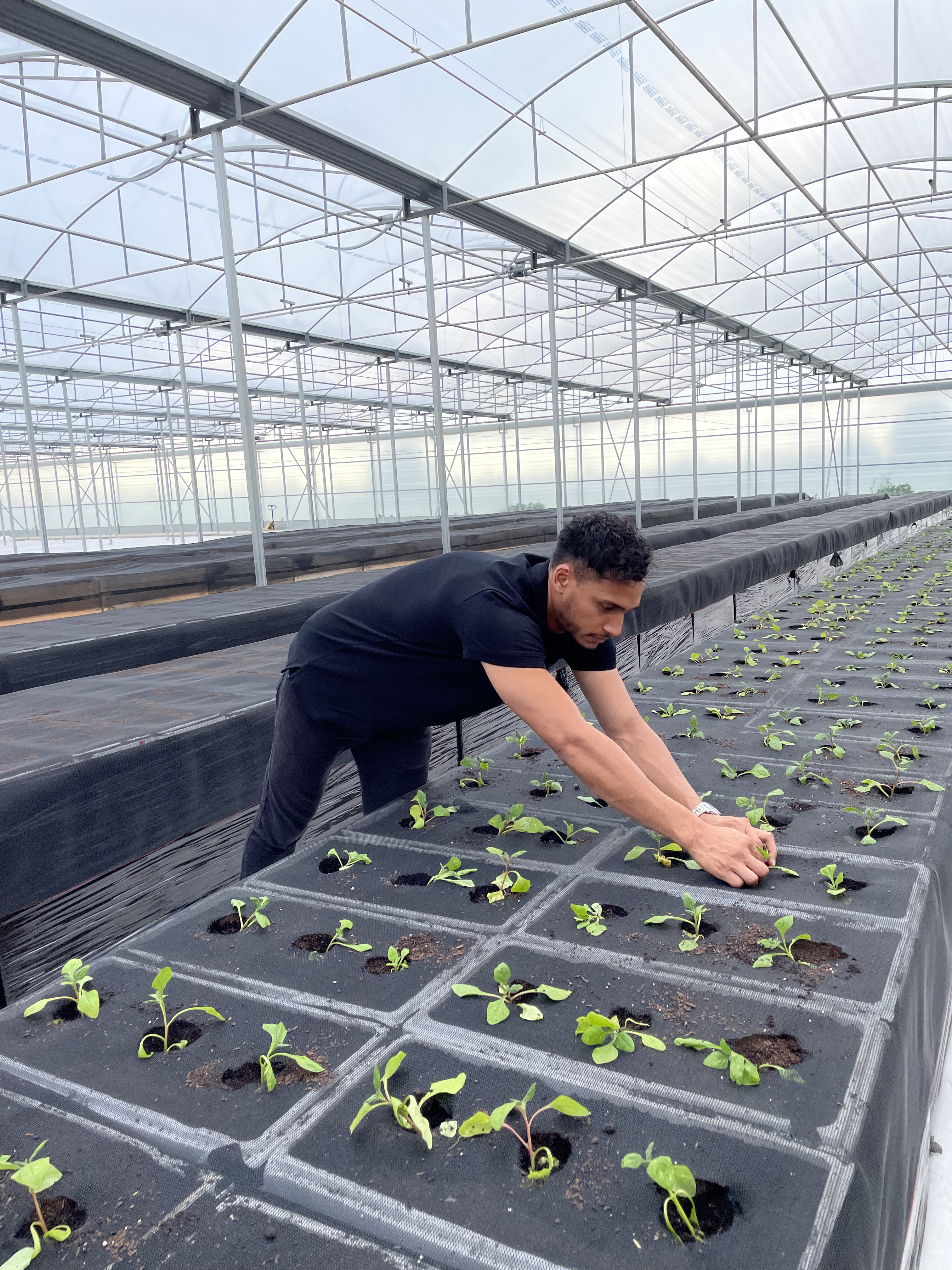
Native Co, Adelaide, SA Kaurna Country cultivating seedlings.
 Marlon is the inaugural First Nations scholar to complete a Nuffield Scholarship since its beginnings in 1947. His research aimed to highlight the cultural importance and unique benefits of Australian Native Foods, as well as investigate the barriers facing First Nations businesses in the agriculture and farming sectors. He also accentuated the importance of safeguarding Indigenous Cultural Intellectual Property, which refers to the rights that Aboriginal and Torres Strait Islander peoples hold in relation to protecting and controlling their Traditional Knowledge and cultural expressions.
“When I started it out, it was really about bringing awareness to the Australian Native Food sector, but more specifically around the Cultural Intellectual Property of Aboriginal communities within Native Foods,” Marlon explained.
“I think there’s been some progression in the conversations that we’re now having in terms of safeguarding [First Nations Knowledge systems]. But I think there’s still a long way to go to get Indigenous Cultural Intellectual Property legislated within the country… there really needs to be some progression from a legal perspective in this space.”
Learnings from overseas
As part of his scholarship, Marlon travelled internationally to learn about the significance of First Nations Foods from around the world and the similarities in their cultural importance. His travels extended to Canada, New Zealand, Brazil, the USA, England, Belgium, and Singapore.
“I guess, particularly around North America and First Nations people within Canada, I feel they’ve probably progressed a little bit further than what we have as a country in their awareness and the frameworks they have in place for First Nations communities and people,” Marlon said.
“What I’ve realised is that Australia is quite a young country in comparison. But there are somethings that we’ve adopted from international First Nations groups in terms of legislation and First Nations engagement that I think we’ll continue to see evolve and mould in a way.”
“It’s a complex situation in Australia because we’ve got such a diverse range of Aboriginal and Torres Strait Islander cultures. We’ve got over 300 groups and within those there are different dialects and clan groups. So, it’s a communal responsibility and the terms ‘ownership’ and ‘property’ aren’t essentially concepts that Aboriginal and Torres Strait Islander peoples live by.”
“It’s a really complex topic to speak on, but if I was to compare anything in terms of what would work here, I think legislating Indigenous Cultural Intellectual Property and safeguarding knowledge is a priority, for example in Malawi, the first and only country to have ratified the WIPO Treaty, requiring patent applications to include Cultural origins of Traditional Knowledge.”
Barriers for First Nations-led businesses
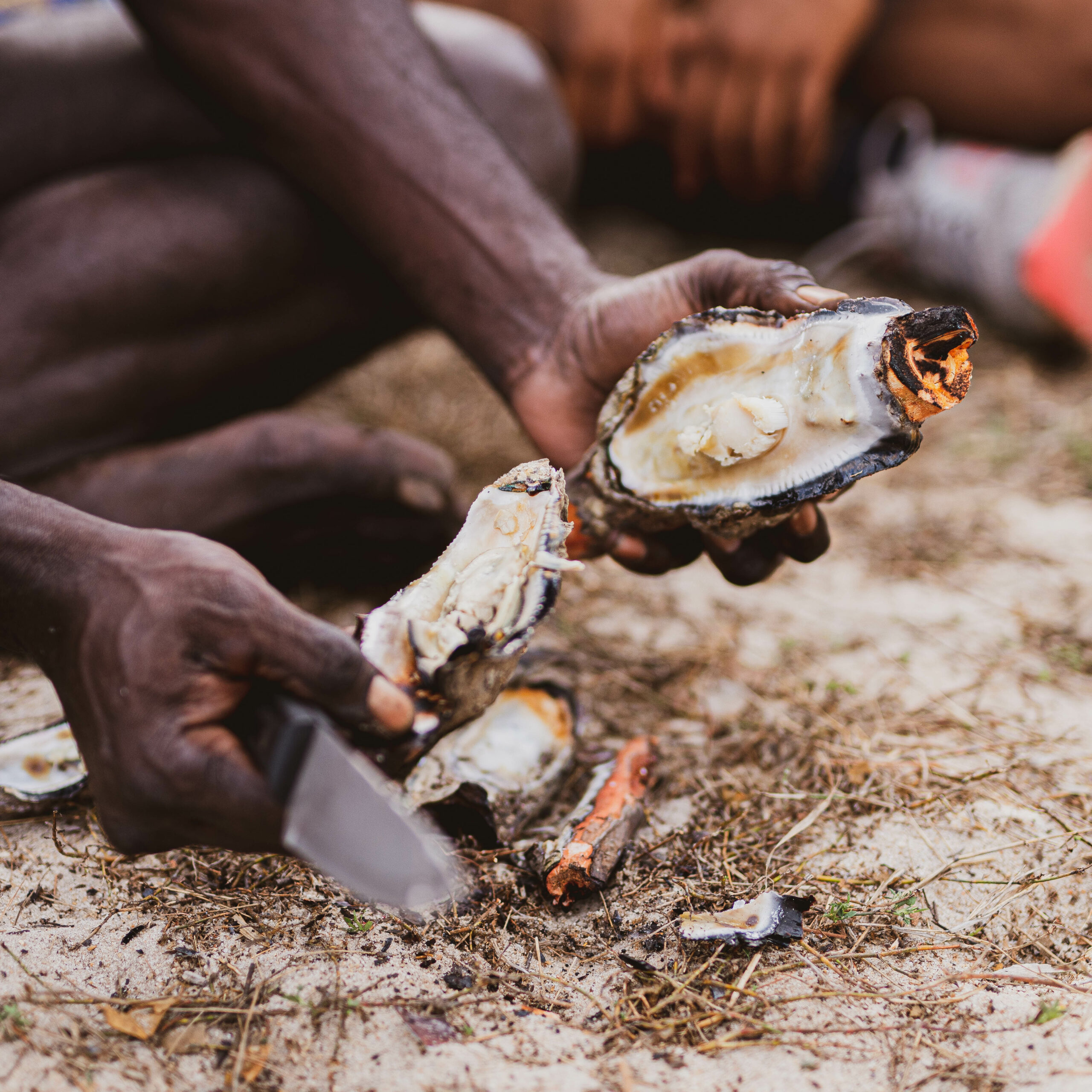
Kane Chenoweth, Dhaniya Yolngu (Gumatj) Country with Rock Oyster.
In his report, Marlon outlines the key barriers faced by First Nations-led businesses, including limited access to capital and finance, land use agreements and legal barriers, Market Access and supply chain challenges, infrastructure and capability gaps, and cultural misappropriation and cultural safety.
“A lot of Aboriginal and Torres Strait Islander peoples will be first generation growers or farmers or business owners in the Native Foods space. Access to capital investment isn’t something that we’re born into or we come up with,” he explained.
“Increased investment into capital for First Nations agribusiness is a must for setting up our businesses to grow, and basing business and strategic values from an agricultural space around the progression and self-determination of First Nation businesses in Australia is something that is a positive driver for the Australian economy from a broader perspective as well.”
Looking ahead
As well as strengthening Intellectual Property and Knowledge protection, Marlon also recommended from his findings greater investment into research and development, increased capital investments in First Nations agriculture businesses, securing sustainable supply chains through capability and capacity building for First Nations agribusinesses, and implementation of culturally safe Aboriginal and Torres Strait Islander governance structures for First Nations businesses in the Native Foods sector.
Marlon emphasised the power that Australian Native Foods hold to be a bridge for conversations around reconciliation: “It’s an opportunity to spark conversation between non-Aboriginal people within Australia and talk about the real history of Australia. The truth-telling aspect of this country’s history is one that needs to progress, and we shouldn’t look at that as something to be scared of. We should look at that as an opportunity to learn and grow as a society and as a nation.”
“As humans, we connect through food and we’re sustained by that very practice. I think that the way we look at Australian Native Foods now is like a niche market, but it’s one of the oldest markets in the world.”
“Having our businesses and enterprise hold space within the mainstream market is something that I see within the next ten years for sure.”