


January to November 2025 Australian vegetable international trade overview
27 February 2026
Protecting Traditional Knowledge while growing Australian Native Food markets
27 February 2026
Reading Time: 4 minutes
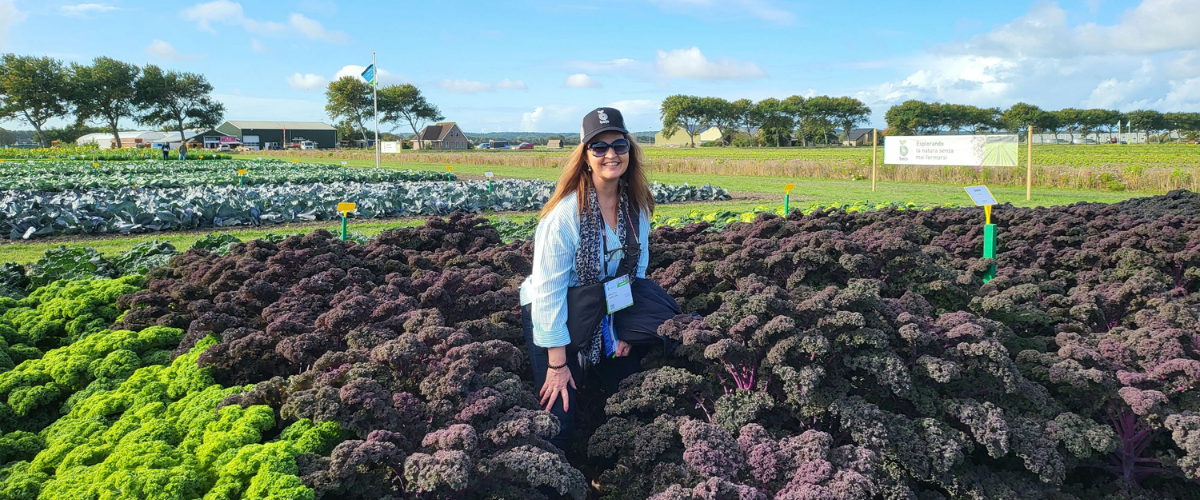
The tour brought together growers, seed company representatives, and industry staff to explore how European innovators are responding to rising costs, labour constraints, regulatory pressure, and increasing sustainability expectations – challenges that closely mirror those facing Australian growers.
The study tour was delivered with support from Hort Innovation, funded by the vegetable research and development levy and matched with contributions from the Australian Government, ensuring Australian growers have access to global insights that strengthen long-term productivity, resilience, and market competitiveness.
Timed to coincide with the renowned Week 39 seed trials in the Netherlands, the itinerary included visits to leading seed companies, agritech manufacturers, biological input specialists, and the Fruit Attraction trade fair in Madrid. While severe weather prevented planned farm visits in Spain’s Albacete region, the program still delivered an exceptional cross-section of innovation and practical learning.
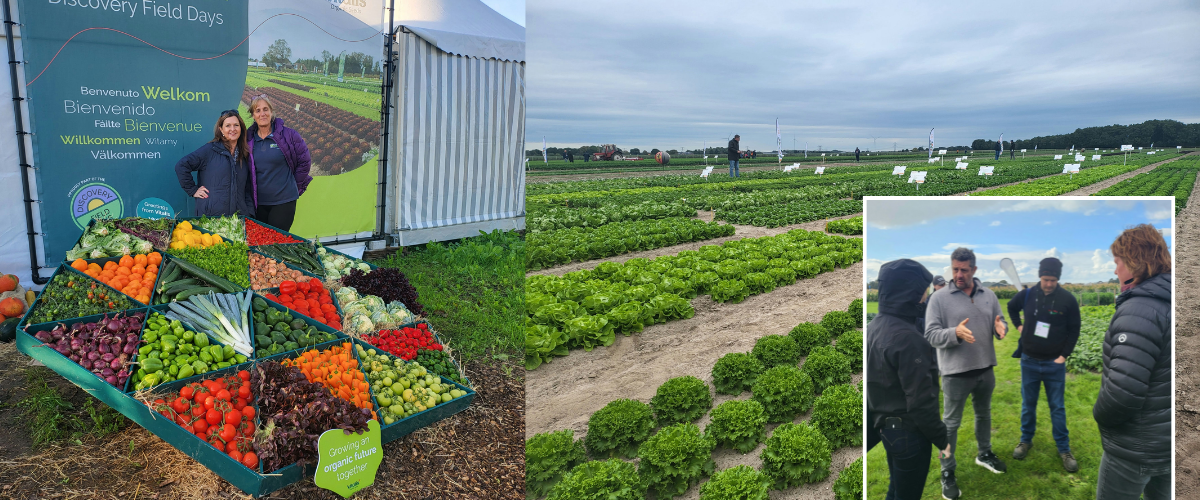
Natasha Shields (Peninsula Organics) and Monika Fiebig (Monika’s Organics) at Enza Zaden Discovery Field Days (Voorst, the Netherlands).
Inset. Marco and Vincent Mason (Mason Brothers Vegetable Farms) at Syngenta Fields of Innovation (Grootebroek, the Netherlands).
Genetics doing the heavy lifting
One of the strongest take-home messages from the Netherlands leg of the tour was the central role that genetics now play in managing risk and reducing input dependency. Across visits to Bejo, Syngenta, Enza Zaden, Bayer (Seminis), BASF Nunhems and Rijk Zwaan, breeding programs were increasingly focused on resilience rather than yield alone.
Participants saw varieties bred for resistance to major diseases such as Fusarium, Downy mildew and Tomato spotted wilt virus, along with improved tolerance to heat, bolting, and environmental stress. These traits are helping European growers reduce reliance on chemical controls while maintaining productivity, quality, and consistency.
For Australian growers, the relevance is clear. Across Europe, the progressive withdrawal of many conventional crop-protection products has accelerated the shift toward resistant genetics as a primary risk-management tool. As a result, resistant varieties are becoming a cornerstone of integrated pest and disease management, reducing reliance on chemical inputs, lowering spray frequency and costs, and strengthening biosecurity resilience against both endemic and emerging pest and disease threats.
As one participant observed, “These varieties aren’t just about yield anymore – they’re designed to cut inputs, improve shelf life, and still meet market expectations.”
Organic and low-input systems moving mainstream
At Enza Zaden’s Discovery Field Days, the group saw organic production systems operating at scale. Through its Vitalis breeding program, Enza Zaden is incorporating wild genetics into commercial vegetable lines to deliver strong disease resistance and reliable performance under low-input conditions.
What stood out was the quality of the crops on display. Several participants remarked that the organic lines rivalled conventional varieties in appearance and vigour, reinforcing the idea that modern breeding, rather than chemistry alone, is driving the next phase of sustainable production.
This approach has clear relevance for Australia as growers look to manage regulatory pressure on certain active ingredients while maintaining yield and market access.
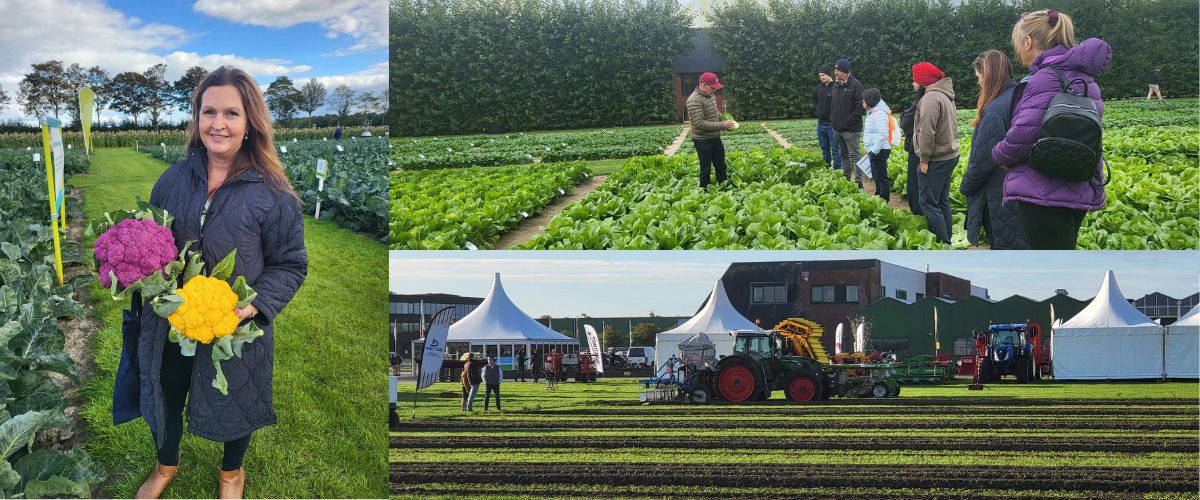
L-R. Natasha Shields (Peninsula Organics) at Bejo Open Days (Warmenhuizen, the Netherlands). Study tour group at Rijk Zwaan Open Field Demo Days (Fijnaart, the Netherlands).
Automation addressing labour challenges
Beyond genetics, the tour highlighted how mechanisation and automation are reshaping European horticulture in response to labour scarcity and costs – a challenge that resonates strongly in Australia.
At Sormac B.V., participants saw advanced postharvest processing systems incorporating AI-driven optical grading, automated trimming and washing, and water recycling. These systems improve efficiency, reduce waste, and meet increasingly stringent food safety and sustainability requirements.
At Roopack BV, the group examined custom-built harvesting machinery designed to minimise soil compaction, reduce fuel use, and significantly improve harvesting efficiency. Roopack’s twin-disc harvesting system was of particular interest, with demonstrated reductions in product loss and increased component lifespan compared with conventional blade systems.
For Australian growers, these technologies highlighted practical pathways to address labour shortages while improving product quality and operational flexibility.
Biologicals becoming part of the toolbox
In Spain, the group met with representatives from Servalesa, a company specialising in biostimulants and microbial inputs. Although adverse weather prevented farm visits, technical presentations provided insight into how biological products are being integrated into European IPM systems.
Rather than replacing conventional chemistry outright, biologicals are being used to enhance plant health, stress tolerance, and soil function — reducing chemical reliance while maintaining yield and quality. This integrated approach aligns closely with emerging trends in Australia’s own biological input sector.
From innovation to application
The tour concluded at Fruit Attraction in Madrid, one of Europe’s largest fresh produce trade events. Here, participants saw how genetics, automation, packaging, and logistics innovations are converging to support low-input, technology-enabled production systems that respond directly to consumer and market expectations.
Across the tour, several consistent themes emerged. Genetics are reducing chemical dependence, automation is reshaping labour efficiency, and sustainability is increasingly embedded in commercial decision-making rather than treated as a separate objective.
For Australian growers, the value of the tour lay not in replicating European systems, but in understanding where global horticulture is heading and how these innovations can be adapted to Australian crops, regions, and markets.
As one participant summed it up, “What we saw wasn’t futuristic – it’s already happening. The challenge now is deciding how we apply it at home.”
The insights gained from the EU Study Tour will help inform future industry priorities, from variety selection and mechanisation investment to the role of biologicals and integrated pest management – supporting a more resilient, competitive, and sustainable Australian vegetable industry.