


New Hort Innovation funded carrot project
27 February 2026
A levelling consideration: Stay the course or transition your business
2 March 2026
Reading Time: 9 minutes
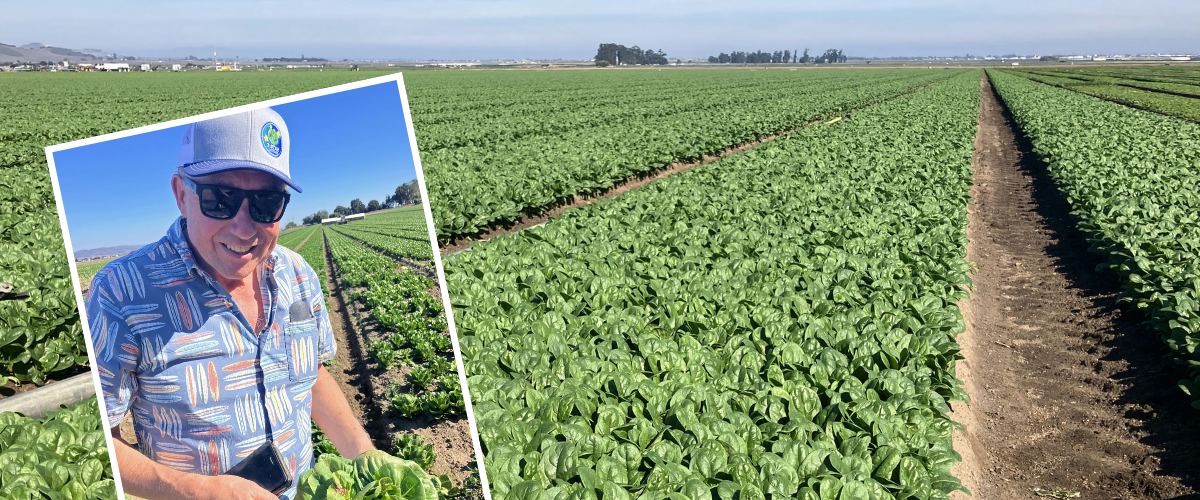
California is the epicentre of global baby leaf spinach and salad production, where scale is a defining feature and the industry operates with a distinctly North American ‘go big or go home’ mindset.
Fitting also that the home of Popeye, an enduring symbol of spinach’s place in popular culture, leads the country, and possibly the world, in production intensity, research investment and regulation.
Observations from California offer useful context for our own industry, highlighting areas where current approaches appear effective, while also drawing attention to emerging issues that warrant ongoing monitoring and collaboration.
Stuart Grigg and Dr Len Tesoriero – part of Applied Horticultural Research’s (AHR) team on the Hort Innovation project Addressing challenges in baby leaf production (VG23014) – attended the conference and associated site visits.
Commercial practice in California
Postharvest handling
Visits to commercial operations in the Salinas Valley highlighted the highly integrated nature of the Californian leafy greens industry.
Dole, Soledad
Dole only grow around 35 percent of their own produce, with the remainder sourced from local contracted growers. Spinach is harvested overnight – between dusk and early morning – and into bulk bins fitted with cooling tubes. Slits cut into the tubes increase airflow through the bin, increasing the efficiency of cooling.
Spinach lines generally run during the early morning, processing the product harvested overnight. Softer wash lines are used than for other leafy greens to reduce the risk of bruising. This means spinach can go from the field to bagged product in as little as 12 hours, a much faster turnaround than what typically occurs in Australia.
In contrast, lettuce is harvested from approximately 6am to early afternoon. Interestingly, Dole rinses the cut surfaces in saline water to reduce browning, as this process can remove some of the fluids and latex leaking from the cut surface. Adding salt alters the osmotic pressure in the wash water, which could explain why saline water is more effective.
Following washing, lettuce is vacuum cooled to as close to 0°C as possible. While this temperature risks freezing, minor damage to the outer leaves is considered okay if it helps to maintain the cold chain; frozen leaves are simply removed during processing. The lettuce is sealed in bags flushed with nitrogen, another method used to inhibit browning.
A key postharvest process is the use of variable flow drive vacuum coolers. It has only recently been recognised that rapid vacuum cooling can rupture the leaf cells within relatively fragile baby leaf crops. Slower vacuum cooling rates reduce the risk of damage.
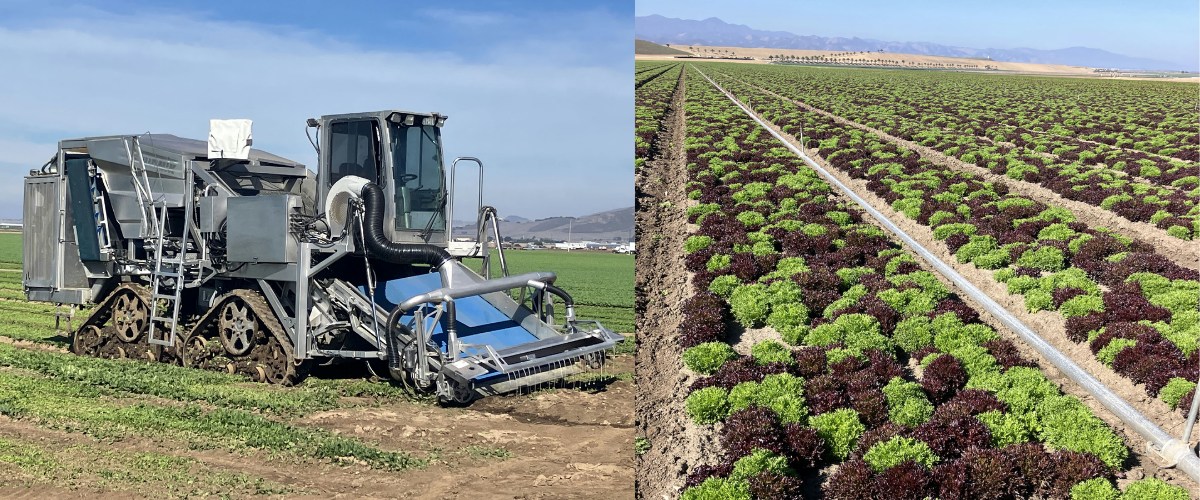
Figure 2. Spudnik spinach harvester at Taylor Farms. Figure 3. Salanova lettuce is direct sown and machine harvested, ready mixed for processing.
Taylor Farms
The benefits of automation was a consistent theme during site visits, particularly at Taylor Farms. Taylor Farms is a massive operation (Figure 1), fully vertically integrated with turnover exceeding USD $7 billion.
Automated broccoli harvesters have been trialled, but, in the end, machines just couldn’t keep up with experienced hands in high-density production systems. Skilled contract crews still outperform the robots.
Spinach, on the other hand, is an excellent candidate for mechanisation. Advanced harvesters and on-board sorting systems reduce the need for human hands without compromising quality.
Taylor Farms uses Spudnik spinach harvesters (Figure 2), incorporating:
- Air assistance at the front of the harvester to move spinach onto the belt, reducing both leaf damage and wear to the bearings
- First airbridge very early in the process, to remove contaminants
- Mesh belts that spread leaves to prevent bruising
- On-harvester vision sorting systems that eject damaged leaves and contaminants using a finger knock-out mechanism.
Rava Ranches
A visit to family owned and operated Rava Ranches further highlighted the scale and complexity of leafy vegetable production in the Salinas Valley. Crops include lettuce, brassicas, chard, mesclun, garlic and capsicums as well as spinach, with the majority planted directly from seed (Figure 3). Every week they sow roughly 150 acres of organic and 200 acres of conventional spinach. The annual seed bill alone can top USD $41 million.
Rava Ranches have a strong emphasis on soil health. Rather than using chemical fumigants, broccoli is grown for both its commercial value and strategic use as a cover crop. To reduce soil-borne diseases, the plants are mulched and incorporated into the soil within 24 hours. Annual applications of gypsum and lime, along with sulphur and calcium, also help maintain soil health and reduce tip burn.
While crop rotation and careful management reduce pests and disease, diamondback moth remains a challenge. Damping off is also an issue for spinach, especially in warmer weather. Aerial sprayers have been replaced by more precise ground rigs, and mustard cover crops are often grown before spinach to reduce damping off issues.
Irrigation is another tool used to manage disease and maximise spinach quality.
While three irrigations are used to germinate the crop, irrigation is then withheld for seven–10 days, driving the roots deep underground. Irrigation resumes once the true leaves start to emerge. While they try to avoid crops getting steamy, extra water may be needed during hot afternoons, simply to cool the crop.
Irrigation water is either pumped directly from bores or put into a storage dam. Like all of the local salad producers, there is a high level of consciousness about food safety and, therefore, the importance of clean irrigation water.
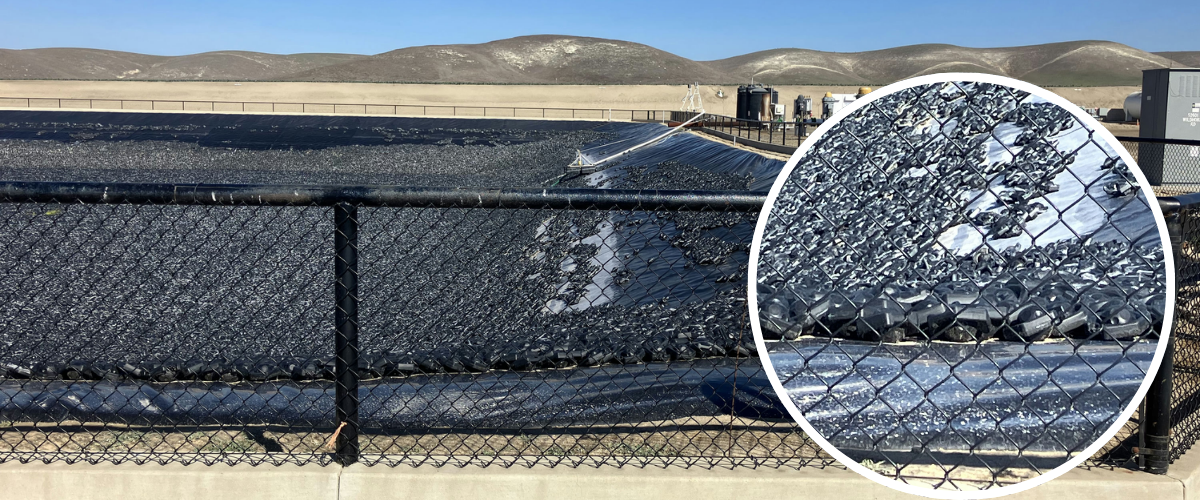
Figure 4. Plastic-lined and fenced dam, covered with floating balls (to prevent birds settling as well as reduce water loss). Water is chlorinated to drinking quality before application to salad crops
To prevent contamination, the storage dams are covered with a layer of floating plastic balls (reducing evaporation as well as preventing birds landing) (Figure 4). In addition, the water is pH balanced and treated with chlorine before use, and at the end of the season each dam is emptied and the plastic liner cleaned to remove accumulated dirt.
As another food safety measure, products are tested for microbes before harvest. While expensive, the costs of previous food safety outbreaks make this extra level of testing a worthwhile investment.
The farm has no less than twelve baby leaf harvesters, but all cooling is done at local processors. They therefore rely on fast turnaround times to maintain quality.
Conference highlights:
Research, regulation, and challenges
The 11th International Spinach Conference included a terrific field day, with a huge range of different varieties on show (Figure 5). There were cultivars to suit different climates, with flat to full savoy, round or pointed, various shades of green and a range of resistance packages.
Industry research priorities
Jennifer Clarke, Executive Director of the California Leafy Greens Research Board, gave a compelling overview of the challenges and research priorities shaping the spinach industry.
The Board spends more than USD $1.3 million annually on research, of which the bulk (62 percent) is spent on plant breeding and genetics, followed by disease management (23 percent). It was interesting to see that only two percent and three percent of the budget are spent on entomology and IPM respectively, despite the growers noting major challenges with diamondback moth.
Weed science – which must surely be one of the biggest challenges for Australian baby leaf growers – only receives one percent of funds. Presumably the dry conditions mean weeds are less problematic. Weed management in Californian systems is increasingly high-tech, with laser weeders and solarisation joining traditional cultural approaches.
Despite many challenges, the Californian industry certainly isn’t standing still.
Jennifer highlighted broader trends that are reshaping production, including a growing appetite for organic produce, ongoing trade uncertainty with Canada and Mexico, and the increasing role of robotics and AI in the field and packing shed.
With roughly 64 percent of California’s leafy greens now grown organically, she emphasised that understanding organic-specific pest and disease pressures is no longer optional, it’s central to maintaining both yield and market access.
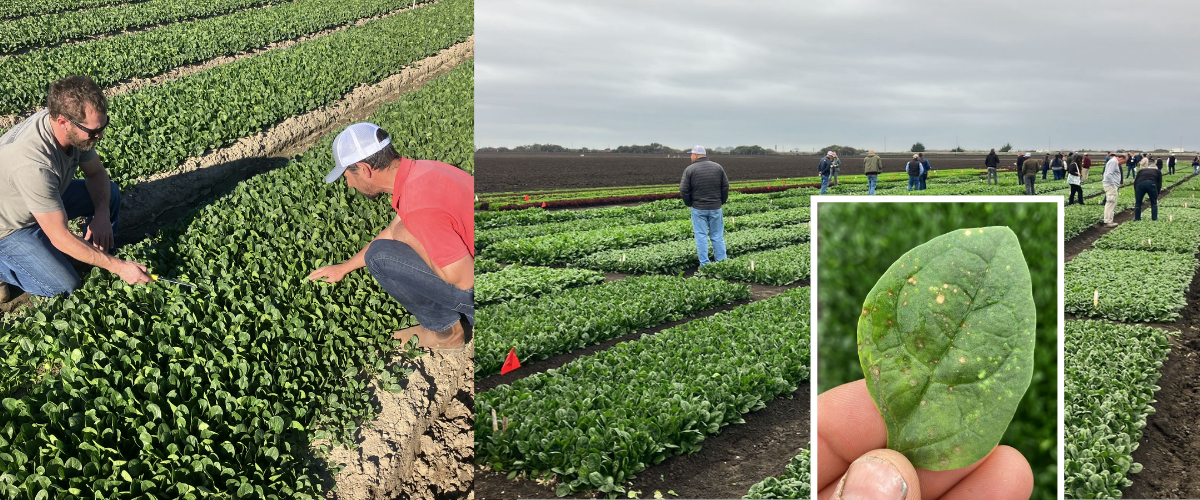
Stuart Grigg part of the Applied Horticultural Research’s (AHR) team in the field. Figure 5. A major field day was held as part of the conference, showcasing a huge range of different spinach varieties.
Figure 6. Even the immaculately cultivated and groomed field day crops were developing a few leaf spots (cause possibly Stemphylium or a Pseudomonas bacteria).
Disease management
In the past, downy mildew was absolutely front of mind when it came to disease of baby spinach. However, a number of presenters described how downy mildew pressure has eased in recent years thanks to resistant varieties
According to Diedrick Smilde (from the International Working Group for Peronospora effusa), spinach varieties typically have commercial lifespans of eight–16 years. However, they may be replaced sooner if new races of downy mildew emerge or industry and consumer preferences shift.
While the resistance packages are currently holding up, Professor Jim Correll (University of Arkansas) described how he uses ‘sentinel’ spinach crops in key growing areas as bait for any new and emerging pathotypes. This proactive approach offers early warning and can inform management decisions.
Official recognition of new downy mildew races is a meticulous process, requiring validated virulence patterns and submission of type isolates to the International Working Group for Peronospora (IWGP).
Beyond downy mildew, other emerging risks were discussed. White rust (white blister) has become a growing biosecurity concern.
Stemphylium leaf spot varies between regions in terms of species’ dominance. There are also marked differences in sensitivity between cultivars. In the USA, Stemphylium is most likely during warmer seasons, with symptoms initially visible on the cotyledons.
According to Dr Lindsey DuToit, resistance to Group 11 (strobilurin) fungicides has emerged in some Stemphylium isolates. These were highly effective when initially tested in the early 2000s and while some studies indicate that pyraclostrobin is more effective than azoxystrobin, effectiveness is declining. The work therefore highlights the need for continual monitoring, rotation of key fungicides and adaptive disease management strategies.
However, the major pathology issue now facing growers is damping off, largely due to Pythium uncinulatum. A recent review estimated that losses from this disease are between USD $47–$77 million in the Salinas Valley alone.
JP Dundoer-Arias from California State University has been studying the interaction between pythium root rot in lettuce and the tospoviruses Impatiens necrotic spot virus (INSV) and Tomato spotted wilt virus (TSWV). He has found that INSV infection (due to thrips infestation) greatly increases the severity of root rots.
Dr Len Tesoriero has observed the same interaction between TSWV and root rot in hydroponic lettuce growing in the Sydney Basin. While the culprit here was P. dissotochum, P. uncinulatum is associated with root rot and wilt of lettuce in Victoria. It seems likely that plants are already weakened by Pythium infection before the virus arrives. As the virus reduces root development, the plant collapses and dies.
Food safety
Food safety was a central theme throughout the conference. Ramy Colfer from True Organic Products noted that spinach recently topped the infamous ‘Dirty Dozen’ list, a result of violations in legal pesticide residue limits and food safety microbial contamination. Felice Arboisiere, Director of Food Safety and Quality Assurance at Dole, Monterey also emphasised how the legacy of the 2006 E. coli outbreak still shapes industry practices today.
Growers have implemented rigorous measures to safeguard leafy greens, including agricultural water assessments, proactive wildlife and livestock risk mitigation, and field-by-field microbial sampling before any harvest is approved.
Of particular concern is E. coli O122, which is emerging as an even bigger risk than E. coli O157.
Presentations also noted the importance of using clean water, both for irrigation and postharvest washing, avoiding contamination with soil amendments and considering the potential for cross contamination at harvest, during packing, and even in cold storage.
Soil and nutrient constraints
Soil and nutrient management also featured prominently, with Richard Smith (University of California) presenting insights on cadmium uptake in spinach. Spinach, it turns out, is particularly adept at absorbing cadmium (Cd), as roots mistake it for zinc. In areas affected by recent floods, sediments deposited on fields have increased soil Cd levels. As Cd is a heavy metal, this potentially creates a food safety issue.
However, there are a number of strategies growers can use to reduce risk:
- Amend soil with zinc (competes with Cd for uptake) (Figure 7)
- Lime soil to increase pH to >7.0, reducing Cd solubility
- Add compost to immobilise Cd
- Choose varieties with low Cd uptake
- Use irrigation water with low chloride levels
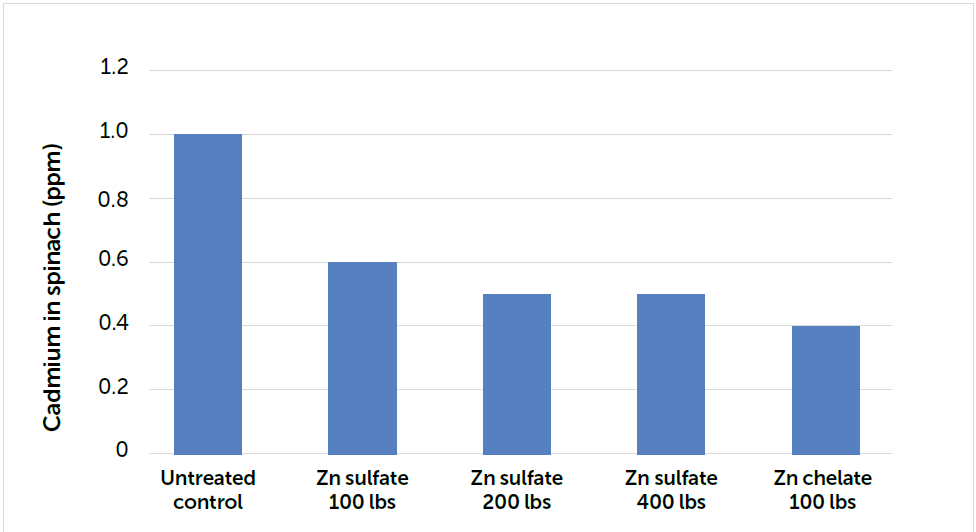
Figure 7. Effect of zinc fertilisation on cadmium uptake by spinach. Soil contained 2.4ppm cadmium. Data presented by Dr Richard Smith, University of California, Monterey
Nitrogen management was another key focus. Breeding efforts are increasingly aiming to improve nitrogen-use efficiency, supporting productive crops while reducing environmental losses.
Developing varieties suited to low-N systems is emerging as an important priority, linking genetics, soil science, and crop nutrition to the wider goal of sustainable baby leaf production.
Growing in the cold
Susan Scheufele from the University of Massachusetts Extension gave an intriguing glimpse into the niche spinach industry in New England, where spinach is grown in polyhouses.
This product is largely sold in local supermarkets and farmers markets, appealing to consumers willing to pay a premium for fresh greens when snow blankets the region.
Interestingly, spinach actually becomes sweeter when exposed to cold temperatures – a quirk that New England growers and consumers have embraced.
Summer cover crops are strategically planted to set up winter production, maximising yield per dollar in the off-season and ensuring a steady supply of high-quality spinach throughout the colder months.
Take-outs for the Australian industry
Spinach farms in the USA really are next level mind-blowing. The scale of operation, investment involved, and volumes processed are hard to get your head around. Despite this, farmers in the USA have more commonalities with Australia than differences.
Increased labour costs (especially in California) are boosting automation, with increasingly sophisticated management of everything from soil health to harvest method.
Disease management is also a major concern. While downy mildew can mostly be managed through variety resistance and the use of crop protectants – both in the USA and here in Australia – damping off pathogens have taken its’ place as the most challenging issue commercially. Emerging issues with white blister are also one for Australian growers to watch. Understanding how the USA industry manages this disease will prove vital if this potentially seed-borne pathogen arrives here.
The emphasis on food safety is also relevant here as there. With our own previous issues in this space, it is useful to see what strategies American growers use to further reduce risk of contamination within supply chains.
All in all, the conference was a useful and enlightening event, and one that that will definitely help guide activities within our project VG23014 Addressing key challenges in Australian baby leaf production.