



Demonstrating the future of weed management: OWL in action
18 May 2026Summary of Resources for Onions and other Alliums
23 June 2026
Reading Time: 3 minutes
BY DR HOANG NGUYEN AND DR ALI BAJWA
While some ‘weeds’ are perfectly edible, and even considered delicacies in different cuisines, others are decidedly undesirable. Either way, when a consumer buys a bag of spinach, that’s all they want to find inside.
However, achieving 100 percent elimination of weeds from baby leaf crops is extremely challenging. Fertile soils, shallow root systems and rapid production turnover make it easy for interlopers to germinate and spread. Even small numbers of weeds can unacceptably contaminate harvested product, disrupt processing and potentially lead to consignment rejection. This is certainly the case if toxic weed species are found, as these can have severe health consequences for consumers.
Hort Innovation has funded a national project Addressing key challenges in Australian baby leaf production (VG23014). Improved weed control, along with disease management and improved shelf life, are key research areas for the project. A team of researchers from La Trobe University, led by Dr Ali Bajwa, in partnership with Tripod Farmers, is currently evaluating laser weeding, alongside other weed management strategies, for baby leaf production.
Precision weed control in high-value crops
Laser weeding is emerging as a potential game changer for high-value baby leaf production systems. With limited herbicide registrations, tightening chemical regulations, and rising labour costs, alternative weed control solutions are urgently needed.
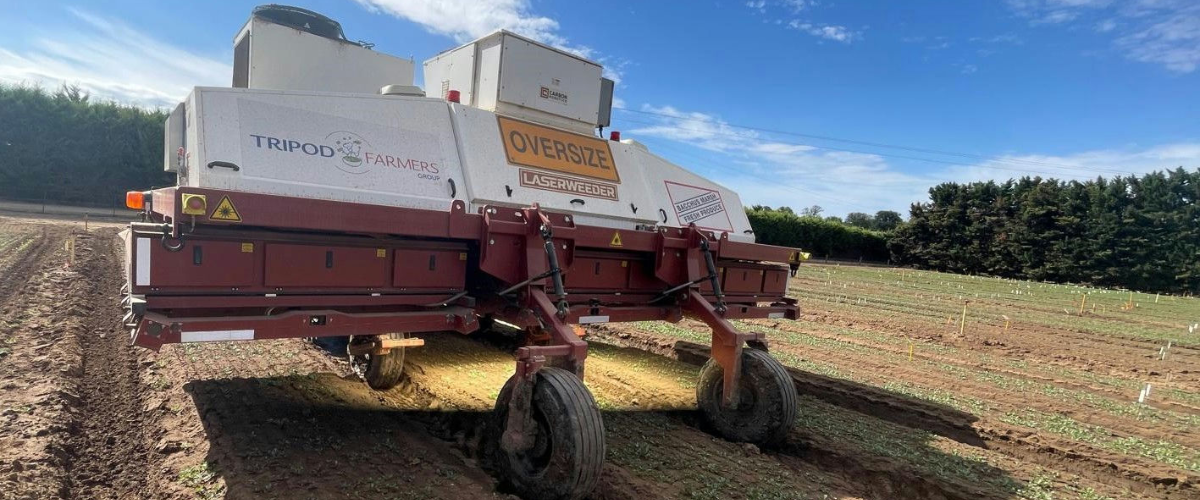
Laser weeding systems integrate artificial intelligence (AI), high-resolution imaging and laser technology to detect and eliminate weeds at early seedling stage (Figure 1). Once identified with high resolution cameras, which analyse plant features such as leaf shape, size, colour, and position relative to the crop, a targeted laser pulse destroys the weed’s growing point without disturbing surrounding soil or crop.
Unlike mechanical cultivation, laser technology operates without soil disturbance, making it particularly well suited to dense plantings of baby leaf crops. While the technology has shown promising results overseas and is gaining popularity in Australia, independent data on its weed control efficacy, potential crop damage, and economics in Australian conditions is lacking.
Research and field evaluation
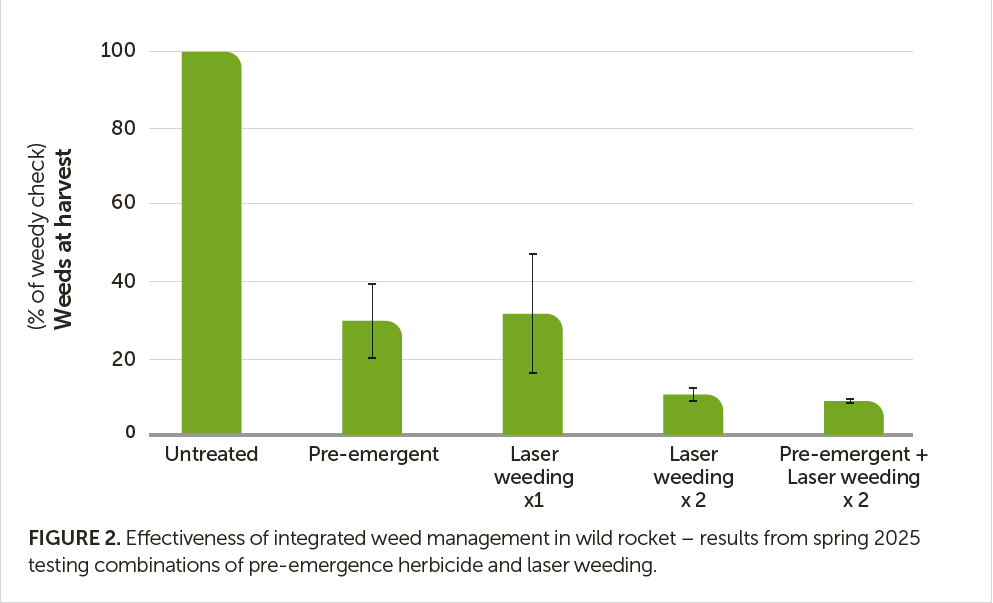
Field trials conducted at the Tripod Farmers site in Bacchus Marsh, VIC, during spring 2025 and summer 2026 have delivered promising results. Early findings from the spring trial suggest that integrating a pre-emergence herbicide program followed by a double pass of laser weeding can significantly reduce weed density, improve weed control (Figure 2), and minimise weed contamination at harvest in wild rocket, compared to applying a pre-emergence herbicide alone. Figure 3 shows a clear comparison between an integrated pre-emergence herbicide program followed by a double pass of laser weeding and an untreated control (weedy check) in wild rocket.
However, it should be noted that laser weeder performance is influenced by factors such as:
- Application timing
- Weed growth stage and structure
- Weed species present
- Weed density at the time of application
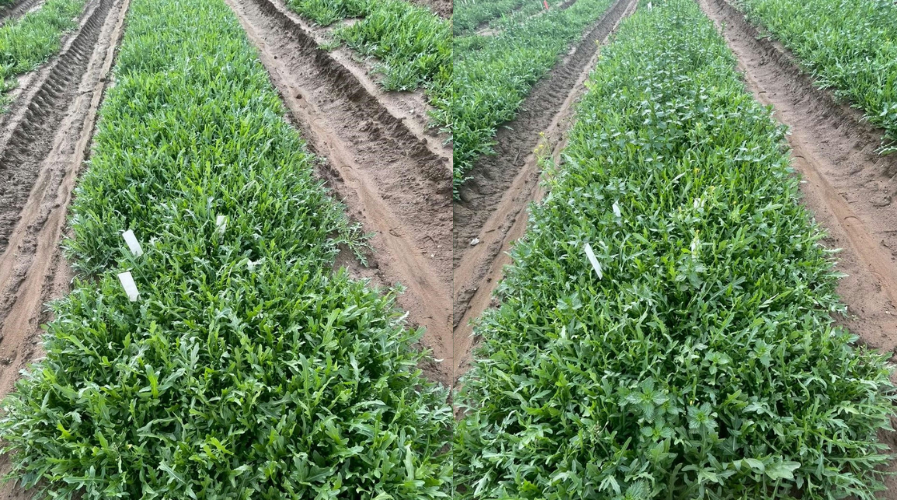
FIGURE 3. Pre-emergence herbicide program followed
by a double pass of laser weeding (A) versus untreated (B), showing significantly reduced weed density in the treated wild rocket plot at harvest.
Only young weeds are killed by the laser; larger plants may be damaged but survive. Moreover, some weeds are easier to differentiate than others at the cotyledon stage. For example, nettles have oval cotyledons difficult to distinguish from germinating wild rocket.
Looking Ahead
As AI-based recognition improves and operational speed increases, laser weeding systems may become more efficient and commercially accessible. However, their role in Australian baby leaf production will depend on further evaluation under commercial-scale conditions. For growers facing regulatory pressure, limited herbicide options and labour constraints, laser technology could form part of an integrated weed management approach. However, it’s performance, cost-effectiveness, and practicality need to be assessed across a wider range of environments and production systems.
Other aspect of ‘Weeds Pillar’ of the project
The ‘Weeds Pillar’ of the project also includes identification and investigations into the germination ecology of problematic weeds. Understanding the environmental drivers of germination for key weed species, particularly toxic weeds such as thornapple, is essential for optimising weed control timing and maximising efficacy. Another key output will be a guide to weed identification in baby leaf crops, which will include information on potential toxicity.
Stay tuned for more information in coming months.