


VegNET NT: From grower to RDO Seeing the industry through a different lens
31 August 2026
VegNET VIC: VegNET working with climate-conscious farmers
31 August 2026
Reading Time: 4 minutes
The Fall Armyworm National Surveillance (FAWNS) project drew to a close in June this year, marking the end of one of Australia’s largest collaborative pest surveillance initiatives for horticulture.
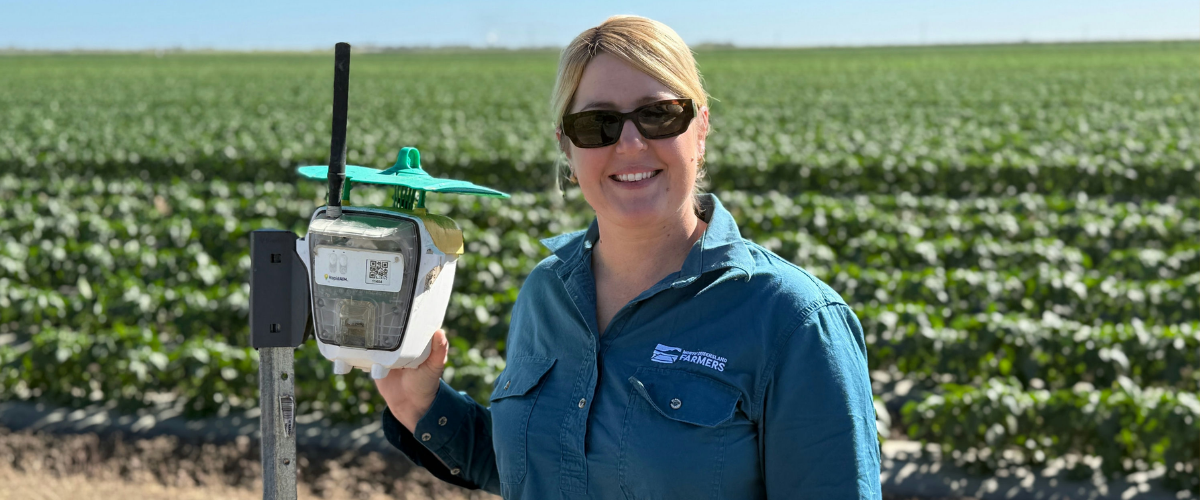
Bowen Gumlu Growers Association (BGGA), now named North Queensland Farmers, began the project in July 2024. By early 2025, RapidAIM Mega sensors had been deployed across most of Australia’s major horticultural regions, monitoring fall armyworm (FAW) activity in capsicum and sweetcorn production systems.
What quickly became clear was that this project was far more than a technology trial. It was a genuine national collaboration with one common goal – to better understand and manage one of horticulture’s most significant invasive pests.
The success of the project relied on many hands. Growers and agronomists hosted and maintained sensors on their farms, entomologists from the Department of Primary Industries (DPI) provided technical expertise, and RapidAIM worked closely with the project team to establish and support the national sensor network. A significant contribution came from the RDOs and RSOs who managed sensors within their regions. Their commitment to maintaining equipment, changing lures, troubleshooting issues and ensuring data quality was fundamental to the project’s success.
Collectively, the project achieved some remarkable milestones:
- 300 RapidAIM sensors deployed across 40 farms in six states and territories.
- More than 7,000 acres of horticultural production monitored.
- Approximately 4,000 pheromone lures used, averaging 14 lure changes per sensor.
- More than 293,000 fall armyworm detections recorded over almost two years.
The data comprises one of the most comprehensive datasets on fall armyworm activity ever collected within Australian horticulture.
The project’s primary objective was to build a national picture of fall armyworm movement across different production regions, but it also demonstrated the practical value of automated surveillance technology. Rather than relying solely on manual trap inspections, growers could access sensor information through an easy-to-use mobile platform, providing timely insights that supported monitoring and management decisions on-farm, while contributing valuable data for ongoing research.
“As an industry we are still trying to understand population dynamics and drivers; consequently, our management decisions continue to evolve. This surveillance project has provided insight on a far greater scale than we could achieve on an individual grower or farm basis. This has been crucial as we try to understand and better manage FAW in our cropping systems,” said Courtney Richards, agronomist in the Burdekin and Gumlu regions who worked closely with NQ Farmers during the project.
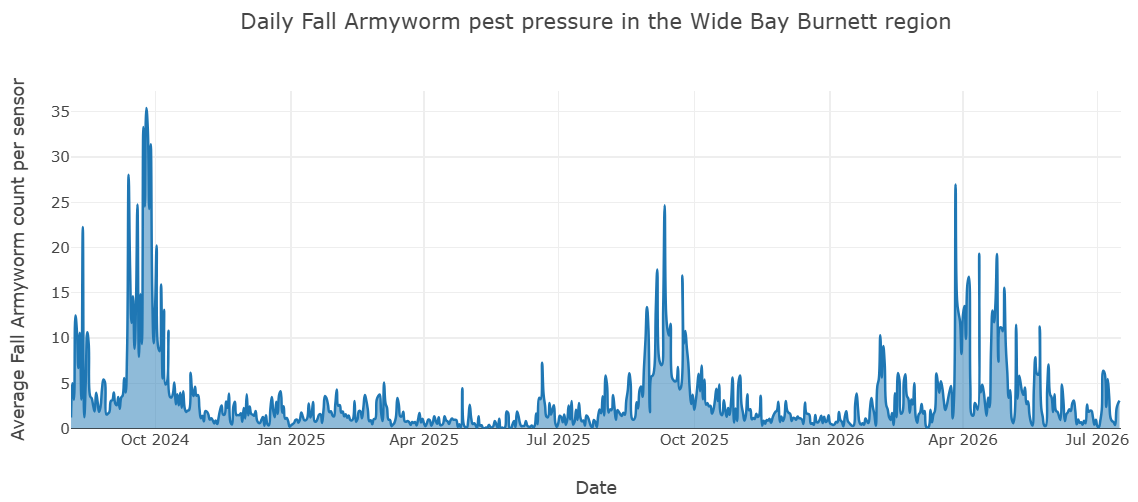
All data collected through the network was de-identified and aggregated, enabling regional trends to be analysed while protecting individual farm privacy. The graphs generated from this data highlighted clear differences in pest behaviour across Australia’s growing regions and are available to the public online.
In the Bowen region, fall armyworm populations consistently increased during the main growing season between May and November before declining during the wet season. The exceptionally wet 2024–25 season resulted in a significant reduction in detections, while the following regular wet season allowed populations to remain comparatively higher.
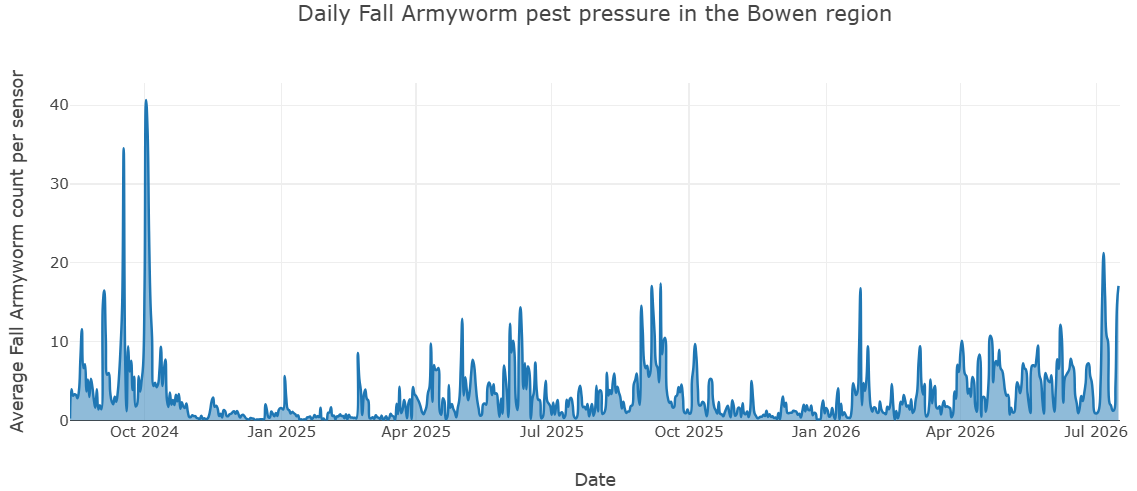 Further south, regions such as the Lockyer Valley and New South Wales experienced much greater seasonal declines due to colder winter temperatures. In contrast, North Queensland’s mild winters allow fall armyworm populations to persist throughout the year, reinforcing the need for regionally tailored management strategies.
One particularly encouraging observation has been the reduction in peak detections compared with those recorded during the early stages of the project. While many factors influence pest populations, the trend suggests that improved management practices – including more targeted spray programs and increased grower awareness – are helping to reduce sharp spikes in fall armyworm pressure.
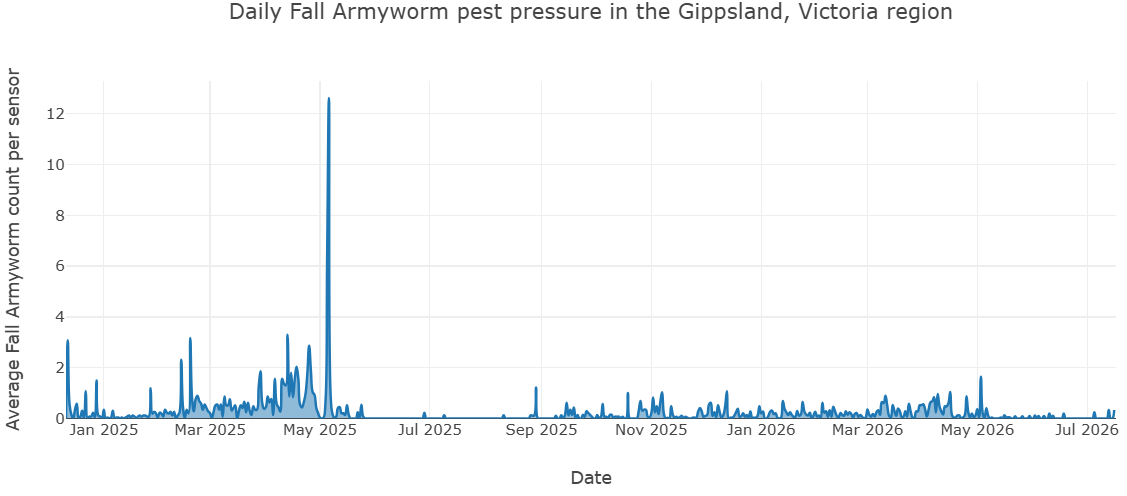
Tasmania remained Australia’s only state free of fall armyworm throughout the project. Sensors installed there served as an early warning system, demonstrating how surveillance technology can also support biosecurity preparedness in regions where the pest has not yet established.
Importantly, the two-year project has created a substantial national dataset that will continue to support researchers investigating fall armyworm ecology, seasonal movement and integrated pest management (IPM) strategies. The knowledge generated will help guide future research and improve decision-making for growers well beyond the life of the project.
This project has shown what can be achieved when industry, researchers and growers work together towards a common goal. While fall armyworm remains a challenging pest, Australian horticulture is now better equipped with stronger surveillance systems, better data and greater understanding than ever before.
That is a legacy that will continue to provide cross-sector benefits in horticulture for years to come.