


VegNET Far North Queensland: National fall armyworm surveillance project leaves a lasting legacy for Australian horticulture
31 August 2026
VegNET NSW: Grower Sam Micallef in focus A harvest of achievement for Alandale Produce
31 August 2026
Reading Time: 4 minutes
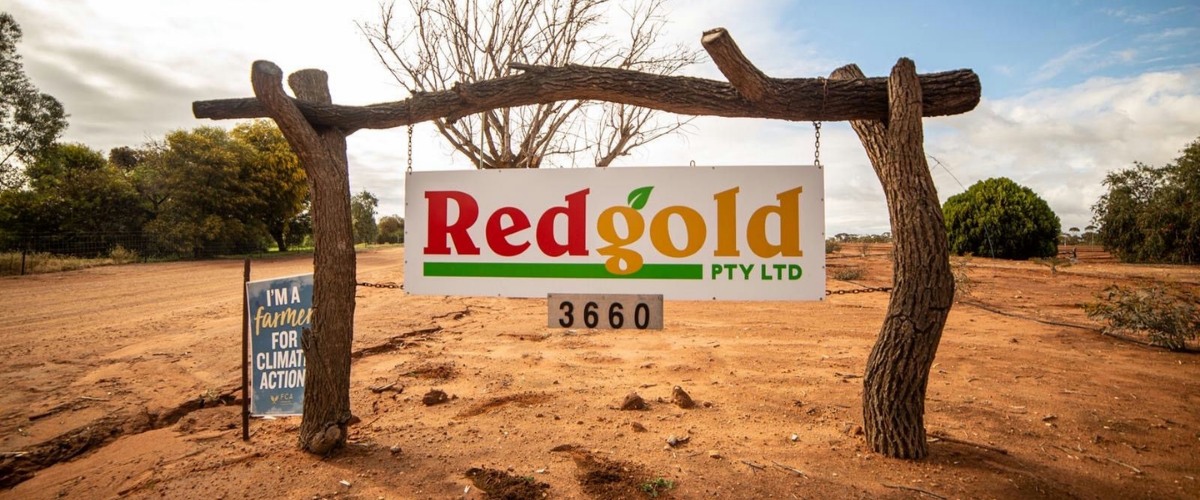
VegNET recently caught up with Andrew Young from RedGold Farm to hear about his unique approach to vegetable production. Andrew offers a thoughtful perspective, recognising that conventional farming practices are sometimes essential for maintaining profitability, while also striving to make environmentally conscious decisions wherever possible.
The vegetable industry is made up of growers with diverse priorities and opinions. VegNET’s role is to support growers by listening to a wide range of perspectives, providing relevant information where we can, and helping connect growers with the right resources. By showcasing different approaches from across the industry, we hope to encourage other growers to join the conversation and share their own experiences and insights.
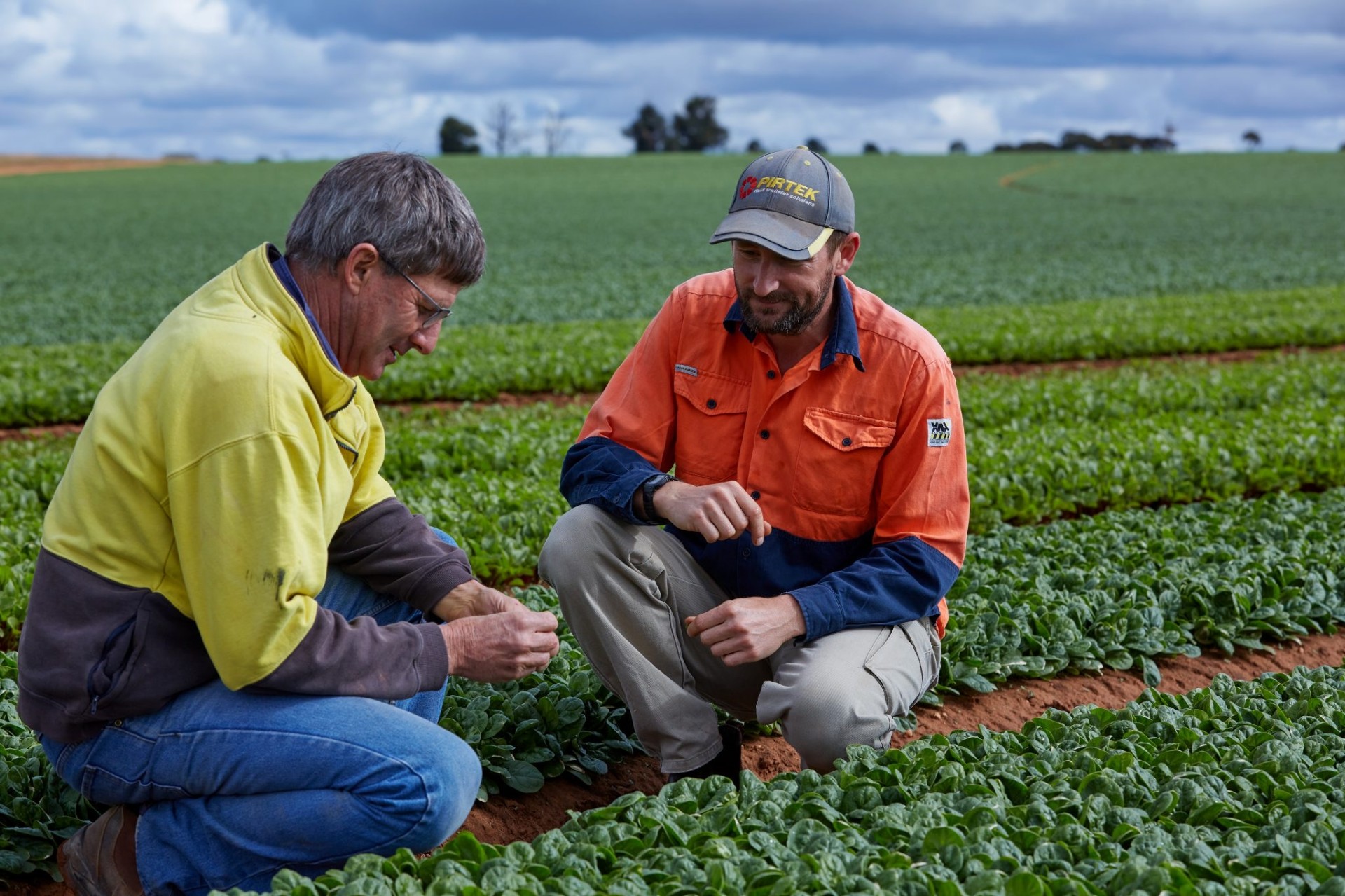
Andrew in the crop.
Background and perspective
RedGold Farm is owned and operated by Andrew Young, his wife Eleanor, and their two sons, Carl and Tim. The 300-hectare farm in Wemen, Victoria grows iceberg lettuce, cos lettuce, baby leaf and chard. Like many Australian family farms, RedGold Farm boasts a proud history of producing vegetables for the Australian market. The Youngs also have a strong commitment to environmental sustainability. The Young family are members of Farmers for Climate Action, advocating for practical solutions to address climate change while supporting Australian horticulture.
Andrew’s passion for the environment is obvious in conversations with him. While reducing carbon emissions is a clear priority, strengthening farmers’ ‘social licence’ is what motivates him. He believes that vegetable growers have the opportunity to do good for the environment while earning public trust by demonstrating a climate-friendly approach to agriculture.
Consumers who prefer locally produced food with low food miles should naturally be drawn to vegetables, as 98 percent of Australia’s vegetable production is sold and consumed domestically. Vegetables are largely made up of water, making them expensive to transport and difficult to import because of strict biosecurity requirements. As a result, Australian vegetable growers benefit from a reasonably secure domestic market. However, growers also depend heavily on local consumer sentiment. Fostering goodwill and trust with consumers will be increasingly important as growers navigate the rising cost of living and changing government regulation.
“Farmers are a voting minority, and we want voters in cities to be supportive of issues affecting farms,” Andrew said.
In Europe, farms are already required to report their emissions. In Australia, firms with more than $200 million in consolidated revenue are now required to report Scope 1 (on-farm), Scope 2 (off-farm) and Scope 3 (pre-farm) emissions.
Many growers supply these major retailers, meaning emissions generated on farms will increasingly form part of their customers’ reporting obligations. As a result, retailers are likely to come under growing pressure to reduce emissions across supply chains, creating another layer of compliance for growers. Andrew wants Australian growers to be proactive in preparing for this shift.
“RedGold is a commercial farm and must make a profit like everybody else,” Andrew said. Adopting low-carbon practices on farm can require significant investment, and RedGold cannot afford to lose market share by producing a more expensive crop. “Government regulation that incentivises everyone to work to the same standard would be required for widespread adoption,” he said.
Farmers are a voting minority, and we want voters in cities to be supportive of issues affecting farms.
VegNET involvement
In his pursuit to operate a more carbon-neutral farm, Andrew asked VegNET RDO Daniel to do some research into what carbon accounting tools are available for vegetable growers. The tools currently available are useful for developing a baseline estimate of farm emissions and carbon sequestrations, but they remain, at best, an educated guess. Daniel’s research found that the current Australian tools are very limited, and previously developed industry tools have not been maintained and are no longer available.
The University of Melbourne hosts and maintains the Greenhouse Accounting Frameworks (GAF), a suite of spreadsheets that can approximate carbon emissions across different agricultural production systems. While these frameworks provide crop-specific estimates for some commodities, most vegetable crops are grouped into a generic “pulses” category, limiting their usefulness.
Another emerging tool is the Agricultural Innovation Australia Environmental Accounting Platform, which is currently under development. It has the potential to provide more comprehensive and accurate environmental accounting for agriculture. However, horticulture has traditionally been a lower priority for carbon accounting software because its emissions are relatively small compared with broadacre cropping and livestock industries, despite being more vulnerable to the impacts of volatile weather and market changes.
Next steps for the industry
Net carbon capture or carbon credits can be a better measure of climate impact than emissions alone. Vegetable farms have a high turnover rate of carbon, with crops and compost driving carbon turnover in the soil. While diesel and fertiliser often attract more attention for their emissions, crops capture carbon from the atmosphere before being harvested, consumed and returned to the carbon cycle.
In Australia, the Australian Carbon Credit Unit (ACCU) Scheme, administered by the Clean Energy Regulator, allows landholders and individuals to earn government-backed carbon credits. These credits could represent carbon sequestration through tree growth or reducing emissions through changes in management practice.
Overseas, new tools have been developed that are providing useful models. In the United Kingdom, the Farm Carbon Toolkit offers an online kit of farm sustainability resources, including a free carbon footprint calculator. Although it is modelled on British climates and soils, it demonstrates an approach that could be adapted for Australia.
RedGold is not alone in pursuing lower-carbon production. Most vegetable growers are committed to leaving their farm in good shape, both profitably and environmentally, for future generations. Rising input costs have already encouraged more efficient use of fuel and nitrogen, reducing emissions per unit of production, and the topic remains an area of significant focus in the industry.