


Safeguarding crop protection: A National Agrichemical Program Gets Underway
2 September 2025Pupae busting for fall armyworm: a participatory action approach to area-wide management in sweet corn
3 September 2025
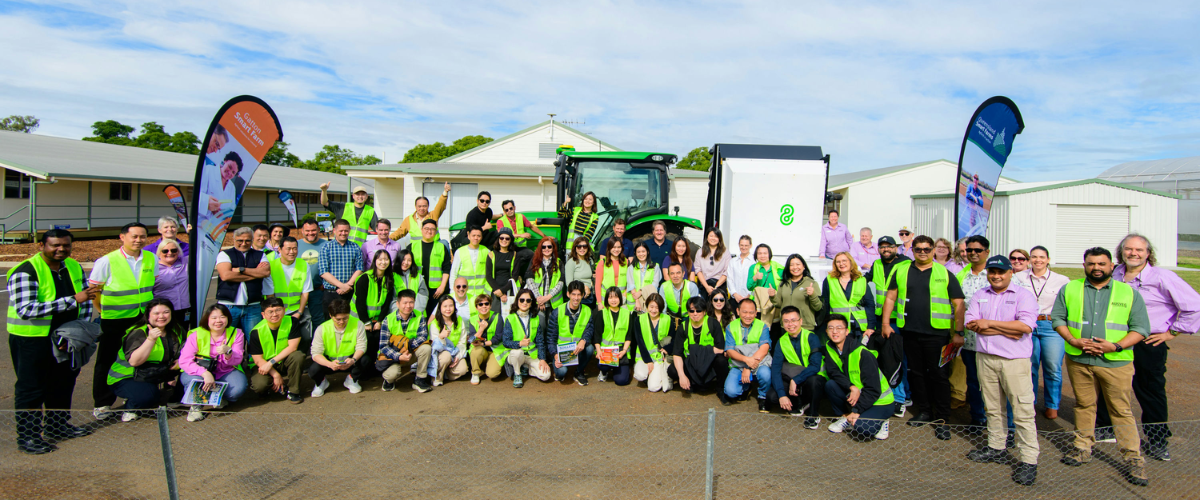
Australia is internationally renowned for high quality, clean and delicious fresh produce supported by a range of stringent quality assurance programs and a first-rate food safety system.
Since 2013, the AUSVEG Reverse Trade Mission has served as a critical platform to showcase this produce to international businesses from key export markets. It also offers Australian vegetable growers, whether they are new to exporting or already engaged in exporting fresh vegetables, a valuable opportunity to connect directly with potential and existing international partners.
The Reverse Trade Mission program typically includes visits to vegetable-growing businesses, irradiation facilities, and research and development centres, showcasing Australia’s horticultural production capabilities and R&D innovations that underpin its ability to deliver some of the freshest, highest-quality vegetables to international buyers from key export markets.
Over the past decade, the Reverse Trade Mission has cultivated a vast network of alumni and grower-exporters who regularly exchange ideas, insights, and expertise in trade and innovation. This ongoing exchange has fostered long-lasting business relationships, delivering significant benefits to all participants. To date, the program has hosted more than 450 international businesses, covering more than 15 markets and has visited major vegetable production regions across Australia, including Western Australia, South Australia, Tasmania, Queensland, and Victoria.
 2025 program overview
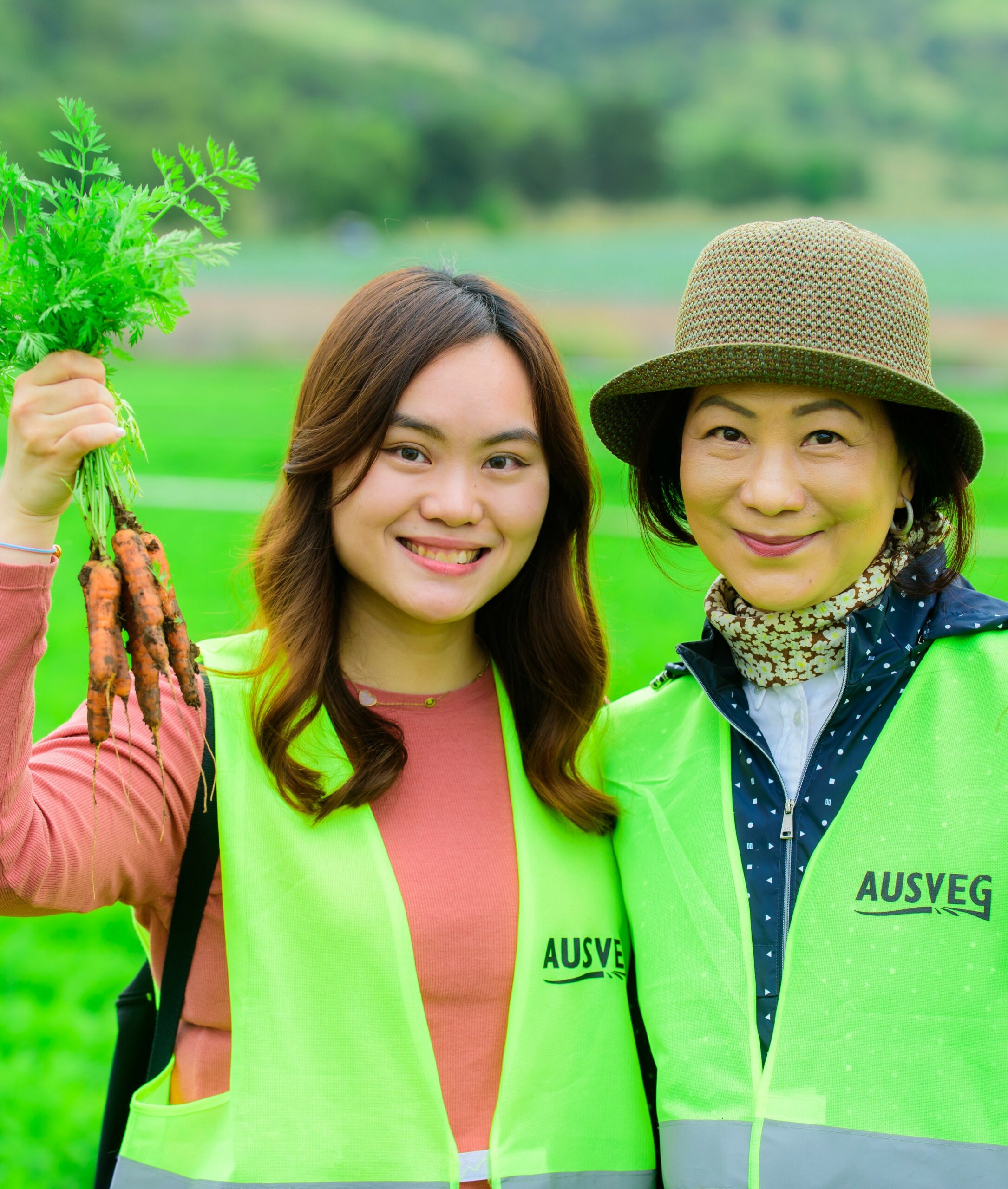
The 2025 Reverse Trade Mission was scheduled for 29 May to 4 June, aiming to amplify the presence and global footprint of Australia’s vegetable, onion, and melon industries by showcasing the country’s production capacities and capabilities to international businesses from key trading markets.
Each year, AUSVEG collaborates closely with Austrade to bring vegetable buyers to Australia, with participating markets aligned to AUSVEG’s export market prioritisation strategy. In 2025, the program welcomed up to 40 international delegates from key export markets across the Middle East and Asia-Pacific region, including Singapore, the United Arab Emirates, Saudi Arabia, Malaysia, Indonesia, Thailand, the Philippines, Hong Kong, Taiwan, Japan, South Korea, and the Pacific Islands.
The 2025 Reverse Trade Mission is funded through the Hort Innovation vegetable, onion and melon funds, and partially supported by the Australia-Japan Showcase Program, which is funded by the Department of Agriculture, Forestry and Fisheries.
Welcome Reception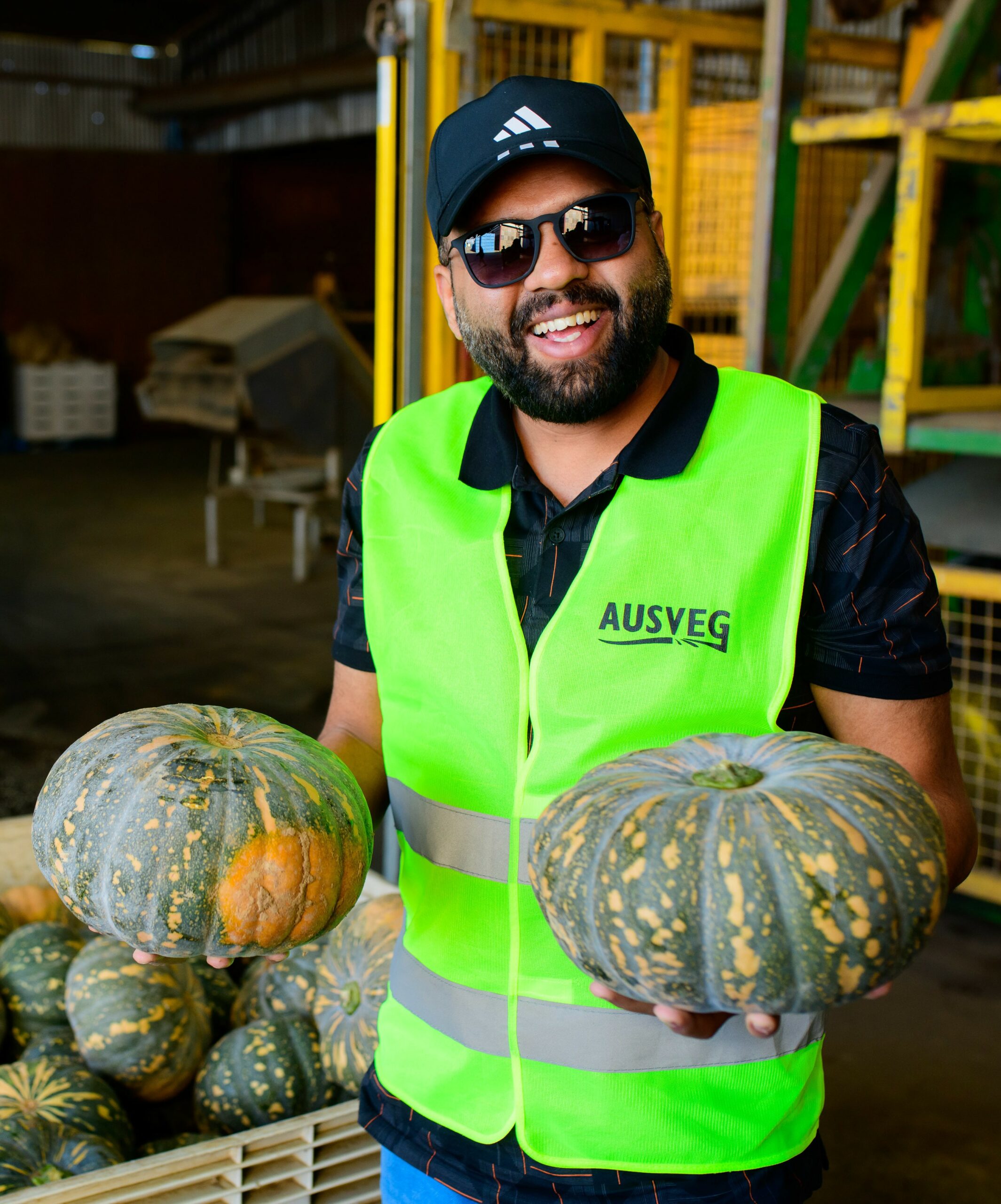
The week-long program officially commenced with a Welcome Reception at W Brisbane, where international delegates were greeted in a relaxed setting ahead of a busy week of farm visits, business connections and export discussions.
AUSVEG CEO Michael Coote and Hort Innovation Head of Trade Mimi Doan extended a warm welcome to the visiting delegates and thanked them for taking the time to visit Australia. They underscored the value of strong and long-standing collaboration between industry bodies, government agencies like Austrade, state governments and Research and Development Corporations (RDCs) in driving the future of Australian horticulture.
They reinforced the importance of working together to drive international demand, develop new markets through a coordinated and united approach, delivering in turn mutual benefits for growers and international buyers.
 Tarome and Kalbar
On Friday 30 May, the Reverse Trade Mission kicked off with site visits to Moffatt Fresh Produce in Tarome and Kalfresh in Kalbar. They are the two leading vegetable growing operations in Queensland’s Scenic Rim.
Tarome benefits from rich volcanic soils and a favourable subtropical climate, making it ideal for year-around growing. Kalbar, known for its strong agricultural heritage, has evolved into a dynamic growing region that supports both conventional and innovative farming operations.
The delegates toured the packing, processing, and cold chain facilities at both farms. Many were impressed by the size and scale of the operations, particularly those who had previously traded with the farms but had never had the opportunity to visit in person.
St George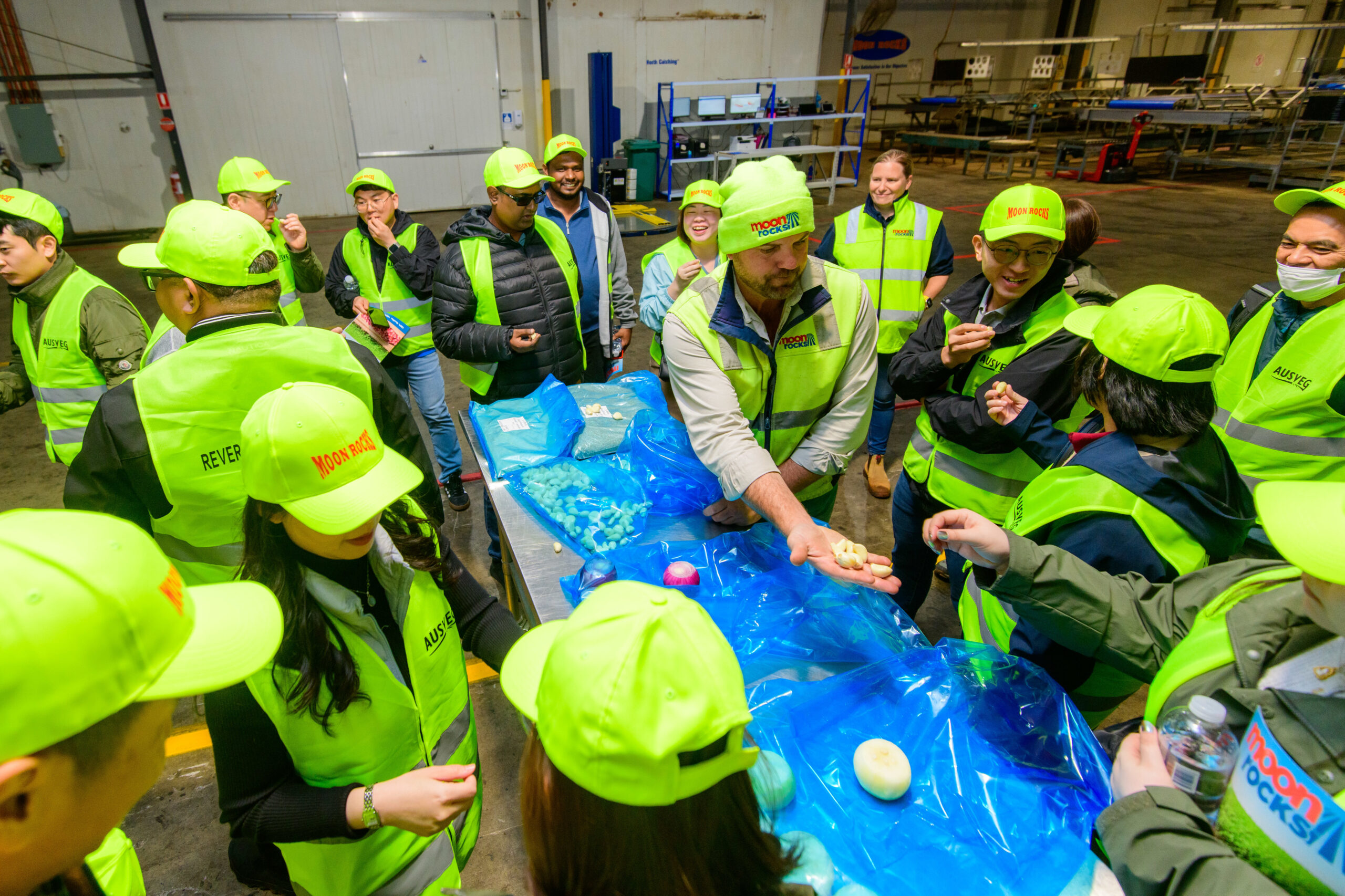
Located in Queensland’s Balonne Shire, St George is a powerhouse of inland horticulture, known for its expansive landscapes, water supply from the Balonne River and innovative farming practices.
The tour group flew out early on Saturday 31 May to St George. A highlight of the visit was an exclusive tour of Moonrocks, one of two large-scale vegetable growing business in the region, renowned for its onions, garlic, pumpkins, and cotton.
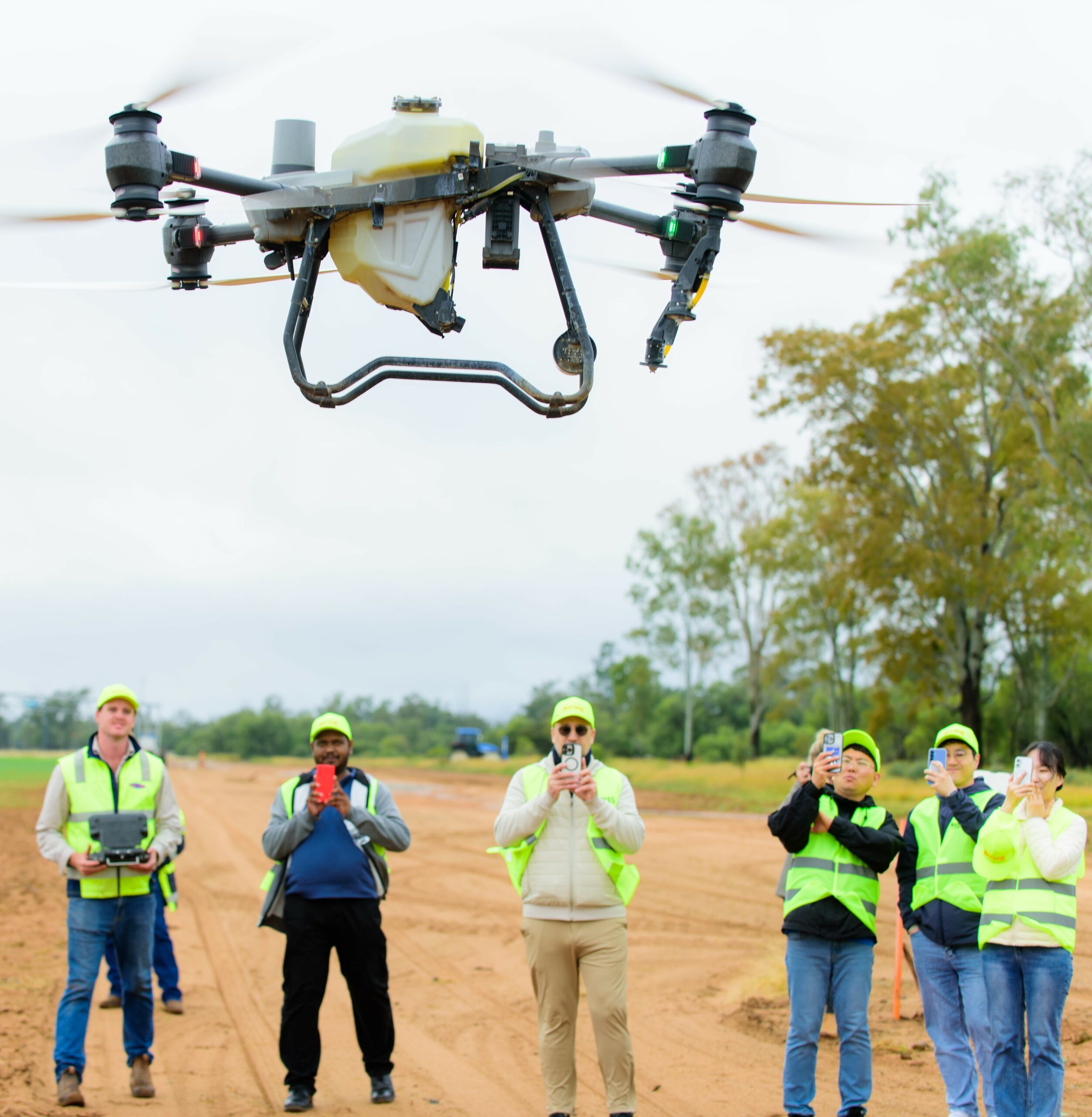
Delegates toured the on-site processing facility where garlic is prepared for market, visited onion fields, and viewed specialised harvesting machinery. The visit also featured a drone spraying demonstration, offering international buyers a firsthand look at the innovative technology being adopted by Australian growers.
This was followed by lunch at Riversands Winery. At the winery, the group was officially welcomed by the Deputy Mayor of the Balonne Shire, along with local councillors and the Council’s Economic Development Officer. In their remarks, they emphasised the significance of regional agribusinesses like Moonrocks and their growing role in showcasing the region’s capability to export premium Australian produce to the world.
 Retail insights – understanding consumer access
On Sunday 1 June, the focus shifted to the consumer end of the supply chain. Delegates visited Coles, Aldi, and Woolworths in Indooroopilly, followed by a tour of Harris Farm Markets in West End. This provided buyers valuable insights into Australian retail standards, product presentation, and pricing structures.
Research and innovation in the Lockyer Valley
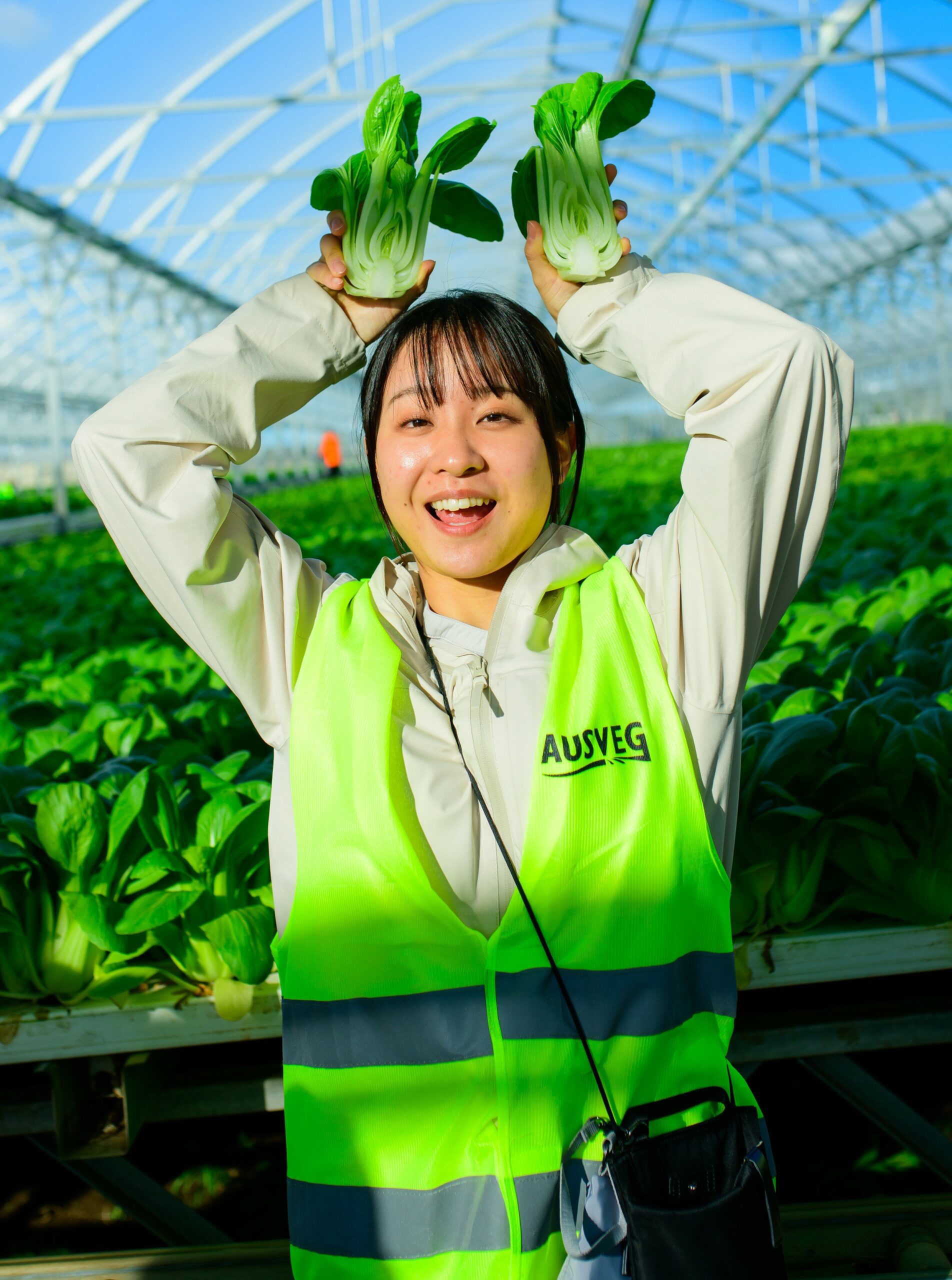
Monday 2 June featured a deep dive into horticultural R&D and agri-technology. The day began with a visit to the Gatton Smart Farm, part of the Queensland Department of Primary Industries’ (QDPI) Gatton Research Station, showcasing Australia’s innovation in crop production and technology.
The delegates received comprehensive presentations on various research carried out by QDPI, including trials in glasshouses focused on fruit fly management. The visit also featured demonstrations of advanced machinery designed to support more efficient harvesting and on-farm operations. After that, delegates toured Windolf Farms, a key grower in the Lockyer Valley, known for leafy greens and root vegetables.
Processing and export readiness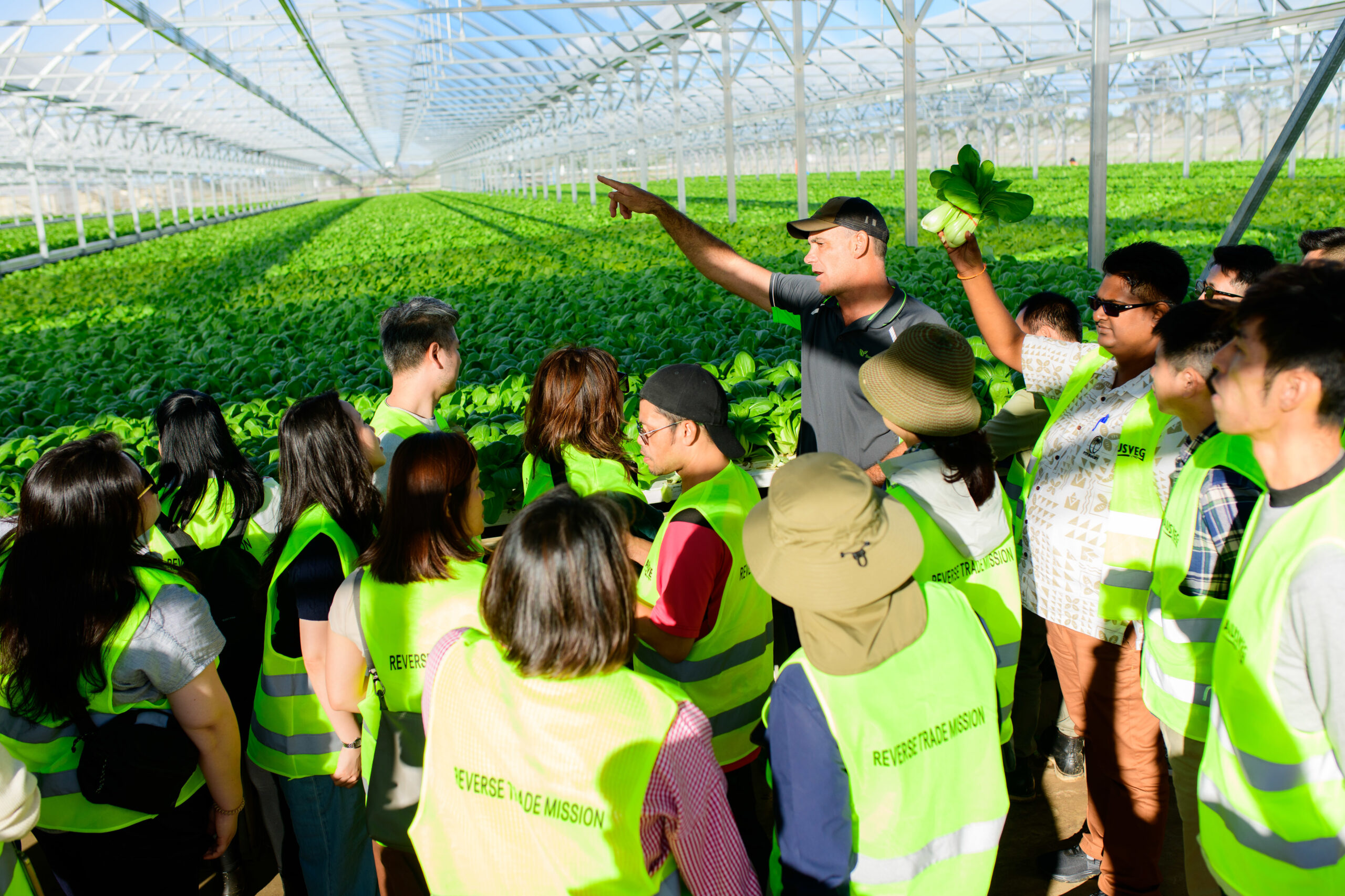
On Tuesday 3 June, the group travelled to Steritech in Narangba to learn about irradiation technology, a vital component of Australia’s export protocols. Delegates were guided through the full process of how fresh produce pallets are treated using irradiation, further underscoring Australia’s commitment to exporting fresh, safe, and high-quality products.
The itinerary continued with grower visits to Qualipac Produce and Barden Produce, both of which are actively engaged in export. Each farm has also invested in advanced machinery to efficiently pack produce for international markets.
 Industry connection & AUSVEG Fresh Produce Showcase
On Wednesday 4 June, the program wrapped up with a Knowledge Exchange Breakfast Forum and the AUSVEG Fresh Produce Showcase, where delegates met with growers from across the country in a dedicated B2B setting.
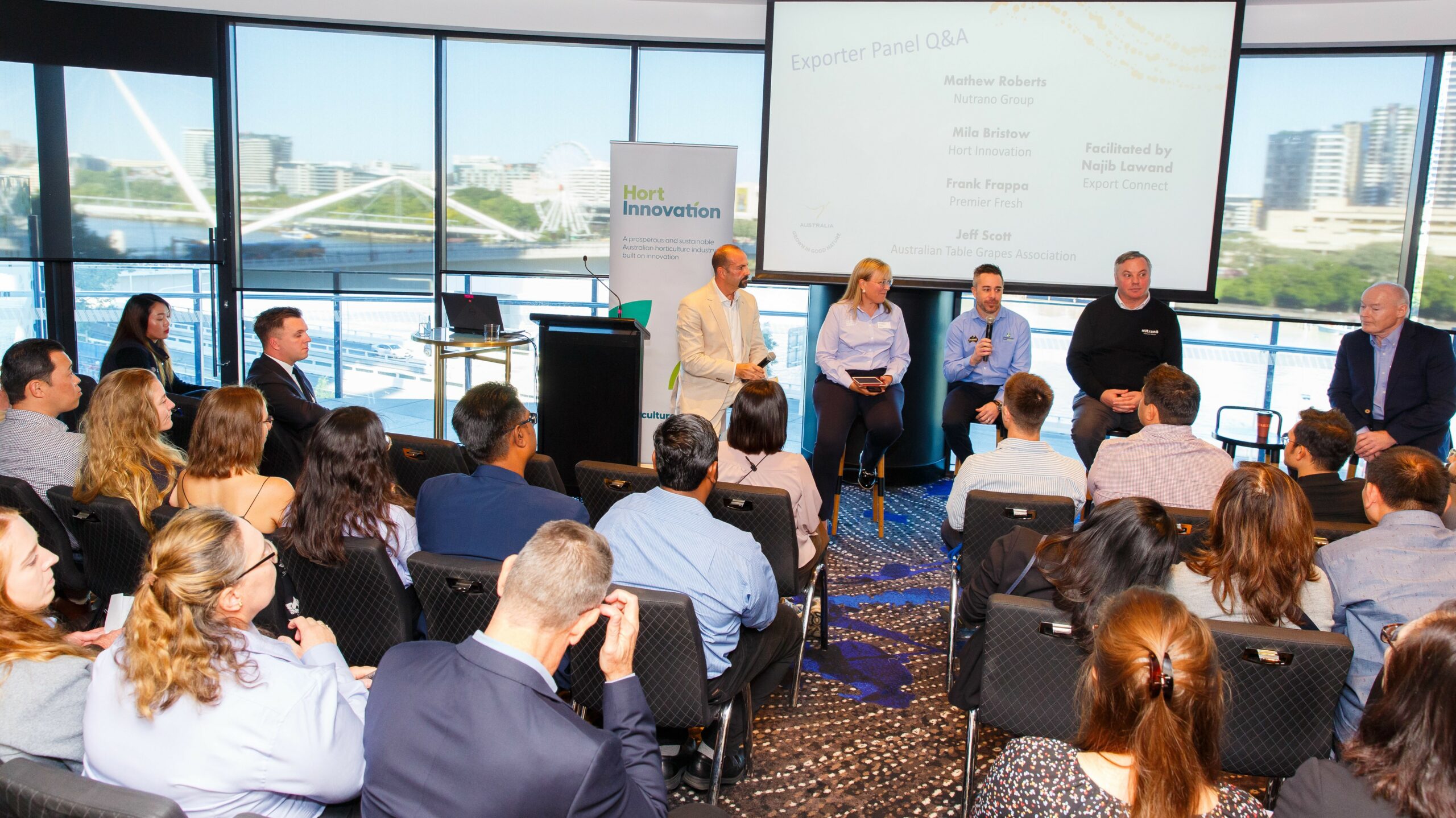
The Knowledge Exchange Breakfast Forum included three presentations, including ‘How Australian fresh produce/ horticulture sector connect with shoppers and activate our commodities in the Australian marketplace’, presented by Ben Leigh, D2C; ‘Australian table grapes: reaching new markets’, presented by Jesse White, Australian Table Grape Association; and ‘Australia’s fresh credentials/unique selling proposition for Australian fresh produce’, presented by Najib Lawand, Export Connect. The forum also concluded with an exporter Q&A panel, where three critical topics for fresh produce was discussed – product, supply chain and promotions.
AUSVEG Fresh Produce Showcase
The final component of the 2025 Reverse Trade Mission concluded with the AUSVEG Fresh Produce Showcase, a standout event for the international delegates who participated in the week-long program. Grower-exporters from across the Australian horticulture sector, including vegetables, onions, potatoes, melons, citrus, berries, stone fruit, apples, and bananas, showcased their premium produce to international buyers. The event generated strong business interest and connections, reinforcing the value of face-to-face engagement between growers and global markets.
The showcase brought together 30 Australian grower-exporters and buyers from 12 priority markets, providing a unique platform to facilitate trade discussions and build commercial relationships. The event was delivered by AUSVEG, with support from Hort Innovation, and the showcase continued to expand its footprint on previous years, including having a wider range of fruit growers on board and a broader representation of Australia’s key production regions. This signifies the importance of united approach within the Australian horticulture industry.
Importantly, the majority of international delegates rated the AUSVEG Fresh Produce Showcase as the most essential and impactful component of the Reverse Trade Mission, highlighting its effectiveness in connecting buyers with high-quality Australian produce and supporting long-term export growth.
Key takeaways and future prospects
The 2025 Reverse Trade Mission highlights Australia’s strong commitment to supporting grower-exporters through targeted research and development initiatives that enable export success. Fostering international relationships and showcasing the industry’s excellence are essential steps toward securing a sustainable future for Australian vegetable and horticulture growers.
Amid the evolving landscape of international trade and the increasing global emphasis on food security, it is important for both government and industry to intensify their efforts in ensuring Australia’s horticulture sector is well-positioned to meet growing demand and achieve its export goals.
The Reverse Trade Mission received positive feedback from delegates, who appreciated the opportunity to meet with growers and visit farms across key horticultural production regions. Many also valued the chance to tour the Steritech irradiation facility and the Gatton Smart Farm, gaining firsthand insight into Australia’s advanced export readiness and innovation in agri-technology.
A majority of delegates reported immediate trade outcomes as a direct result of the program, with several anticipating significant commercial activity to follow in the months ahead. Almost all participants expressed strong interest in attending similar trade development initiatives in the future and praised the support provided by Austrade and AUSVEG in ensuring a smooth and productive experience throughout the program.
FIND OUT MORE
Please contact Andrea Lin, International Trade Specialist, AUSVEG andrea.lin@ausveg.com.au or +61 3 9882 0277