


A national effort to grow vegetable demand and a healthier Australia
3 September 2025
Quick wins, long gains: how benchmarking can boost your business today
3 September 2025
BY WAYNE O’NEILL
QUEENSLAND DEPARTMENT OF PRIMARY INDUSTRIES
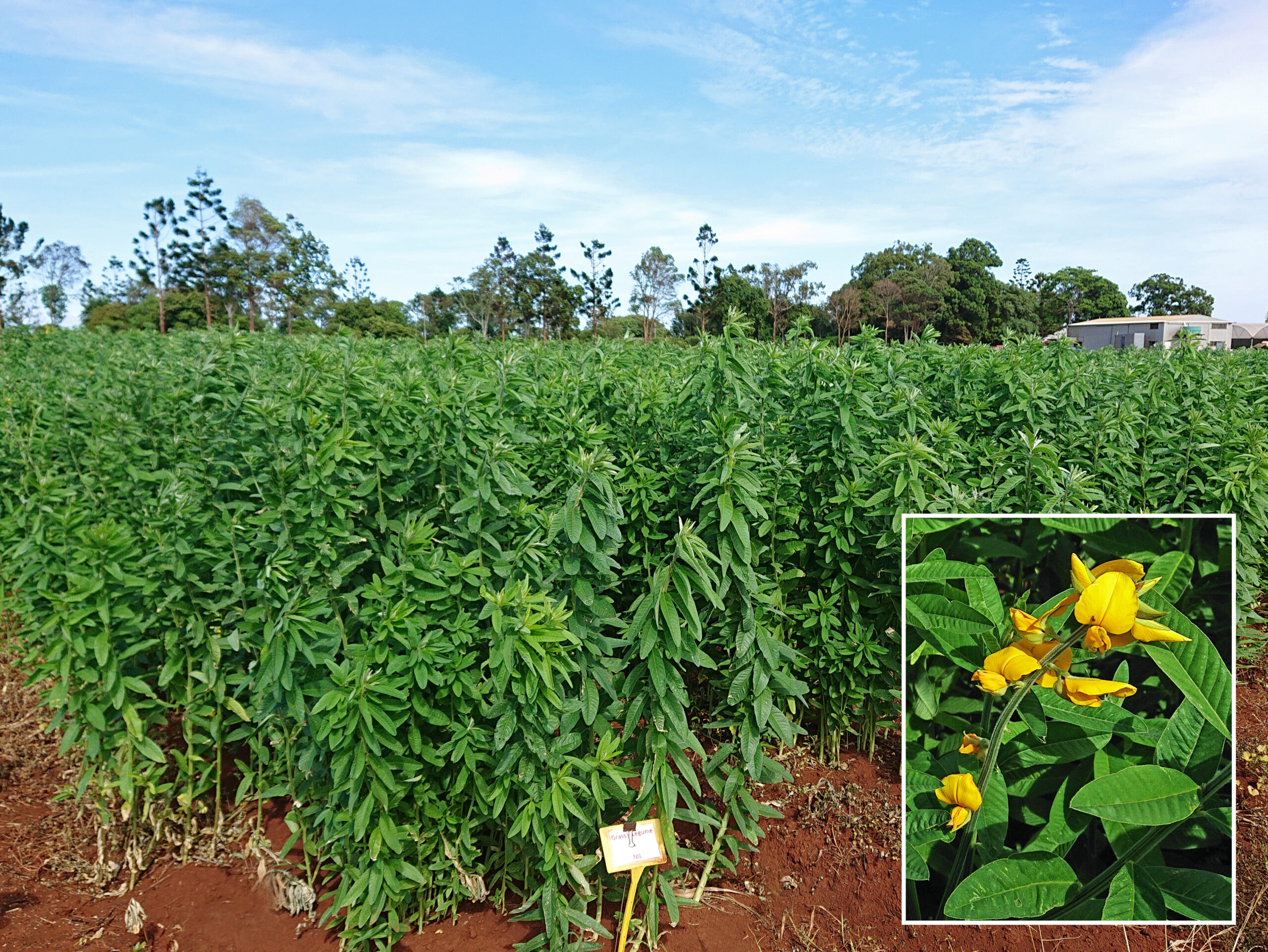
A vigorous sunn hemp cover crop in a sweetpotato field
Root-knot nematodes are obligate parasites, which means that they require a susceptible plant host to survive and reproduce. By growing a cover crop that is not a host to root-knot nematodes they will starve, and populations will be greatly reduced. A clean bare fallow (no weeds or volunteer plants) will have the same effect but may be detrimental to soil health and has a higher risk of topsoil loss from erosion.
There are several types of cover cropping:
- Alternative cash crop – a commercially grown cover crop different to the main vegetable crops grown by the business, usually off season.
- Rotation crop – grown for pest/disease suppression and other benefits, but not as a cash crop.
- Mixed cropping/companion planting– not commonly practiced in Australia, but common in intensive smallholder cropping in other parts of the world.
- Cover crops have many benefits, as well as some costs, which will be described below.
Benefits of cover crops
Improved microbial diversity. Bare fallows provide harsh conditions for beneficial microbes (as well as pathogens), which leads to a decrease in the abundance and diversity of the good guys in your soil. Growing a cover crop allows beneficial microbes to persist from crop to crop, and different root exudates produced by differing plants encourages a diversity of soil microorganisms. A diversity of soil microbes makes for a resilient soil.
Increased soil organic matter/carbon. Cover crop residues boost organic carbon levels, which influences many soil properties. Soil carbon also helps fuel beneficial microbes, including nematode competitors, predators and parasites, which occur naturally in most soils. Increasing the populations of these beneficial microbes in the soil further helps to suppress plant-parasitic nematodes.
Nutrition benefits. Cover crops also assist with nutrient recycling and help to reduce leaching/loss of nutrients. As well as carbon, residues from cover crops contain nitrogen, phosphorus and other valuable nutrients. Legume cover crops can also contribute significant amounts of N through nitrogen fixation.
Physical soil benefits. Growing cover crops can improve soil physical characteristics due to the presence of the plants themselves, the increase in soil organic matter, and the associated boost in soil organisms. Improved soil structure/aggregate stability, increased water infiltration, and improved drainage are some of the potential gains in soil physical properties.
Weed suppression. Having a wide host range is part of the root-knot nematode survival strategy. A vigorous, nematode resistant cover crop (like certain forage sorghum varieties) will help suppress weeds that may allow nematodes to carry over between seasons. Cover crops not only suppress and compete with one generation of weeds, but often a second and third weed germination dies out when seedlings emerge and receive no sunlight for photosynthesis.
Erosion control. This is particularly important in regions where more frequent, intense rainfall events are being experienced. A field protected by a cover crop is far less likely to suffer soil losses from rainfall events compared with a bare paddock.
Disadvantages of cover crops
Planting and maintenance costs. These can be quite expensive for cover crops, especially due to the high cost of seed. For large scale use of cover crops a precision no-till planter (to allow planting into moisture and accurate use of seed) is beneficial.
Potential water usage/cost. If you are going to grow a cover crop it needs to be done well to reap all of the benefits outlined above. A poorly established, struggling cover crop can become a weed hosting area, and may cause more harm than good.
Managing crop residues. Spraying out or tilling-in crops, dealing with residues, potentially extra work for bed preparation.
Growers may aim to minimise costs/work associated with cover crops as much as possible, but should try to keep in mind long term benefits and savings.
Hort Innovation-funded projects in sweetpotato and vegetables have been screening cover crops to test for root-knot nematode resistance. Since 2018, The Queensland Department of Primary Industries (QDPI) has tested over 120 different cover crops against two or more RKN species.
TABLE 1. COVER CROPS WITH GOOD LEVELS OF RESISTANCE AGAINST TWO OR MORE RKN SPECIES
| Species of Meloidogyne | |||||
|---|---|---|---|---|---|
| Common name | Crop species | Cultivar | M. Enterolobii | M. Incognita | M. Javanica |
| oats (forage) | Avena sativa | Austin | Highly Resistant | Highly Resistant | Slightly Susceptible |
| oats (forage) | Avena sativa | Bond | Highly Resistant | Slightly Susceptible | Highly Resistant |
| oats (forage) | Avena sativa | Brunswick | Highly Resistant | Slightly Susceptible | Highly Resistant |
| oats (forage/grain) | Avena sativa | Swan | Highly Resistant | Highly Resistant | Highly Resistant |
| oats (grain) | Avena sativa | Williams | Highly Resistant | Resistant | Highly Resistant |
| peanut* | Arachis hypogaea | Alloway | Not Tested | Highly Resistant | Highly Resistant |
| peanut* | Arachis hypogaea | Holt | Highly Resistant | Highly Resistant | Highly Resistant |
| peanut* | Arachis hypogaea | Kairi | Kairi | Highly Resistant | Highly Resistant |
| peanut* | Arachis hypogaea | Wheeler | Not Tested | Resistant | Highly Resistant |
| Rhodes grass | Chloris gayana | Callide | Highly Resistant | Resistant | Slightly Susceptible |
| sabi grass | Urochloa mosambicensis | Not Tested | Resistant | Highly Resistant | |
| signal grass | Urochloa decumbens | Highly Resistant | Highly Resistant | Slightly Susceptible | |
| sorghum (forage) | Sorghum x Sudan | Dyna Powa | Not Tested | Highly Resistant | Highly Resistant |
| sorghum (forage) | Sudan x Sudan | Flexigraze | Highly Resistant | Highly Resistant | Resistant |
| sorghum (forage) | Sorghum x Sudan | Jumbo | Highly Resistant | Highly Resistant | Highly Resistant |
| sunn hemp | Crotolaria juncea | Resistant | Resistant | Resistant | |
| sweet smother grass | Dactyloctenium australe | Not Tested | Highly Resistant | Highly Resistant | |
*Note, while peanuts have excellent resistance to several RKN species, they are susceptible to M. arenaria and M. hapla
Guava root-knot nematode (Meloidogyne enterolobii, GRKN) was detected in Australia in 2022 and can be particularly damaging to many horticultural crops. This species has been added to the DPI screening program to ensure that cover crops resistant to GRKN are identified and available. Until the detection of GRKN, screening focussed on M. incognita and M. javanica, which are two of the most significant and widespread RKN pests in Australia. Growers can submit samples to their state nematology laboratory for testing to determine their root-knot species. Testing of cover crops to identify more resistant options for growers is ongoing in the research projects.
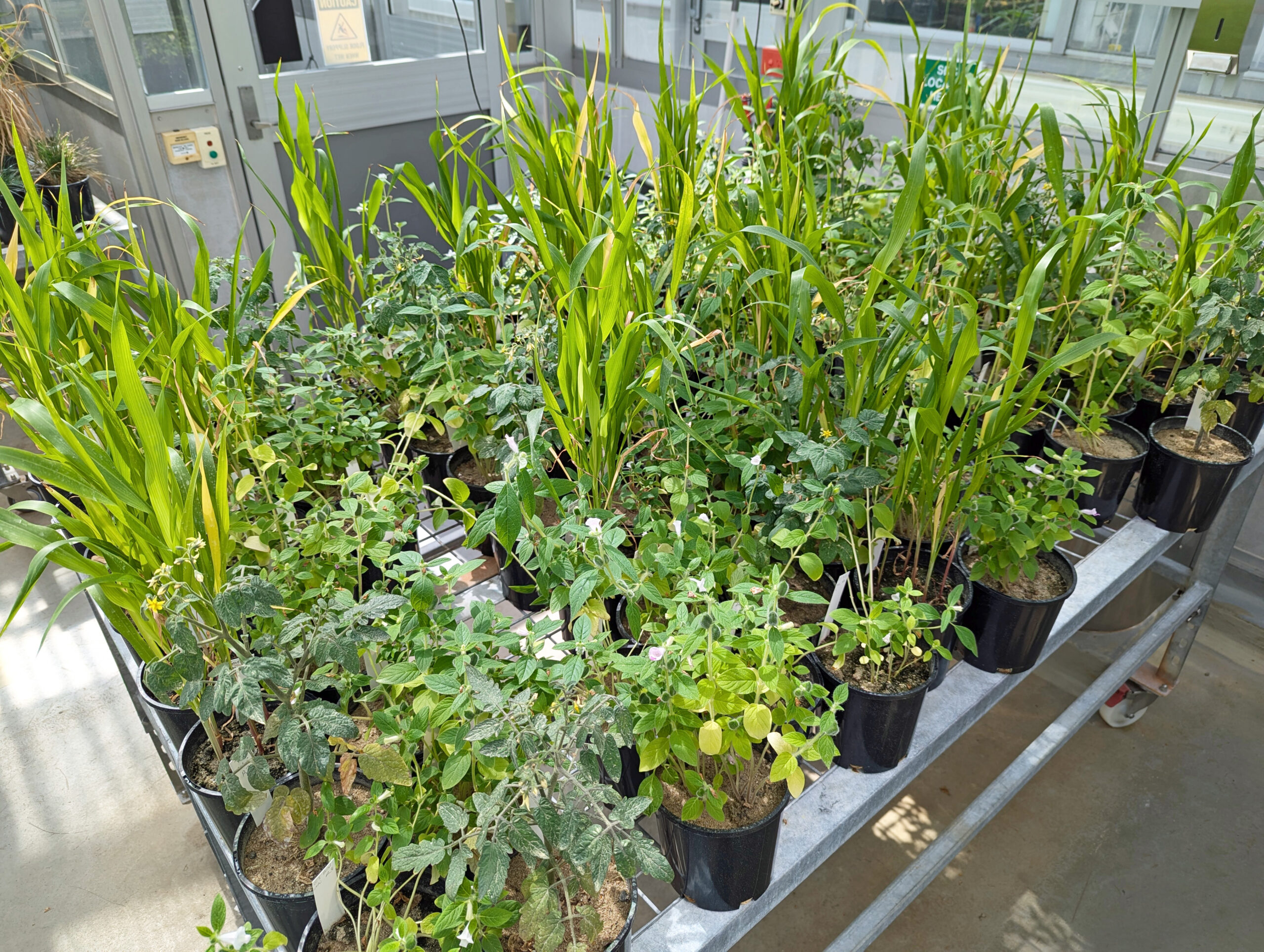
A glasshouse screening experiment of cover crops.
Resistance to plant-parasitic nematodes is determined by the capacity of the nematode to multiply on a plant, with high multiplication rates indicating susceptibility and low multiplication rates indicating resistance. QDPI screens cover crops in a glasshouse by inoculating pots with a known number of RKN eggs, growing the plants for a known number of accumulated heat units (to allow nematode reproduction), and then recovering the nematode eggs from the roots to assess reproduction. Egg numbers are counted under a microscope and the reproduction factor is then calculated. Resistance/susceptibility categories are the assigned according to the level of reproduction.
Because cover crop screening is conducted in a glasshouse with only a selection of RKN populations used for screening, there are some limitations. Where possible, cover crops have also been included in project field trials, with results matching expectations based on the glasshouse results.
Growers should assess cover crops locally for agronomic performance and RKN suppression. Availability of cover crop varieties also changes over time, so continued screening is required to assess new varieties, as shown in Table 1.
Some other crops may serve as potentially useful rotations but are not as resistant as the ones listed above, and therefore, will be less effective in reducing RKN numbers. For example, soybeans can be a useful legume rotation with cash crop potential, but most varieties are susceptible to RKN. The varieties A6785, Fernside and Kuranda HB1 are some of the better options, with resistance to M. incognita but still somewhat susceptible to M. javanica.
Caution for mixtures & biofumigants
Commercial cover crop mixtures may contain some RKN resistant crops and some susceptible. It is important to understand exactly what is in a mixture and whether all components are resistant. Unless all varieties in the mix are resistant it will not successfully reduce RKN populations. Custom mixtures of RKN resistant crops to suit your nematode pests and region may be an option.
Biofumigation can successfully reduce soilborne diseases, but many biofumigant crops are susceptible to RKN, so should be used very cautiously for management. In our testing, Raphanus sativus cultivars like Terranova radish and Black Jack radish were the best performers, with some resistance to M. incognita, but they were moderately susceptible to M. javanica.
Root-knot nematodes are one of the most significant pests in the Australian sweetpotato industry and can cost up to 20 percent of the farm gate value in losses. Through Hort Innovation-funded research projects, the industry has supported nematode screening of cover crops as they are considered an integral part of integrated management by many growers.
“My main advice is to keep it simple,” said Eric Coleman, of Queensland grower Australian Sweet Potato, who’s been involved with QDPI’s research projects.
“Plant a cover crop you know is highly resistant and easy to grow. Mixed species cover crops are a feel-good and can create risks by introducing other diseases and potentially hosting some pathogenic nematodes.
“A single species robust cover crop like forage sorghum is hard to beat, it will endure dry, is vigorous and will outcompete weeds.”
In summary, resistant cover crops can be a key strategy in an integrated management program for reducing RKN populations between crops to avoid severe damage and/or yield losses. Cover crops can have numerous other advantages which enhance long-term sustainability and profitability.
Management tactics like cover cropping should be used in conjunction with nematode monitoring, which allows you to understand what nematode pests you have and to keep track of how your management program is going.