


Future leaders on the Horizon
9 December 2025Gatton AgTech Showcase judged a success
9 December 2025
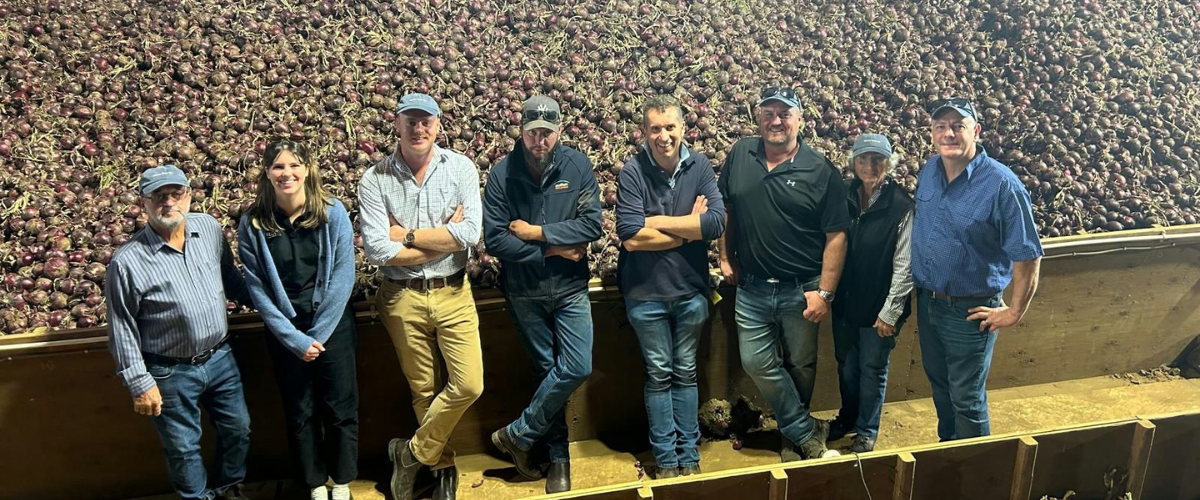
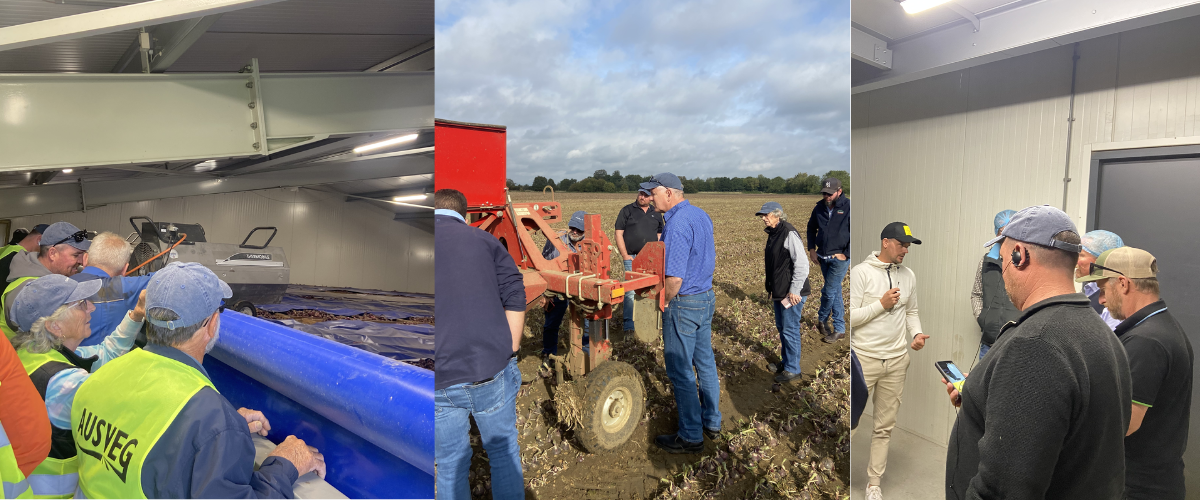
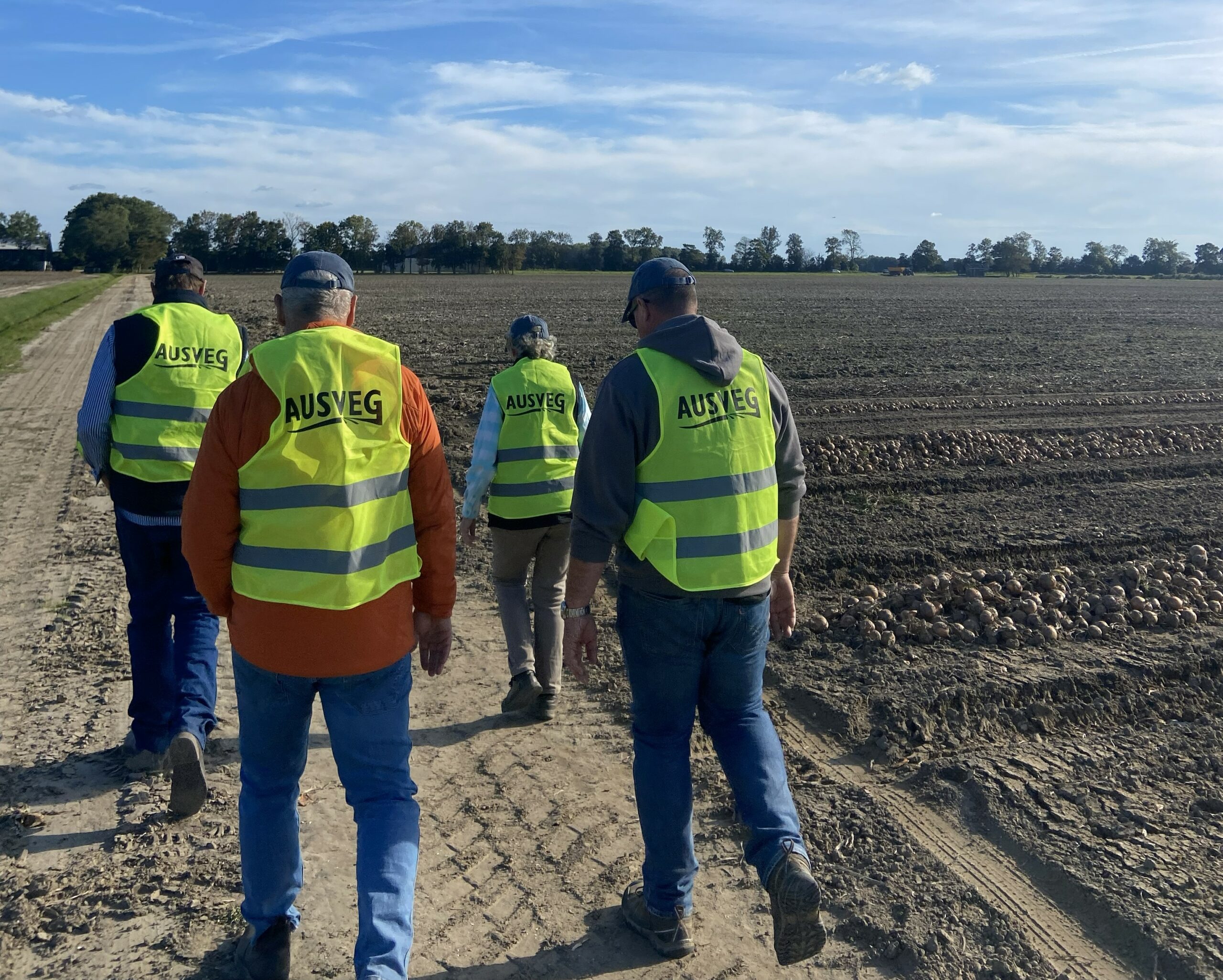 The vegetable and onion industry study tours, funded by Hort Innovation (Project VG23002), provide opportunities for Australian vegetable and onion growers and supply chain businesses to increase their awareness and knowledge of research and innovations in the global horticulture industry, through the delivery of tours to strategic vegetable and onion growing regions, conferences, facilities, and innovation centres around the globe.
Across both countries, the group visited a diverse range of onion-focused businesses including commercial growers, packers, machinery manufacturers, seed companies, and research organisations. Common themes included increasing automation to reduce labour costs and increase efficiency, implementing energy-efficient and circular economy principles, improving disease management through biological and integrated approaches, and incorporating digital technologies and AI for real-time monitoring and traceability.
The professionalism of European growers and processors was a standout feature, with operations characterised by exceptional hygiene standards, precise quality control, and strong alignment with supermarket requirements and consumer trends.
But the tour group noted that while large-scale automation and infrastructure investment delivered impressive efficiencies, success still relied on sound management, workforce development, and continuous improvement. The study tour reinforced that technology alone does not guarantee success, and that businesses thrive when underpinned by disciplined planning, skilled staff, and strong customer relationships.
UNITED KINGDOM
The first week of the study tour was in the United Kingdom where the tour group’s hosts graciously gave their time to talk about the challenges they face and some of the solutions they are using to address them.
Many of the challenges are shared by Australian growers, like land availability, limits on agri-chemicals, variable weather, and dealing with processors while ensuring growers have the confidence to keep growing.
To deal with these issues and others the UK growers have embraced modern technology, with the use of AI, optical grading, autonomous machinery, GPS tracking and yield prediction technology.
They have also embraced diversification to meet market demands, creating co-ops to improve their marketing effectiveness and using more environmentally friendly packaging.
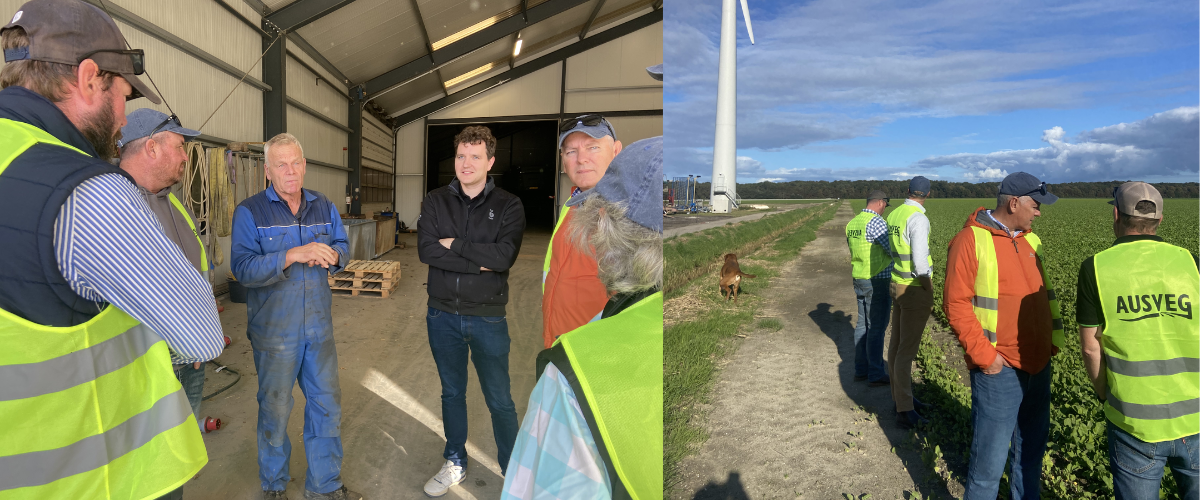 TOUR VISITS
Stourgarden and P.G. Rix Farm
Stourgarden is one of the UK’s leading onion specialists, based at Lodge Farm near Colchester in Essex. Founded in 1995 by brothers Bill and John Rix. The business began by supplying onions to Tesco and has since grown into a major grower, packer, and processor, handling over 75,000 tonnes each year, with 22,000 tonnes supplied by its partner operation, P.G. Rix Farms.
Stourgarden has invested heavily in modern facilities, including a fresh-prepared onion factory that reduces waste by using out-grades, and a state-of-the-art refrigeration system to cut energy use.
Fusarium and mildew were identified as persistent disease challenges, driving innovation in biological treatments and crop rotation strategies. With fewer registered chemical control options available in the UK and Europe compared with Australia, growers have turned to integrated pest management and soil health programs to maintain productivity. Stourgarden has even employed their own research scientist to research fusarium internally.
Moulton Bulb Company
Moulton Bulb Company is one of the UK’s largest onion, shallot, and garlic specialists. Based in Lincolnshire the family-run business has grown from a small farming venture into the country’s biggest onion packer, now handling over 100,000 tonnes annually, and supplying around a quarter of all onions sold in UK supermarkets.
A major investor in new technology, the company has pioneered advanced grading, automation, and energy efficiency. In recent years it has cut its carbon footprint significantly through largescale solar power generation and energy-saving upgrades.
B-Hive Innovations
B-Hive operates as a collaborative innovation hub, developing precision tools and biological solutions aimed at improving crop productivity, sustainability, and supply chain efficiency. The company’s HarvestEye technology, developed in partnership with growers and processors, was of particular interest. Installed on harvesting machinery, the system uses imaging and machine-learning algorithms to measure bulb size and distribution in real time.
This enables growers to generate accurate yield maps as they harvest—information that can then be used to forecast grading outcomes, inform market strategies, and refine agronomic decisions for the following season.
The tour group all recognised the potential application of this technology in Australia, particularly for improving on-farm decision-making and logistics planning in onion-growing regions where yield variability is common.
Bedfordshire Growers
The Bedfordshire Growers cooperative was started by a group of like-minded growers producing brassica crops in the fertile soils of Bedfordshire, and by the mid-70s it was one of the foremost producers of Brussels sprouts in the UK.
In the 1980s Bedfordshire Growers started to commercially grow onions, initially brown onions followed by being the first company to introduce red onions to the UK. The business went on to pioneer the CA long term storage technology enabling a four-month extension to the British onion season.
The group has seven grower members; the Alastair Findlay Partnership, Croft and Findlay, EC Brown and Sons, FG Rook and Son, James Macdonald Farm and FB Parrish and Sons. FB Parrish & Son Ltd is a family-run agricultural business with a history dating back to 1927. Over the decades, the farm has evolved, and with nearly a century of farming experience it has developed a reputation for producing high-quality produce and has embraced sustainable farming practices to ensure the health of the land and the surrounding environment.
THE NETHERLANDS
Onion growers in the Netherlands face similar challenges to those in the UK with fusarium basal rot, prehistoric soil diseases, land availability, limits on chemical use, and also variable weather conditions in recent seasons.
Even so, onion production is thriving. The close proximity to ports means the country can export high amounts of onions globally. To preserve those markets there has been major investments in technology to ensure it can supply onions all year round.
Another key element in the Netherlands is the use of renewable energy, with all companies from growers to processors to storage companies utilising wind turbines and solar panels to power their systems. Some have achieved energy neutrality.
In some cases, beneficial partnerships with neighbouring businesses were also struck, for example the heat energy used in a potato chipping factory was used to dry onions in storage.
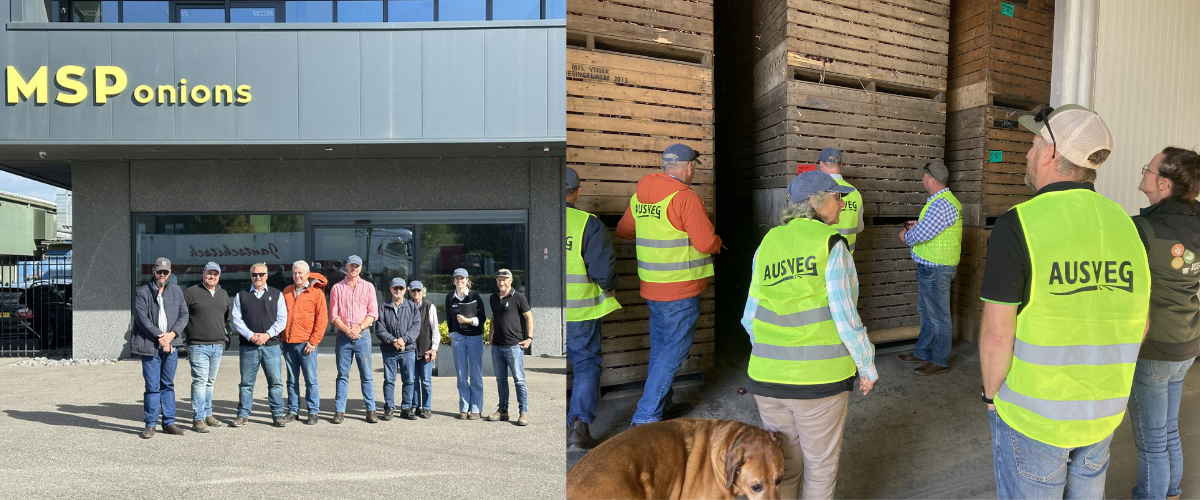 TOUR VISITS
Wiskerke Onions
Wiskerke Onions is a leading Dutch onion exporter. Established in 1933, the company has grown into one of the world’s largest onion exporters, shipping approximately 176 million kilograms of produce annually to over 130 countries.
From intake through to shipping, Wiskerke’s system is a model of efficiency. Grading, sorting, and packing were handled almost entirely through automated processes. The quality control systems were complemented by sophisticated digital dashboards that displayed real-time data on product flow, temperature, moisture, and packaging output.
MSP Onions
The visit to MSP Onions, was described by the tour group as one of their highlights. Known locally as the ‘factory of the future,’ MSP Onions has redefined what large-scale post-harvest handling can look like.
Every stage of production, from intake through to final export packaging, operates with minimal human intervention. This fully autonomous systems cost around $100 million euros ($179 million AUD), with MSP set to build their second packing shed in the coming years. The system combines infrared and optical grading technologies to analyse both internal and external bulb quality with exceptional accuracy. Infrared imaging detects internal decay or moisture imbalance invisible to the human eye, ensuring that only the highest-quality bulbs progress through the system.
For Australian growers and packers, MSP’s operation demonstrates how automation can be scaled effectively while maintaining flexibility to meet changing market requirements.
Bejo Zaden BV
At Bejo Zaden BV the group saw an impressive seed breeding and research organisation.
Bejo’s onion breeding program focuses on developing varieties that are resistant to downy mildew, fusarium, and storage-related diseases, issues that resonate deeply with Australian growers. The company has also made substantial investment in precision agriculture technologies and laser weeding systems, which reduce the need for herbicides while protecting soil structure and biodiversity. Researchers explained that their breeding work emphasises not only disease resistance but also bulb uniformity, skin retention, and storability, traits critical for supply chains.
Discussions also touched on the regulatory environment, with Bejo researchers acknowledging that strict European pesticide and environmental regulations have accelerated interest in breeding for resilience rather than chemical reliance. The tour group found this shift instructive, noting that Australia’s own industry is likely to follow a similar trajectory in coming years.
Visser Agro
Visser Agro combines conventional onion production with innovative environmental management systems designed to reduce inputs and enhance soil health.
The farm operates on an energy-neutral model, relying on solar panels, efficient irrigation systems, and minimal fuel use. One of the most striking practices observed was the use of controlled flooding to suppress nematode populations— a biological alter- native to chemical fumigation. This technique, used strategically between crop cycles, helps reduce pest pressure while maintaining soil microbial diversity.
Participants also noted the farm’s emphasis on biodiversity, with cover cropping, wildflower strips, and hedgerows providing habitat for beneficial insects and pollinators. Soil organic matter management was a core focus, and data from soil sensors were used to fine-tune nutrient applications.
An innovative component of Visser Agro’s operation was its onion peeling line, which transforms undersized or visually imperfect onions into value-added products for the processing market. This initiative has reduced food waste and improved profitability while supporting environmental sustainability.
For the Australian growers, the visit reinforced that regenerative practices and diversification can offer economic as well as environmental benefits.
Samon Machines
Samon Machines is a well-established Dutch engineering company specialising in the design and construction of onion harvesters, lifters, toppers, and handling equipment. The visit provided insight into the development of machinery that underpins much of Europe’s on-farm efficiency.
The group recognised several machines already in use in Australia, though they discussed the need for adaptations to suit Australia’s generally softer onion varieties in Queensland and sandy soil types in South Australia.
The company’s philosophy centered on continuous improvement and partnership. Engineers described working directly with growers during harvests to test prototypes, a level of collaboration that resonated strongly with the Australian visitors. For them, the visit reinforced the importance of local feedback loops between farmers and equipment manufacturers to ensure machinery evolves alongside production challenges.
 Broer BV
Broer BV is one of Europe’s foremost producers of onion sets (immature bulbs used for planting), supplying both domestic and international markets. The operation combined meticulous quality control with advanced storage and logistics systems to ensure sets retained dormancy and viability until planting.
The company has strict biosecurity and hygiene standards. Each batch of sets was traceable to its seed lot, field, and storage cell, with multiple inspection points throughout the process. Temperature and humidity were tightly regulated to avoid sprouting or disease development, and staff followed strict sanitation procedures between handling lots.
While the group acknowledged that climatic differences mean onion set production is unlikely to become a major Australian enterprise, the visit provided transferable lessons, with the company’s rigorous logistics, cleanliness, and disciplined management seen as benchmarks for any high-value horticultural product.
Tolsma-Grisnich
The final visit of the tour was to Tolsma-Grisnich. Specialising in storage, grading, and processing systems for onions and potatoes, Tolsma-Grisnich offered a vision of how data, automation, and sustainability converges in modern agriculture.
The company’s intelligent storage systems combine temperature, humidity, and gas-exchange sensors with advanced algorithms that automatically regulate airflow and energy use. Operators can monitor conditions remotely via internet dashboards, allowing precise control even across multiple facilities. Participants watched demonstrations showing how subtle adjustments to air distribution can prevent condensation and maintain uniform curing, reducing post-harvest losses by up to 10 percent.
Tolsma-Grisnich also showcased its energy-efficient dryers, which recover and recycle heat through a closed-loop system, reducing fuel consumption while maintaining consistent drying conditions.
With energy costs and climate variability posing challenges for onion storage in Australian regions like South Australia and Tasmania, Tolsma- Grisnich’s systems represented a potential model for improving both quality retention and profitability.
Conclusion
The Onion Tour 2025 showcased how growers in the UK and the Netherlands are responding to challenges with innovative strategies, determination and a pure passion for farming.
We would like to thank all the growers and organisations that hosted us during the tour; Stourgarden, P.G. Rix Farms, Moulton Bulb Company, B-Hive Innovations, Alastair Findlay Partnership, F.B Parrish, Bedfordshire Growers, Wiskerke Onions, MSP Onions, Landbouwbedrijf van Stee, Bejo Zaden BV, Visser Agro, Waterman Onions, Samon Machines, Gebroeders de Zeeuw, Broer BV, Tolsma-Grisnich. Another thank you to Andry Richardson from the UK Allium and Brassica Centre, as well as Bejo Zaden BV, in particular Robert Schilder and Kevin van Schaik for their support in organising the itinerary.