


Harvesting Innovation: Global AgTech Meets Australian Broccoli and Lettuce Growers
9 December 2025
Level Up Hort providing guidance and benchmarks for growers
9 December 2025
BY NAOMI DIPLOCK AND PAULETTE BAUMGARTL
APPLIED HORTICULTURAL RESEARCH
Dr Naomi Diplock
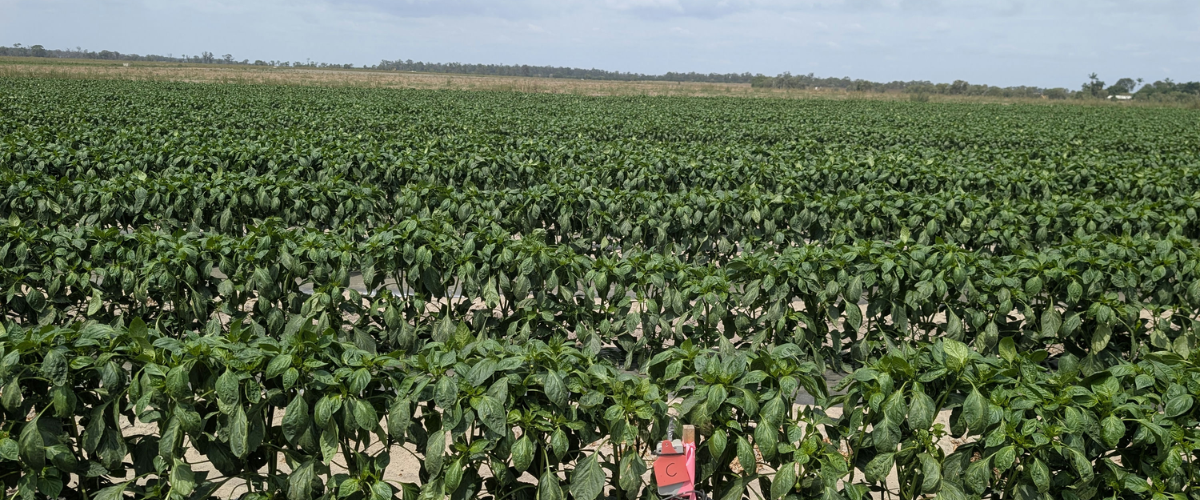
A demonstration trial in Moorland, near Bundaberg, is helping capsicum growers get more from every drop of water and every kilogram of fertiliser. Now in its second year, the project is taking a practical, data-driven look at how fine-tuning irrigation and nutrition can improve input efficiency without compromising crop yield or quality.
The trial is hosted by local grower Trevor Cross and delivered through the Soil Wealth and Integrated Crop Protection (ICP) program. It builds on lessons from the first season, continuing to focus on one key question: how can growers better match their inputs to what the crop actually needs, when it needs it?
A real-world, whole-block approach
Instead of comparing small trial plots, the team is working across a section in a commercial block under real farming conditions. The idea is to make the learning as relevant and practical as possible.
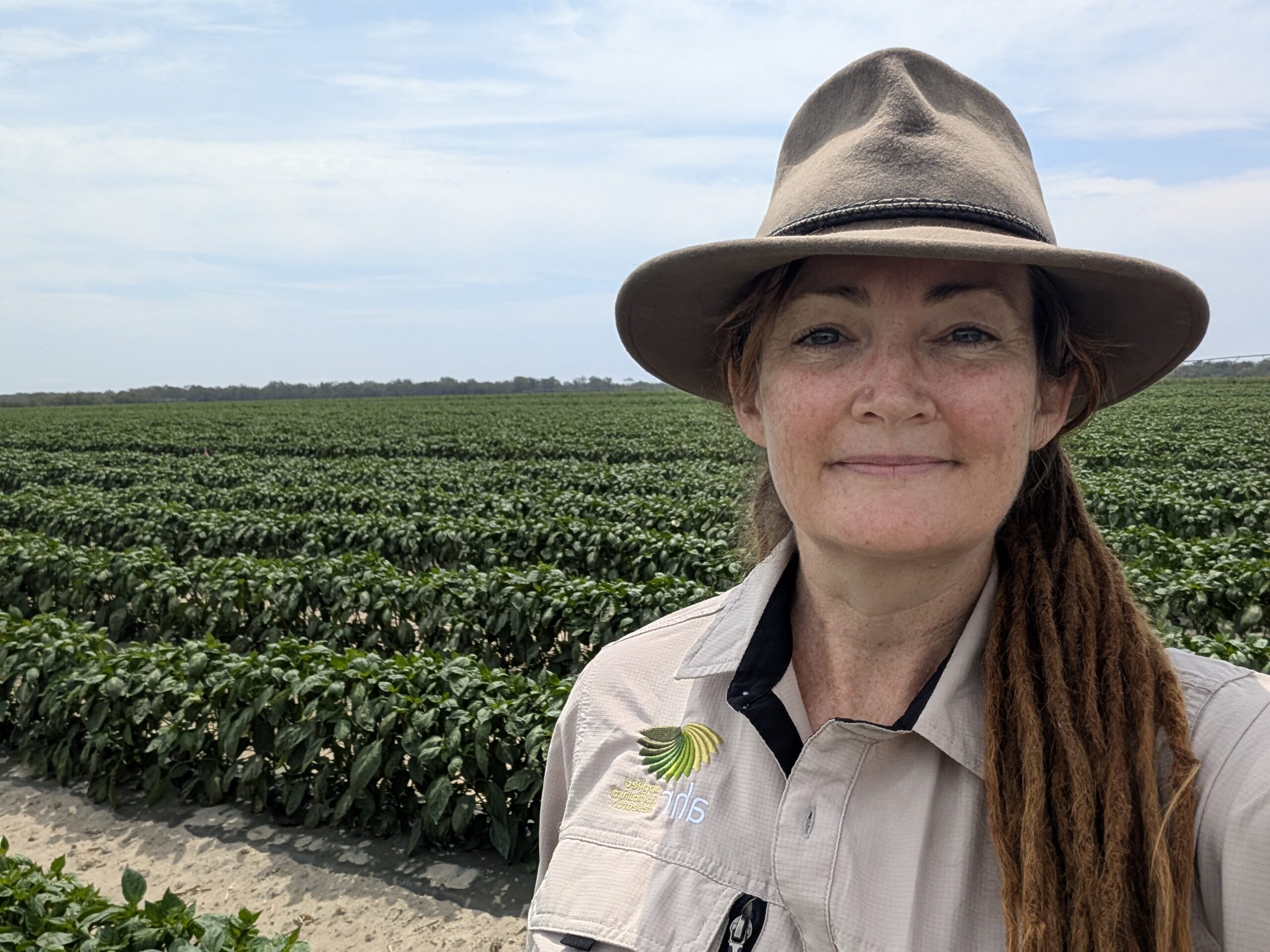
“So much of this project is about adjusting practices in real time,” explains Dr Naomi Diplock, from the Soil Wealth ICP team.
“We’re combining the grower’s experience with data and monitoring tools to make confident, evidence-based decisions.”
Weekly field visits by the project team allow adjustments to irrigation and fertigation schedules as the season progresses. These regular check-ins also provide a chance to review monitoring data, discuss plant nutrition, and spot any potential pest or disease issues early.
“It’s very hands-on and collaborative,” Naomi says.
“We want to make sure any changes are practical and backed by what’s actually happening in the crop.”
Monitoring what matters
The trial block sits on the sandy soils, with raised beds and plastic mulch reflecting Trevor’s standard production system. To guide decision-making, three Wildeye soil moisture probes have been installed at 10, 30 and 60 centimetre depths to track root-zone moisture, alongside a HOBO rain gauge to record rainfall.
This season, the team has increased its focus on regular testing. Weekly tissue samples are providing insight into nutrient uptake and balance, while soil samples before planting and after harvest track how nutrients move through the profile.
Every irrigation and fertiliser event is recorded and reviewed. By combining field data, grower records, and tissue results, the team can identify over- or under-watering events and make quick adjustments to keep the crop in its optimum range.
“Having this level of visibility is powerful,” Naomi says.
“We can see how the crop is responding and fine-tune both the timing and volume of irrigation or fertigation accordingly.”
Fine-tuning nitrogen and nutrient use
Nitrogen management is a particular focus for the 2025 season. The team is testing alternative nitrogen sources, adjusting base fertiliser rates using pre-plant soil test results, and relying on weekly tissue data to guide fertigation decisions.
Early results have been encouraging, with tissue sampling results indicating that nutrient levels are consistently within the desired range, confirming that the new management approach is hitting the mark.
The weekly rhythm of the trial has proven to be one of its strengths. Each visit combines data analysis with paddock observation, creating a clear feedback loop between what’s measured and what’s seen in the field.
Building insights for the wider industry
The outcomes from this demonstration will be shared through case studies, articles and regional extension events as part of the Soil Wealth ICP program. The intent is to give other capsicum growers, and vegetable producers more broadly, confidence in adopting real-time monitoring and adaptive management strategies on their own farms.
For Naomi, the project is about more than collecting data. “It’s about building understanding,” she says.
“If we can help growers make more informed, confident decisions with the tools they already have, we’re improving both productivity and sustainability.”