



Australian Onions back in the spotlight and first in the pan
8 September 2025Spotlighting spuds for International Day of the Potato
8 September 2025
Reading Time: 7 minutes
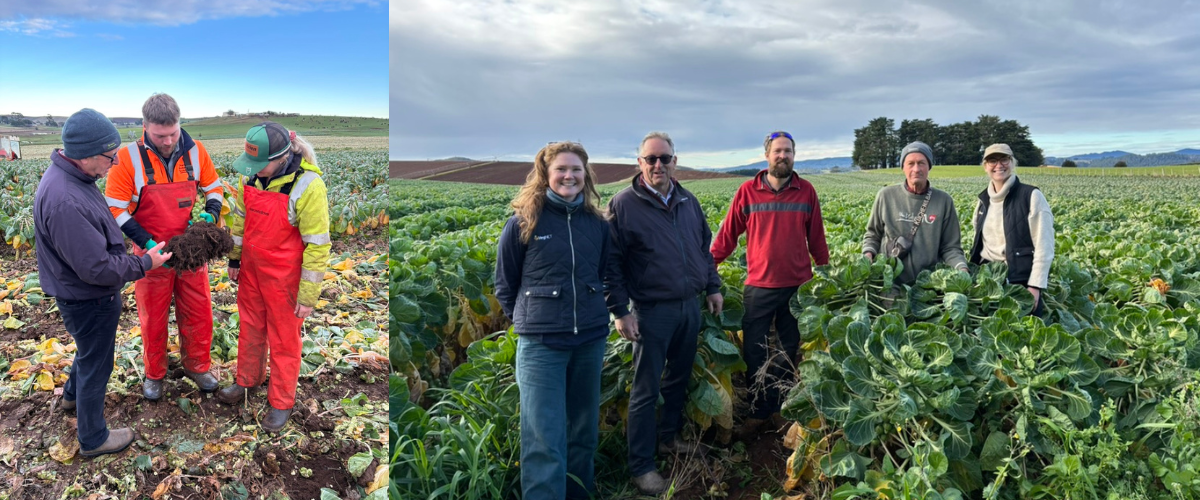
In June 2025, Julius Joel, Product Director at G’s Fresh, travelled from the UK to Australia to share insights on regenerative agriculture with growers and industry stakeholders in Brisbane at Hort Connections. Following this, hosted by AUSVEG and VegNET, Julius visited key vegetable production regions across north-west Tasmania and Victoria, culminating in two grower workshops where he shared the lessons, and challenges, of transitioning one of the UK’s largest fresh produce operations towards more regenerative systems.
The workshops, held in Ulverstone, Tasmania, and in Chadstone, Victoria, gave Australian growers an opportunity to hear firsthand how G’s Fresh is rethinking its farming systems to remain profitable, sustainable, and resilient in an era marked by climate volatility, regulatory pressures, and shifting consumer expectations.
G’s Fresh is a vertically integrated farming and fresh produce business operating across the UK, Spain, Senegal, and the Czech Republic. Their philosophy is to be recognised as outstanding, market-led growers and suppliers of sustainable, healthy fresh produce, and to be at the forefront of the industry in everything they do.
Julius has over a decade’s worth of experience in the business and expertise in intensive horticulture, encompassing all aspects of the supply chain through to category management and market analysis. In recent years, he has spearheaded G’s regenerative agriculture agenda, working to reconfigure farming systems to reduce environmental impact, improve soil health, and maintain yields in light of mounting pressures on the industry.
During the workshops, Julius described the evolving pressures confronting farming operations worldwide, including more extreme weather events, increasing cost-price squeeze, and limited availability to agrichemicals.
Julius shared with the group one of the worst weather events he’s seen at G’s operations in Spain.
“We had eight inches [203 millimetres]of rain in an hour and 24 inches [609 millimetres] of rain in 24 hours,” he told workshop attendees.
Julius highlighted that this is the new standard for what farms have to be able to function in, and growers have to change their farming practices to create soils that are able to absorb eight inches of rain in an hour.
Meanwhile, regulatory changes and product withdrawals are making crop protection and weed management more difficult.
“As a celery grower in Spain, we now have no herbicides available to use after planting, and we’re about to have no insecticides available from November,” Julius noted.
 On top of all of that, profit margins continue to be squeezed by flatlining prices and escalating costs.
“We’ve all been fighting against that dynamic perpetually,” Julius stated, highlighting the importance of change within a business to stay competitive.
“We were in the territory of the farm becoming unsuitable for the business it had supported for 50-60 years,” Julius stated.
The realisation of that hard truth led G’s Fresh to embrace regenerative agriculture, for both the environmental benefits and the need to build resilience into the business and stay competitive in the industry.
 In its simplest form, regenerative agriculture is an approach to farming based on feeding organisms in the soil which, in turn, feed plants. The heighted biological activity allows farmers to produce the greatest yield for the lowest cost. The principles of regenerative agriculture includes minimising soil disturbance, maintaining living roots, maximising diversity, keeping soil covered with cover crops, integrating soil microorganisms, and recognising context.
Julius spoke on how these principles are not hard rules growers have to immediately follow. Whilst your system will benefit from the implementation of all principles working together, “there was no way we were going to go cold turkey,” Julius stated.
Julius recognised that showing up to work on a random Monday and deciding to give up all chemical inputs and cultivations isn’t going to benefit your farm or your business. The best approach is to plan change over often large amounts of time as timing and conditions allow. It’s important to recognise that regenerative agriculture isn’t going to cure all problems and only result in higher returns; sometimes it may feel like one step forward and two steps back.
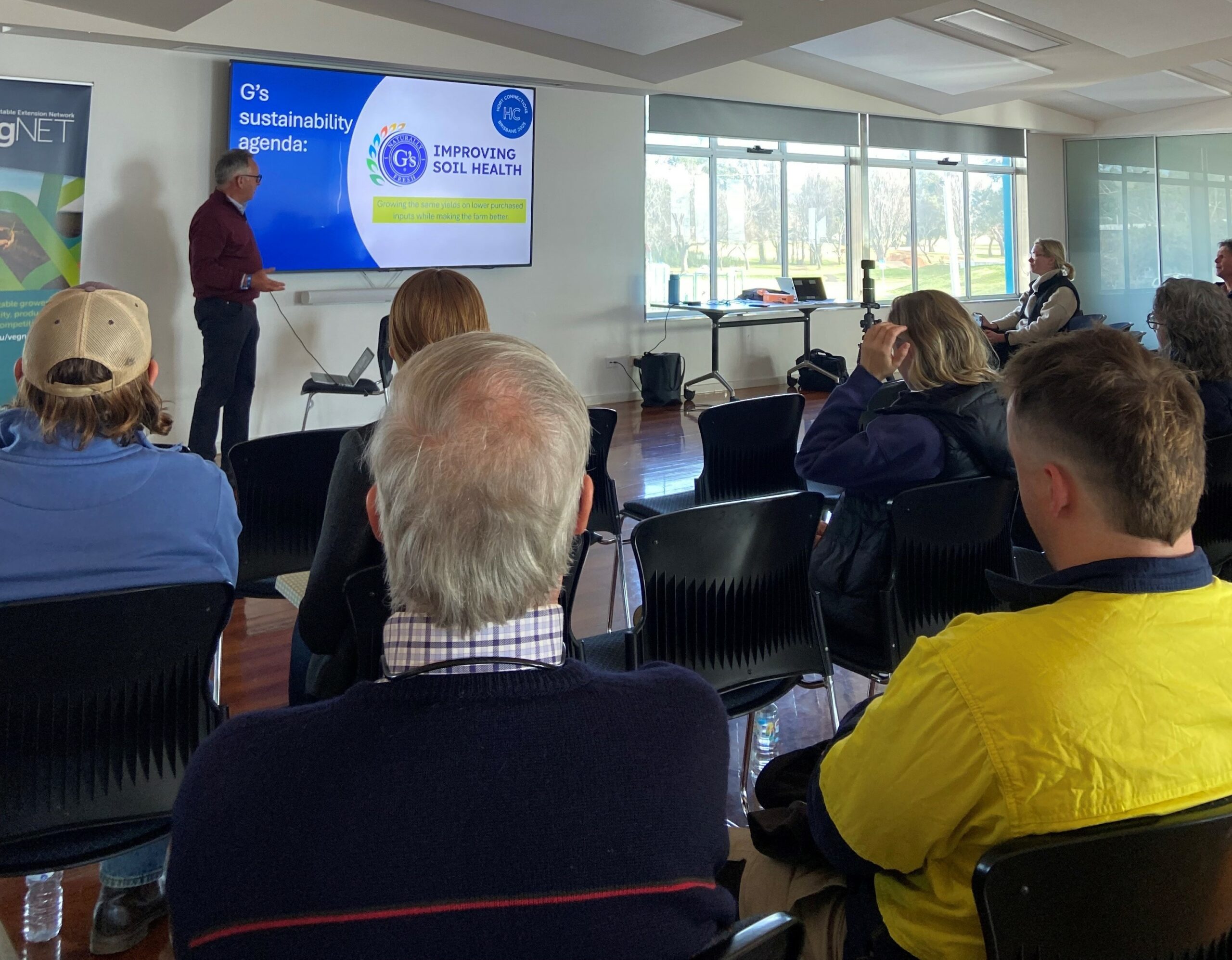
G’s sustainability agenda is broken down into three overlapping and highly interdependent pillars; drive down GHG emissions, improve soil health, and increase biodiversity. The key intended outcomes of these pillars include building well-aggregated soils with better water infiltration and holding capacity, reducing the need for heavy cultivation, and creating a rich and diverse soil biology supported by a balanced soil food web that not only cycles carbon but begins to sequester it.
The result is a farming system that is more resilient to climate extremes, with long-term environmental benefits, safeguarding supply for both growers and retailers and in turn protecting profits long-term.
Over the years as machinery gets bigger and businesses grow, it is the nature of the industry to increase the number of tractors in the fleet and at the same time increase the horsepower of those tractors, Julius explained.
“That’s partly self-indulgence because you’ve got to have a bigger tractor than your neighbour,” joked Julius, but also highlighted that the soils are becoming harder and harder to work because of the compaction caused by heavy equipment.
In response to this, G’s Fresh have actually reduced the number of tractors they use in their operation, and look towards smaller, lighter machinery that will cause less disturbance and compaction to the soil.
Another example of G’s transition is the ‘iceberg rig’ system used in its salads business. This field-harvest and fieldpacking rig allows produce to be packed, labelled, and palletised immediately after harvest, minimising handling and storage, improving freshness, and cutting fuel use and greenhouse gas emissions.
“Our experience is, every time you reduce your carbon footprint, you save money,” said Julius.
By investing in the soil through regenerative agriculture, capital costs spent on tractors and the amount of fuel used on farm will be reduced.
“If we can grow the same yield with less diesel, less tractors, less purchased inputs, we’re going to have more profit.”
G’s Fresh are using two accelerators to aid in their journey into regenerative agriculture.
Sap and tissue testing
A sap analysis examines available nutrients from the xylem – the system in a plant that transports water and dissolved minerals from the roots to the rest of the plant – and the phloem – the system in a plant that transports organic nutrients, particularly sugars produced during photosynthesis, from the leaves to the other parts of the plant. A tissue analysis assesses available and unavailable (total) nutrients accumulated over time from the entire leaf.
Together, a sap and tissue test help identify if a crop is lacking key nutrients, or alternatively if inputs are being ‘wasted’ on the crop. Plants can often show no visible signs of deficiency, but growth and yield are still limited. Sap and tissue tests help reveal these shortages before they become a problem and can be used at key growth stages to verify if the crop is meeting nutrient standards.
The most important step in sap and tissue testing is the interpretation of results. G’s Fresh uses John Kempf’s plant health pyramid to support their analysis and on-farm response plan to sap and tissue testing results.
The most important step in sap and tissue testing is the interpretation of results.
Johnson-Su compost
Designed by David Johnson and Hui-Chun Su, Johnson-Su is a static composting process that allows organic materials to be undisturbed for the complete duration of the composting process, around 400 days. The lack of disturbance allows the fungal communities to better process the organic materials and produce higher quality compost that is fungi dominant.
G’s Fresh has implemented this composting system into their large-scale horticultural business and use Johnson-Su as a biological inoculant, through foliar applications, in-furrow treatments and as a seed coating.
After initially trialling Johnson-Su on-farm, Julius shared the positive findings.
“We were seeing yields increase by 20 percent and disease go down,” he stated. Johnson-Su used without fertiliser was showing the same yields in onions as a full fertiliser program. Upon visual assessment Julius was seeing “rapid fast root growth and then rapid colonisation of those roots by the soil biology”.
Julius and the G’s Fresh team are also seeing springtails, millipedes, centipedes, earthworms, and other visible signs of life in the soil at levels that they haven’t seen for years.
Julius and the G’s Fresh team are also optimistic about Johnson-Su as a possible disease suppressor based off of the observations witnessed at G’s. “We’ve planted onions in fields we haven’t used for 30 years because of white rot,” Julius said.
In sections of fields treated with Johnson-Su, G’s is now seeing minimal white rot, with white rot still present in untreated sections of the field.

Applying workshop lessons on farm
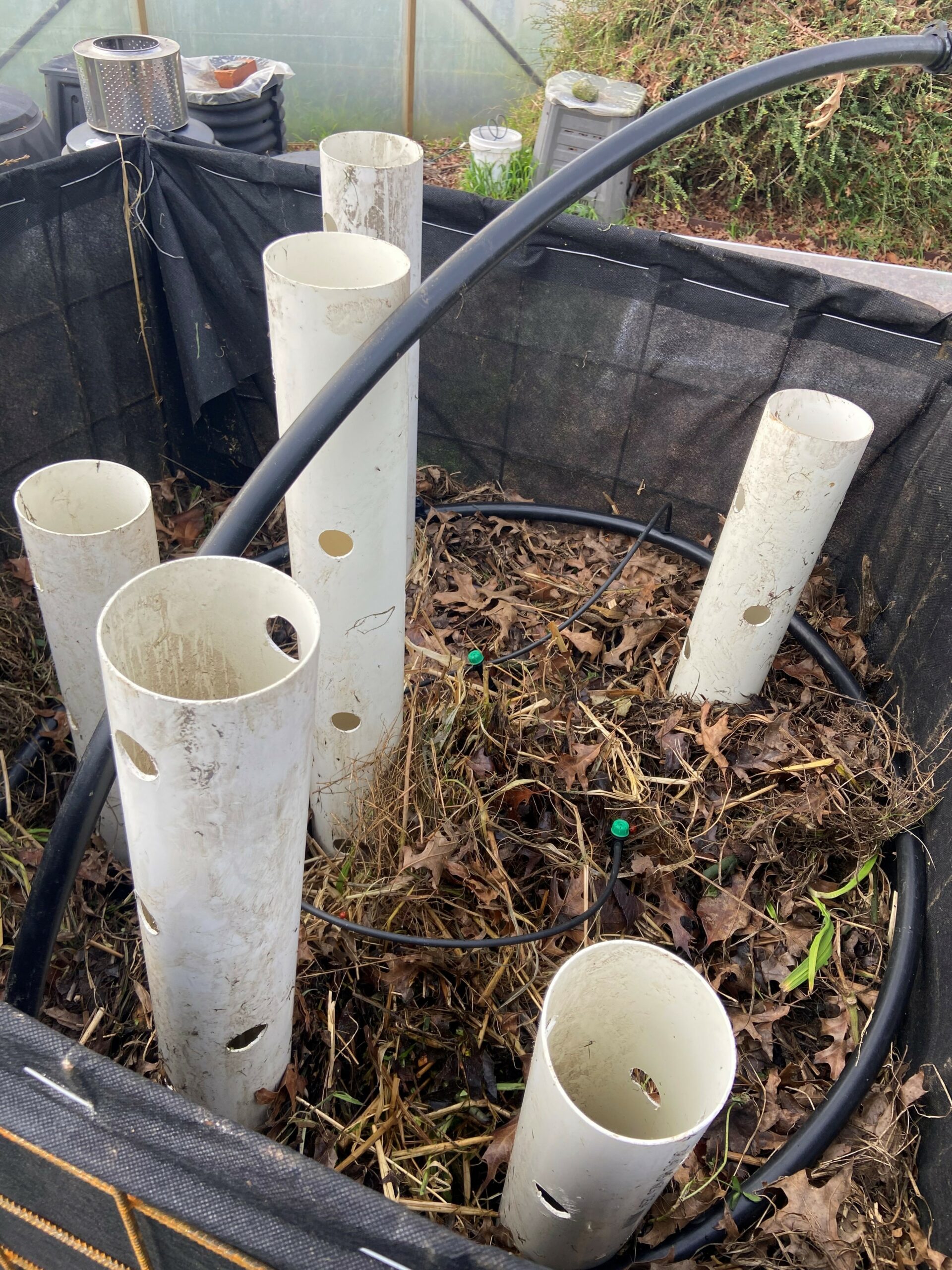
Attendee of the Ulverstone workshop, Tim Groom, who oversees production at Charlton Farm and exports onions on behalf of Wynyon Pty Ltd, built a Johnson-Su bioreactor the weekend following the workshop.
Tim hand built the Johnson-Su frame with materials including wire mesh sheets, shade cloths and PVC pipes.
Johnson-Su mixes are made using local materials within 2km of your property, the idea being that you incorporate biology and organic matter that thrives in your local area, therefore ensuring the biology will also thrive in the soil. Tim Groom sourced the following materials from his property; grass clippings, mulched up prunings from fruit and olive trees, barley straw, autumn leaves and chopped up weeds, adding water to ensure moisture is around 70 percent.
It’s important to note that there are many different approaches to make Johnson-Su, but there are a few good practices to follow. A couple of days after establishing your Johnson-Su, the PVC pipes can be removed. Beware of steam and potential fire risk during this time, as this is a thermophilic process that produces heat.
It is important to ensure the Johnson-Su is adequately irrigated and moisture levels remain high throughout the entire process. The Johnson-Su is ready for extraction at 9-12 months, although it is worth noting that at 22 weeks the top 80 percent of the mix already has 57 species of biology present, increasing to 99 species at 60 weeks. In the case of Johnson-Su, patience is a virtue.
One to 10kg of Johnson-Su can be used per hectare, with 1kg of compost translating to approximately 100 litres of Johnson-Su extract.
Key takeaways for Tim Groom from the workshop held at Ulverstone was the theory that cultivation and the use of nitrogen and phosphorus fertilisers have made bacteria dominant in the soil, and Johnson-Su offers a way to reintroduce beneficial fungi back into the system.
Although Tim also noted that Johnson-Su isn’t a miracle worker.
“You need to have enough food in the soil for the microorganisms in the Johnson-Su to flourish,” he said, highlighting the importance of using Johnson-Su as an accelerator to an established regenerative agriculture farming system.
If you missed the workshops with Julius Joel you can catch a recording of his presentation on RMCG’s YouTube account.