


January to November 2025: Australian potato export performance overview
2 March 2026
Strengthening insecticide resistance management for fall armyworm
2 March 2026
Reading Time: 3 minutes
BY DR MELANIE FORD AND DR WAYNE O’NEILL

Cucumber roots with heavy galling caused by guava root-knot nematode. Photo credit: David Yuan, Australian National Insect Collection.
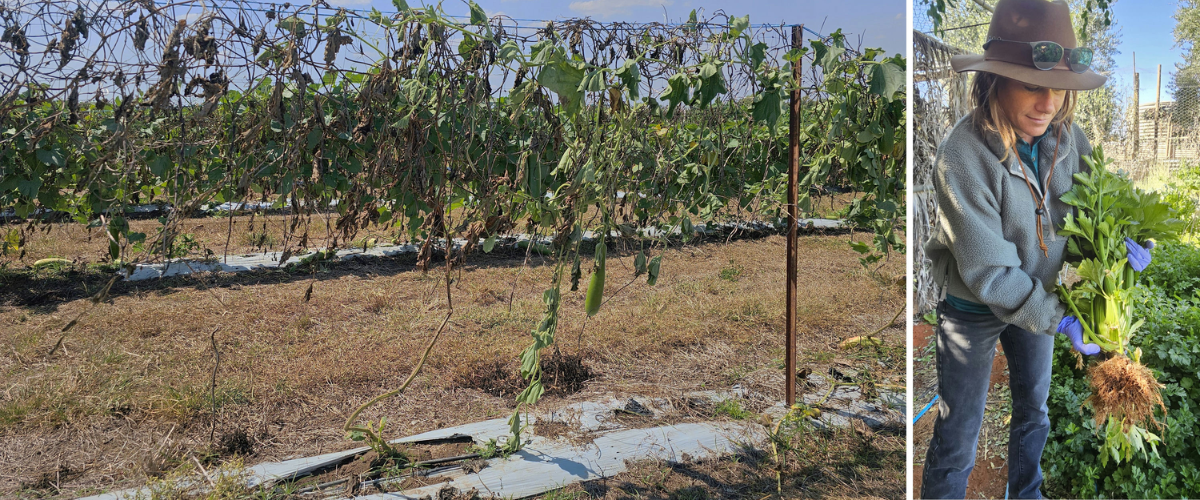
Guava root-knot nematode (GRKN), Meloidogyne enterolobii, was first detected in Australia in 2022. It was found in cucumber, zucchini, capsicum, sweetpotato and snake bean crops in the Top End of the Northern Territory. Further testing indicates that it is also present in isolated areas of Queensland.
Due to the challenges of managing this pest, Hort Innovation, alongside AUSVEG and several state and territory governments, have embarked on an Australia-wide project, Guava root-knot nematode identification and management (VG23007).
Led by the Queensland Department of Primary Industries, this strategic levy investment from the Hort Innovation Vegetable Fund seeks to understand where guava root-knot is found, better ways to detect it, and regionally appropriate management strategies.
Where has it been detected in NT?
The Northern Territory Department of Agriculture and Fisheries (NTDAF) are conducting Territory-wide surveys to determine where root-knot nematodes are a problem, which species are present, and the crops affected.
Dr Melanie Ford of NTDAF is working with growers, community gardens, and households to collect hundreds of root samples. She is analysing roots in the laboratory and identifying root-knot nematodes via their DNA.
There are three main species of root-knot nematodes that are found across the NT. To date, the newly detected fourth species, GRKN, has not been found outside of the Top End region. The other three species are long established in the NT and other parts of Australia.
“From our survey results to date, guava root-knot nematodes appear to be concentrated around the residential suburbs of Darwin and less in the agricultural areas. When detected on commercial farms, infestations of guava root-knot nematodes are often associated guava trees, and vegetable crops planted near the infested guava. The limited distribution is good news for other productive regions and building effective management practices,” explained Melanie.
Despite guava being a favoured host, GRKN has a very wide crop host range, and large losses have been experienced in multiple vegetable commodities overseas, so avoiding spread of the pest to other regions is extremely important.
“Farm hygiene, especially boot washing and wheel washing, are important for growers to prevent the spread of root-knot nematodes.
Another movement pathway for GRKN (and other plant pests and diseases, e.g. viruses) is the uncontrolled sharing of vegetative planting material. Therefore, it is crucial for farm staff and visitors travelling from infested to healthy areas to ‘come clean-go clean’.”
Research into management
Root-knot nematodes are notoriously difficult to manage, with most practices focussing on reducing populations and their impact to crops. Rotating crops with non-host cover crops are effective ways to reduce nematode populations by removing their food source. As guava root-knot nematode is a recent detection in Australia, it was unknown which local cover crops are suitable for management, so this project is testing a range of rotations for resistance.
“It is important for growers to know if rotational cover crops are root-knot nematode hosts, especially in mixed horticulture and fodder farming systems in the north.”
Trials are underway in the NTDAF Berrimah Research Farm glasshouses to identify which common NT cover crops are resistant to guava root-knot nematodes and if any are hosts.
Preliminary results suggest that Jumbo sorghum, Pronto sorghum and Katambora Rhodes grass are resistant to guava root-knot nematode. The commonly used fodder crop, Cavalcade, may be susceptible. Further research is under way and results will be available in mid-2026.
On the ground
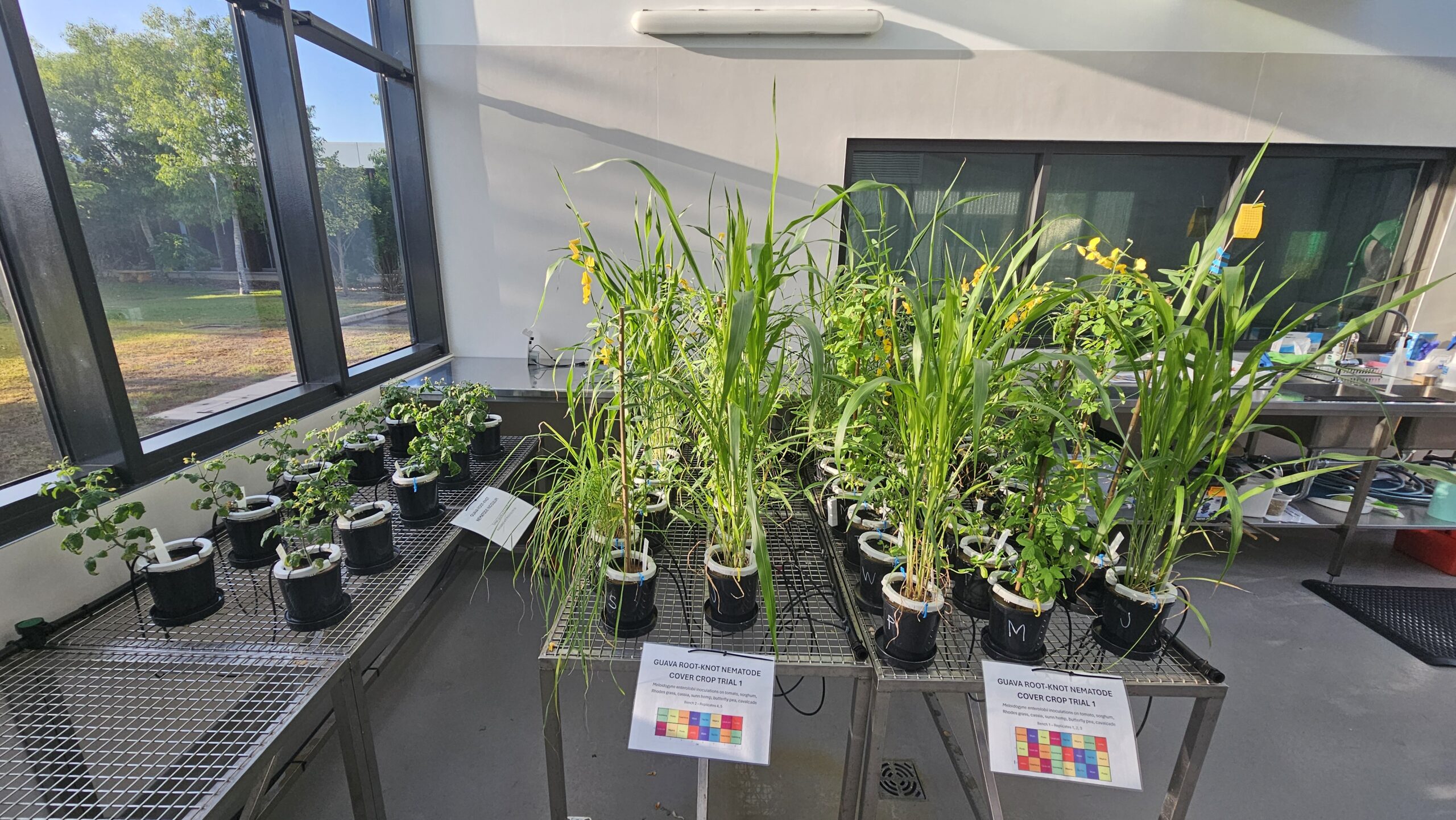
Glasshouse trials, at Berrimah Research Farm, testing common NT cover crops for GRKN resistance.
Some Top End growers impacted by GRKN have been proactive about farm hygiene, rotational cover crops and the use of compost amendments. Inputs of organic amendments have also been shown to suppress root-knot nematodes by supporting increased populations of natural enemies of the nematodes in the soil.
“Due to their diligence and hard work, we have seen two farms reduce the GRKN populations to negligible levels in annual cropping systems. This is a really positive outcome.”
Systems with mixed perennial and annual production are more challenging to manage as the perennial crop roots can host root-knot nematodes across seasons and at depth in the soil. To address these challenges, the Australia-wide project is developing methods for rapid detection of GRKN from soil samples. This will be key to helping growers understand where it is on their properties and drive Integrated Pest Management strategies for long-term management.