


Paraquat and diquat: A landmark decision and more reviews on the horizon
28 August 2026
Emerging technologies in action at the 2026 TAPG Ag Innovation Expo
28 August 2026
Reading Time: 4 minutes
BY THE SOIL WEALTH ICP TEAM
The success of a grower-led demonstration trial can often be judged by its immediate outcomes, but some of the most meaningful changes take years to emerge. The Soil Wealth ICP team caught up with demo site host growers in Western Australia, Victoria, and Queensland to reflect on their experiences and involvement in the project over the past decade.
What happens five, eight or even 10 years after a grower hosts a demonstration site trial? Do the practices stick? Do they evolve? Do they continue to influence the way a business farms?
These questions sit behind a new series of grower stories developed by the Soil Wealth ICP project. Two of the stories follow vegetable growers who have been continuously involved with the project for about a decade, documenting how ongoing collaboration has supported practice change over many years. The third revisits an earlier demonstration site in Western Australia to see what has happened since the original trial concluded.
The two ongoing longitudinal stories, the Mulgowie Farming Company and Schreurs & Sons, capture what can happen when growers and the levy-funded project work together over many years. Rather than focusing on a single trial, these case studies document how ideas have been refined, adapted, and expanded through continuous engagement.
The Western Australian story takes a slightly different approach. It revisits an earlier demonstration site hosted by Center West Exports several years after the trial finished, exploring which practices remained, what had changed and how the original work continued to influence the business.
Rather than asking whether a single practice was adopted, the stories explore broader questions. Which ideas endured? How did they evolve over time? And what role did trusted relationships play?
The answers were fairly consistent across all three businesses.
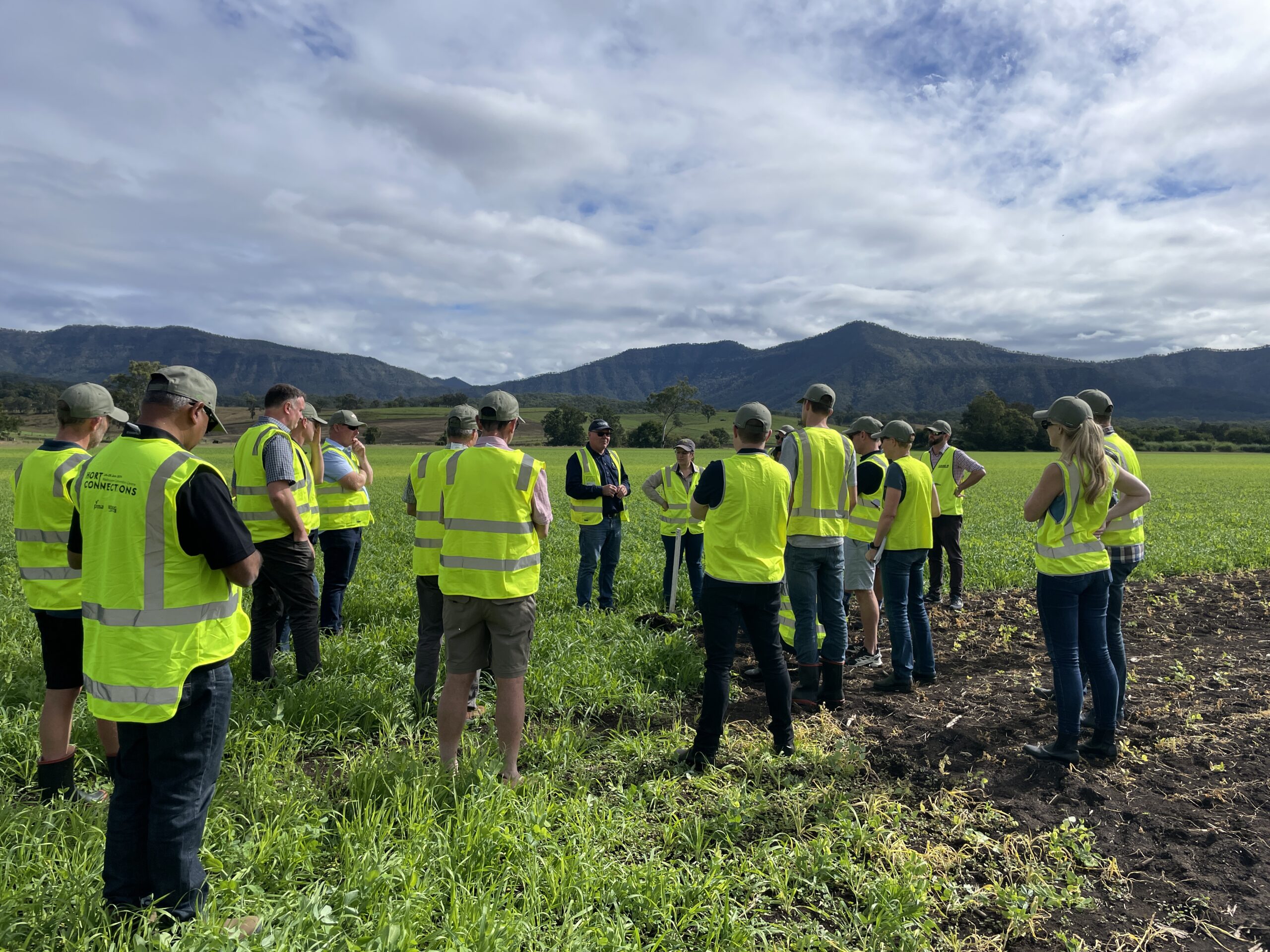
Field walk as part of Hort Connections 2025, Mulgowie.
Confidence grows over time
One of the strongest themes emerging from the stories is that confidence is often the catalyst for change.
For the Mulgowie Farming Company in Queensland, an eight-year partnership with the project has supported a progression from early cover crop and strip-tillage demonstrations through to biological inputs, nitrogen budgeting, and multi-species cover crops. Importantly, practices were not simply copied from elsewhere, but adapted to suit local soils, climates, and production systems.
The collaboration also provided data to support significant commercial decisions. A reduced tillage demonstration at Maffra, Victoria became the turning point that saw the business invest in strip-till machinery and expand the practice across hundreds of hectares. Today, the partnership continues to evolve as new opportunities emerge around crop nutrition, organic sources of nitrogen, soil biology, and nutrient efficiency.
A similar story has unfolded at Schreurs & Sons in Victoria. Over more than a decade, the business has engaged with Soil Wealth ICP through demonstration sites, webinars, masterclasses, project reference groups, industry events, and technical resources. As the business transitioned from peri-urban Melbourne to its new Tarwin farming operation in South Gippsland, many of the ideas
explored through the project became embedded in the design, establishment, and management of the new property.
Cover cropping, precision nutrient management, gridded soil sampling, soil moisture monitoring, biodiversity plantings, and integrated pest management became standard practice, supported by demonstration site data that proved their value under commercial conditions.
Revisiting a demonstration site
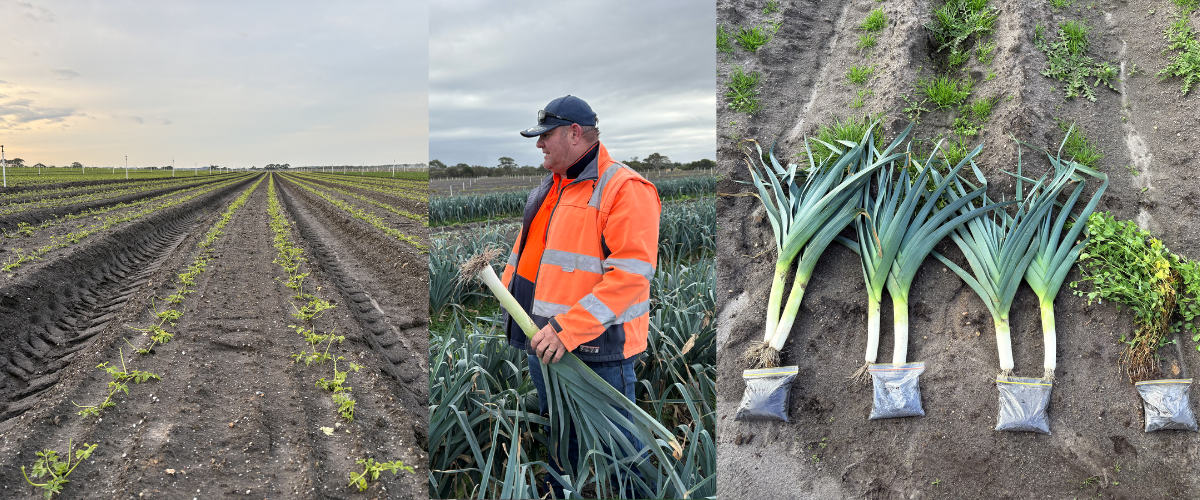
Center West Exports hosted one of Soil Wealth ICP’s early demonstration sites between 2016 and 2018, investigating compost and organic amendments to improve soil health in intensive carrot production.
This story revisits the business several years after the original trials to see what lasting impact they had. It revealed that some of the outcomes continue to influence decision-making today, with the business refining soil health practices, investigating alternative organic amendments, conducting its own on-farm trials, and continuing to invest in innovations that improve both productivity and crop quality.

Doris Blaesing and Francis Tedesco, WA
Relationships matter
While each grower adopted different practices, another common theme quickly became clear: the most valuable outcome was not necessarily a single research result but ongoing relationships.
Growers consistently described the value of having trusted people they could call on to discuss challenges, interpret results, and explore new ideas. Equally, the Soil Wealth ICP team gained a deeper understanding of each farming business, allowing future work to become increasingly relevant and practical.
These long-term relationships created a genuine two-way learning process: Researchers learn what is commercially realistic, and growers gain access to national and international knowledge, technical expertise and the confidence to trial innovations that may otherwise have remained on the shelf.
One of the clearest messages emerging from these stories is that meaningful practice change rarely happens overnight. New ideas are tested, refined, challenged and improved over many seasons. As businesses grow, seasons vary and technologies emerge, those ideas continue to evolve.
The team extends its thanks to all of our demonstration site growers and partners for their ongoing engagement and support.
READ THE FULL STORIES
Visit the Soil Wealth ICP website to read the complete stories featuring Mulgowie Farming Company, Schreurs & Sons, and Center West Exports, and discover how long-term partnerships are helping shape the future of Australian vegetable production. soilwealth.com.au/resources
FIND OUT MORE
The Soil Wealth and Integrated Crop Protection (Soil Wealth ICP) project provides research and development (R&D) extension and communication services on improved soil management and plant health to the Australian vegetable and melon industries. For further information contact project leaders Dr Gordon Rogers | gordon@ahr.com.au Carl Larsen | carll@rmcg.com.au