


From trial to impact: Long-term grower partnerships that tell the real story
28 August 2026
Insights into onion and potato production in the Adelaide Plains
31 August 2026
Reading Time: 3 minutes
The 12th annual Tasmanian Agricultural Productivity Group (TAPG) Ag Innovation Expo showcased technologies designed to help Tasmanian growers improve efficiency, productivity, and sustainability.
Held in April at Hagley Farm School in northern Tasmania, the event brought together growers, researchers and industry stakeholders for a day dedicated to the future of agriculture.
The expo was held in partnership with the Tasmanian Government, AUSVEG, Tas Farm Innovation Hub, VegNET Tasmania, Fruit Growers Tasmania, TasFarmers and Topcon. It highlighted emerging technology through live demonstrations in the paddock, giving attendees the opportunity to see the machinery in action.
The expo also provided valuable opportunities for networking and knowledge-sharing, with growers connecting directly with each other, as well as with industry representatives and technology providers.
VegNET Tasmania played a key role in the event, assisting with biosecurity and helping arrange the participation of several technology providers, including Polybee, Ecorobotix, Farm Tech Australia and Croplands.
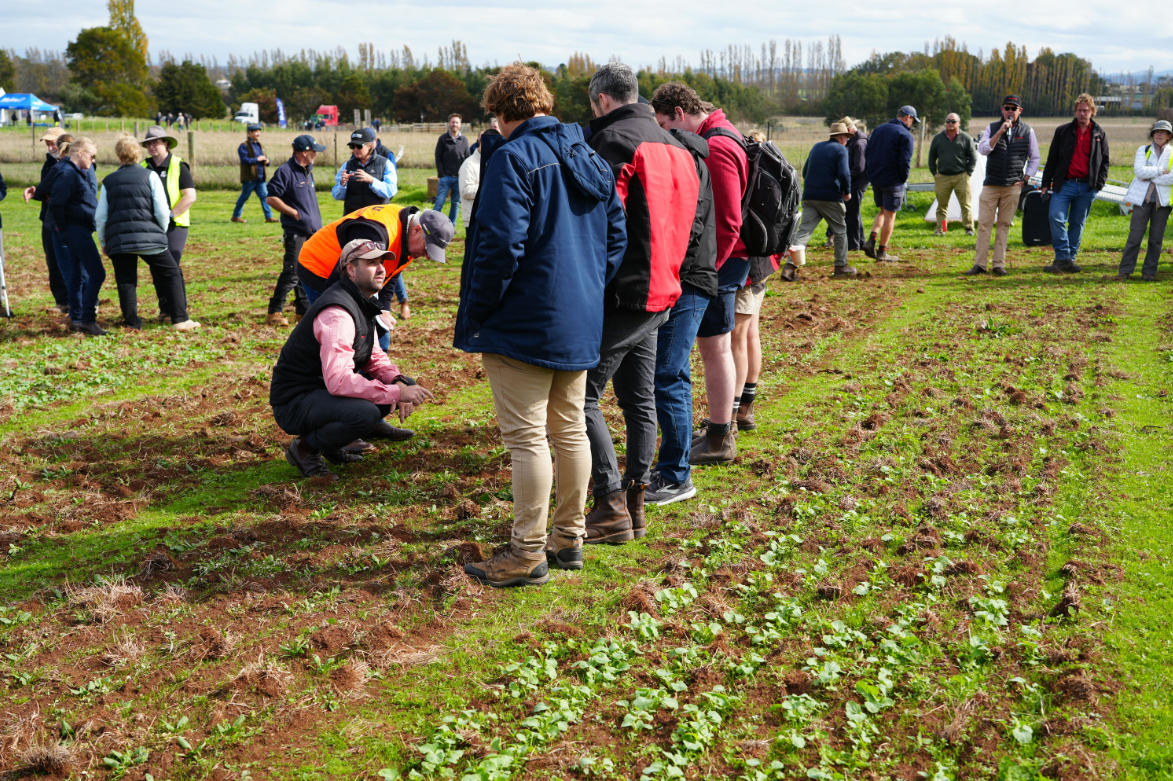
Attendees observing sprayed weeds
Polybee autonomous drone and AI tech
A key exhibitor at this year’s event was Polybee, showcasing its autonomous drone technology designed to support yield forecasting and harvest optimisation.
Polybee is a Singaporean startup that expanded its innovation activities to Australia in 2025, establishing headquarters as a base for ongoing research and development. The company currently focuses on automation solutions for leafy greens, broccoli, strawberries, blueberries, and greenhouse tomatoes.
Using AI and advanced analytics, the system collects detailed crop data during a single drone flight, measuring characteristics such as broccoli head size or spinach leaf development. This enables growers to make more informed management decisions, providing them with up to seven days’ notice of harvest readiness.
Additionally, Polybee’s contactless pollination system uses drone downwash to optimally vibrate flower clusters in self-fertile crops, a system that aims to address challenges stemming from declining bee populations.
FarmDroid demonstrates autonomous seeding
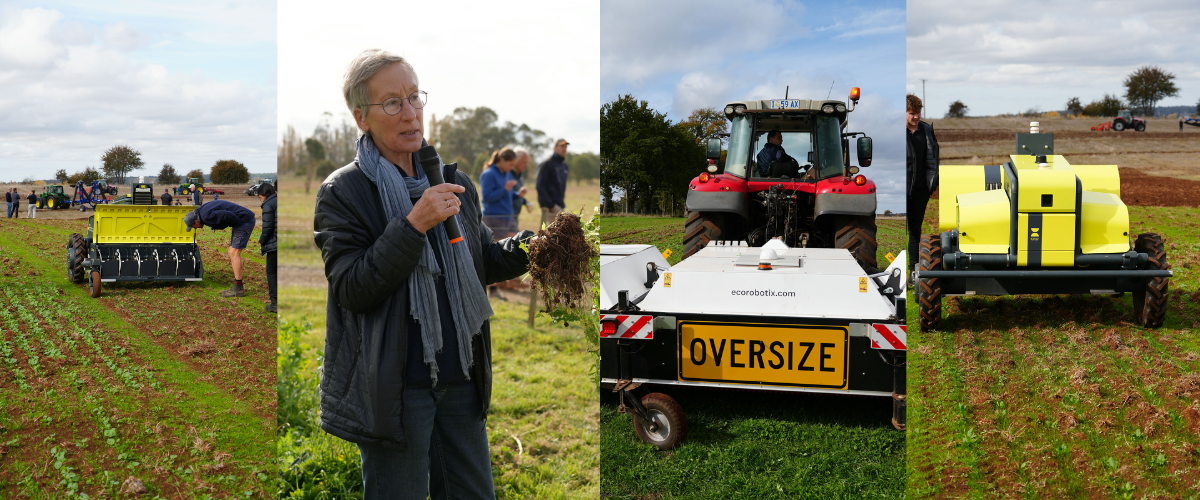
Building on last year’s live autonomous weeding demonstration, visitors also had the opportunity to see the FarmDroid autonomous platform in action again through a live seeding demonstration.
Representatives from Farm Tech Australia and the VegMech project (VG23003) shared insights from recent Tasmanian on-farm trials, including work conducted with grower James Terry of Cloud Ag. The autonomous machine performs both precision seeding and mechanical weeding, reducing labour requirements while maintaining crop establishment and weed control.
The demonstration highlighted how autonomous platforms are becoming increasingly viable options for vegetable production systems, particularly as growers seek ways to improve efficiency and reduce reliance on manual labour.
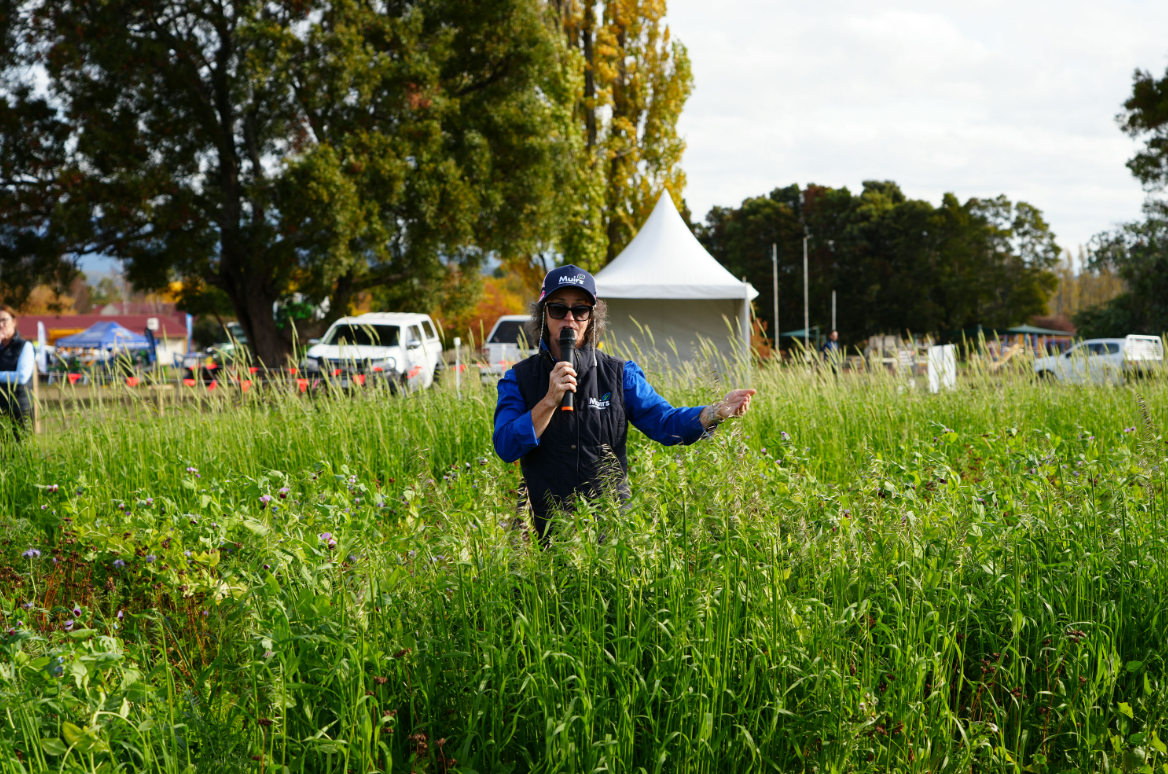
Julie Finnigan discussing cover cropping.
Beneath the Blend field walk
Soil health was another key focus area, with Julie Finnigan (Muirs) leading a presentation alongside John McPhee and Dr Doris Blaesing (Soil Wealth ICP) on the benefits of cover crops and soil biology.
Cover crops are planted primarily to protect and improve soil rather than generate a direct harvest. They help prevent erosion, reduce nutrient loss, suppress weeds and attract beneficial insects and pollinators.
Attendees were able to inspect a range of demonstration plots featuring species selected for different soil improvement purposes. Deep soil conditioners included tillage radish, blue lupins, and caliente 199, while surface soil conditioners featured leo oats, Japanese millet, phacelia and greenglobe turnips. Nitrogen- fixing species on display included benetas purple vetch, blue lupins, hadspen peas and tic beans.
The session emphasised how strategic cover crop selection can reduce reliance on external inputs while supporting productive and resilient farming systems.
Ecorobotix ARA sprayer
The Ecorobotix ARA precision sprayer, courtesy of Botanical Resources Australia, demonstrated how targeted application technology can dramatically reduce chemical use.
Using an array of cameras and advanced image recognition software, the ARA identifies crops, weeds and bare soil in real time. The machine then applies precise doses of product only where required, reducing product use by up to 95 percent.
By eliminating unnecessary applications, growers can lower input costs, improve operational efficiency and reduce environmental impact while maintaining effective weed control and crop protection.
Kilter AX-1 single-droplet weed control
Another autonomous technology attracting attention was the Kilter AX-1, demonstrated by Croplands. The lightweight robot uses AI-powered vision systems to identify weeds in a 360-degree zone around each crop plant. Its proprietary Single Drop Technology applies a precisely targeted 1150-micron droplet every six millimetres, enabling weeds to be treated at their earliest growth stage. By targeting individual weeds rather than broad areas, the AX-1 helps preserve soil moisture and nutrients while reducing herbicide use.
Driving the future of Tasmanian horticulture
The 2026 TAPG Ag Innovation Expo demonstrated how rapidly advancing technologies are reshaping modern horticulture. From autonomous drones to precision spraying systems and soil health strategies, the innovations on display offered practical solutions to some of the industry’s most pressing challenges.