



VegNET VIC: VegNET working with climate-conscious farmers
31 August 2026
VegNET Gippsland: Five trends shaping the future of vegetable growing
31 August 2026
Reading Time: 4 minutes
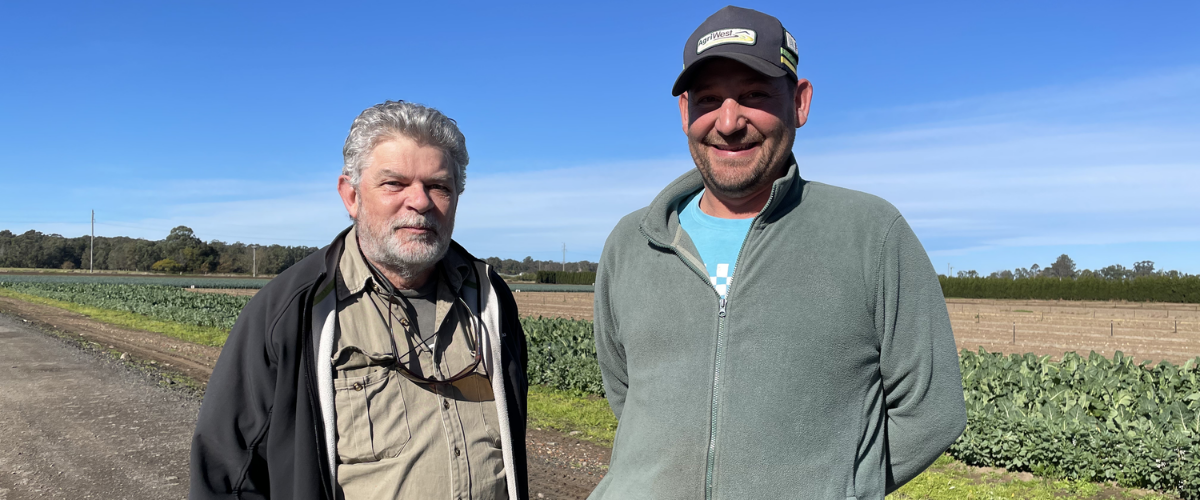
Sylvia Jelinek, VegNET NSW Regional Development Officer, visited Alandale Farm to meet with third-generation vegetable grower Sam Micallef to learn more about the family’s farming journey.
Raised on the sandy soils of Agnes Banks along the Hawkesbury River, Sam and his brother Val grew up immersed in vegetable production under the guidance of their father, John. Today, the brothers continue to build on the family’s proud farming heritage while embracing innovation and sustainable growing practices.
Alandale Produce operates more than 80 hectares across two properties – one at Agnes Banks and another near Bathurst, which is managed by Val. Together, the farms produce a diverse range of vegetables, including brassicas, lettuce, sweet corn, leeks, silverbeet, zucchini and other seasonal crops. The produce is supplied to the fresh market through the Sydney Markets, servicing consumers across the region with high-quality, locally grown vegetables.
Their dedication to sustainable vegetable production was recognised at the 2026 Horticulture Awards for Excellence where they were named finalists for the Environmental and Sustainability Award, while Val was also a finalist for the Grower of the Year award. The brothers remain focused on producing high-quality vegetables, improving farm sustainability and ensuring the long-term success of their family business.
What challenges do you face as a vegetable grower and how do you manage these challenges, or try to overcome them?
Market volatility remains one of the biggest challenges facing vegetable growers, with unpredictable prices often placing pressure on farm profitability. Rising input costs, including labour, fuel, fertiliser and other production expenses, have further reduced margins in recent years. To manage these challenges, careful planning and forecasting are essential. By assessing market demand, planning crop schedules well in advance, and securing the supplies needed for each growing season, growers can improve efficiency, better manage costs, and reduce some of the risks associated with fluctuating market conditions.
What new innovations, research and practices has your business implemented recently?
Alandale Produce has embraced a range of innovations and sustainable farming practices to improve productivity, pest management and resource efficiency. One of the most valuable tools has been the use of RapidAIM’s Fall Armyworm RapidMEGA traps, which have provided reliable early detection of fall armyworm in sweet corn crops. This early warning system allows timely spray applications, helping to manage the pest before significant damage occurs.
The business has also adopted drone spraying technology, which has been a game changer for crop protection and nutrition. Drones enable applications to be made when fields are too wet for conventional machinery, reducing soil compaction and crop damage while ensuring timely delivery of protective sprays and foliar fertilisers.
To improve soil health and long-term productivity, Alandale Produce has incorporated compost applications and minimal tillage practices, helping to build soil organic matter, enhance soil structure and support sustainable production. In addition, the installation of a permanent irrigation system has improved water-use efficiency by reducing the need to relocate pipes and disposable drip tape, cutting agricultural waste while allowing more precise monitoring and management of irrigation. Together, these innovations are helping the business become more efficient, resilient and environmentally sustainable.
How do you maintain your disease resistance and ongoing sustainability of the farm?
Maintaining healthy soils and effective disease management are key priorities for Alandale Produce. At the Bathurst property, cover cropping plays an important role in the farm’s rotation program, helping to keep living roots in the soil, increase organic matter and break disease cycles between vegetable crops. Crop rotation is also used across the farming operation to minimise disease pressure and support long-term soil and crop health.
The business places a strong emphasis on Integrated Pest Management (IPM), working closely with consultant Andy Ryland from Integrated Pest Management Consulting for regular crop monitoring and advice. This service provides clear, timely recommendations on pest and disease management, helping the business make informed decisions while reducing the time required for on-farm monitoring and assessment.
Varietal selection is another important strategy, with crop varieties chosen to suit the growing conditions, seasonal pressures and market requirements. By combining cover cropping, crop rotation, specialist IPM support and careful variety selection, Alandale Produce continues to improve farm sustainability, strengthen disease resilience and support productive vegetable crops year after year.
The most rewarding aspect of farming is watching crops grow from seed to harvest and seeing the results of months of planning and hard work, as well as the independence that comes with running a family business and the opportunity to make decisions that shape the future of the farm.
In terms of research and development, what do you think is vital to the vegetable industry right now?
There is significant value in practical research that delivers on-farm outcomes. Varietal trials are particularly important, helping growers identify cultivars that perform well under local conditions and market requirements. Emerging technologies, such as remote monitoring systems and early detection tools for pests and diseases, are also becoming increasingly valuable for improving efficiency and reducing production risks. In addition, professional development opportunities through farm tours, workshops and field days play an important role in helping growers share knowledge, learn from one another and stay up to date with industry advancements.
What do you enjoy most about being involved in the vegetable industry?
The most rewarding aspect of farming is watching crops grow from seed to harvest and seeing the results of months of planning and hard work, as well as the independence that comes with running a family business and the opportunity to make decisions that shape the future of the farm.
What is your proudest achievement as a vegetable grower?
Building a farming business that prioritises sustainability while consistently delivering high-quality produce to market. Positive feedback from customers and buyers provides reassurance that the business is meeting market expectations and producing vegetables that consumers value.
What future plans do you have for the farm?
Following the recent expansion into Bathurst, Alandale Produce is focused on consolidating and strengthening the business. The additional property has created opportunities to capture shoulder seasons, extend production windows and support more consistent year-round supply of leafy vegetables. Looking ahead, the company is committed to maintaining a sustainable and resilient operation while continuing to improve efficiency, productivity and long-term
profitability across both farming enterprises.