


VegNET NSW: Grower Sam Micallef in focus A harvest of achievement for Alandale Produce
31 August 2026
VegNET South East Queensland: Looking beyond our borders Bringing new ideas back to SEQ
1 September 2026
Reading Time: 3 minutes
As a VegNET Regional Development Officer (RDO), I spend most of my time on farms or on the phone talking with growers about the challenges they’re facing and the opportunities they’re exploring. Whether it’s labour shortages, rising input costs, or finding practical ways to improve efficiency, the conversations are remarkably consistent across the industry.
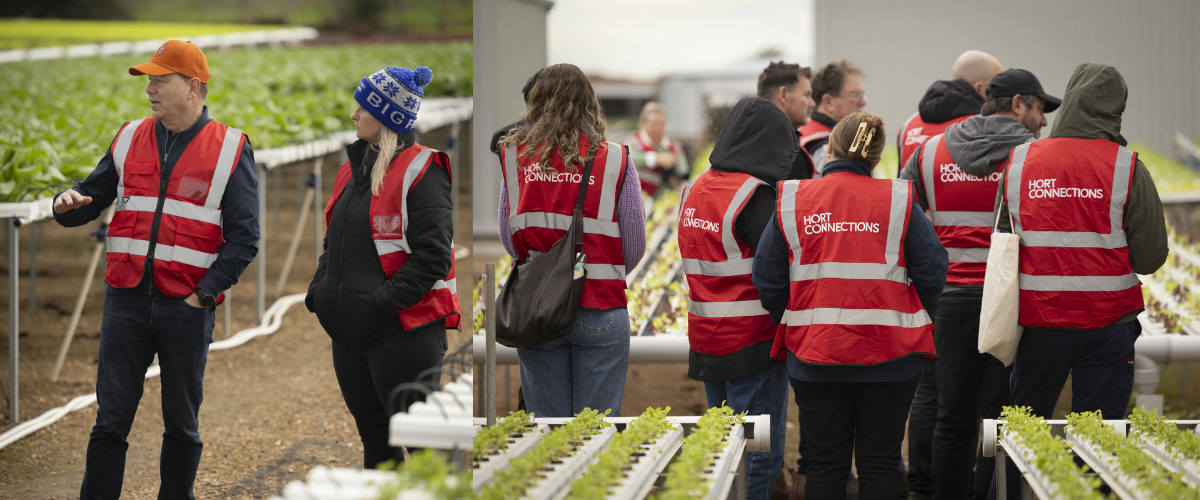
Attending Hort Connections 2026 provided the chance to step away from the day-to-day and look at the bigger picture. It was also a privilege to present at the VegNET 10-year celebration, reflecting on the work we’re doing with growers in Australia and celebrating a decade of connecting vegetable producers with research, innovation and practical support. Standing alongside RDOs from across Australia, it was inspiring to hear the different ways we’re supporting growers while all working towards the same goal – building a stronger, more resilient vegetable industry.
While it’s easy to be impressed by the latest machinery and technology on display, what stood out most to me wasn’t necessarily the newest innovation – it was how much of it is becoming practical and accessible for growers.
Here are the five trends that I believe will shape the future of vegetable production.
1. Precision is becoming the new standard
One of the biggest takeaways was how quickly precision agriculture is becoming part of everyday farming rather than something reserved for large operations.
Whether it’s smarter spraying systems, improved irrigation management or crop monitoring technology, the goal is simple: use resources more efficiently while maintaining productivity.
2. Innovation is focused on solving labour challenges
Labour continues to be one of the biggest pressures facing vegetable businesses, and many of the innovations on display reflected that reality. From autonomous equipment to electric weed control and automated transplanting systems, there was a clear focus on reducing repetitive manual tasks rather than replacing people altogether. Many of these technologies are now moving beyond the concept stage and into commercial use, becoming practical options that growers can see operating on Australian farms, giving them confidence to explore what might work in their own businesses.
3. Sustainability is becoming practical
Sustainability was another major theme, but the conversation has evolved. Rather than focusing solely on environmental outcomes, exhibitors were demonstrating how sustainable practices can also improve business performance. Better water efficiency, more targeted chemical applications, improved soil management and reduced fuel use all have environmental benefits, but they also make good business sense. Growers are increasingly looking for solutions that improve profitability while supporting the long-term health of their farms.
4. Good data leads to better decisions
The technologies that generated the most interest at the conference were those that simplified decision-making. Whether it was digital crop monitoring, equipment diagnostics or pest identification tools, the emphasis was on providing timely, practical information that could be acted on quickly. Working alongside growers, I’ve seen firsthand how valuable simple, easy-to-use tools can be when they help identify problems earlier or give growers greater confidence in their management decisions. Technology is at its best when it supports growers rather than adding another layer of complexity.
5. People remain our greatest resource
Despite all the technology on display, my biggest takeaway wasn’t about machinery at all. The most valuable conversations happened over coffee, between conference sessions and while walking through the exhibition halls. Growers sharing experiences, discussing challenges and learning from each other’s successes and failures is something technology can never replace. As someone whose role is built around connecting growers with information, research and each other, it was encouraging to see how willing people are to share their knowledge.
Looking ahead
Travelling home from Adelaide, I found myself reflecting on just how much this industry continues to evolve. Hort Connections reminded me that Australian growers are incredibly adaptable. They continue to embrace new ideas while remaining focused on what matters most: producing high-quality food, running profitable businesses and leaving their farms in better condition for the next generation.