


VegMech Technology Catalogue
4 August 2026
Building the industry’s next generation. Growing Leaders 2025: Looking Back
28 August 2026
Reading Time: 6 minutes
In this article, you will learn about Australia’s national biosecurity system and how we respond to emergency plant pest (EPP) incidents, including:
- what is being done to protect Australia from exotic plant pests and diseases
- our national plant biosecurity arrangements
- the role growers play in our national plant biosecurity system.
Key points
- Keeping Australia’s plant industries free of unwanted exotic pests and diseases is an ongoing process undertaken overseas, at our border, and within Australia and our external territories.
- Growers can actively participate in our national plant biosecurity system by implementing good biosecurity practices, monitoring their property for unusual pests, and reporting suspected exotic pests and diseases.
Australia’s national plant biosecurity system
Australia is free from many pests and diseases that in other parts of the world have severely impacted crop production, natural environments and communities. Australia has a world-class plant biosecurity system that works hard to protect our lifestyles, natural environment and livelihoods.
The national plant biosecurity system includes activities overseas, at our borders, and within Australia. Protecting Australia from pests and diseases is only possible when everyone works together and every Australian has a role to play.
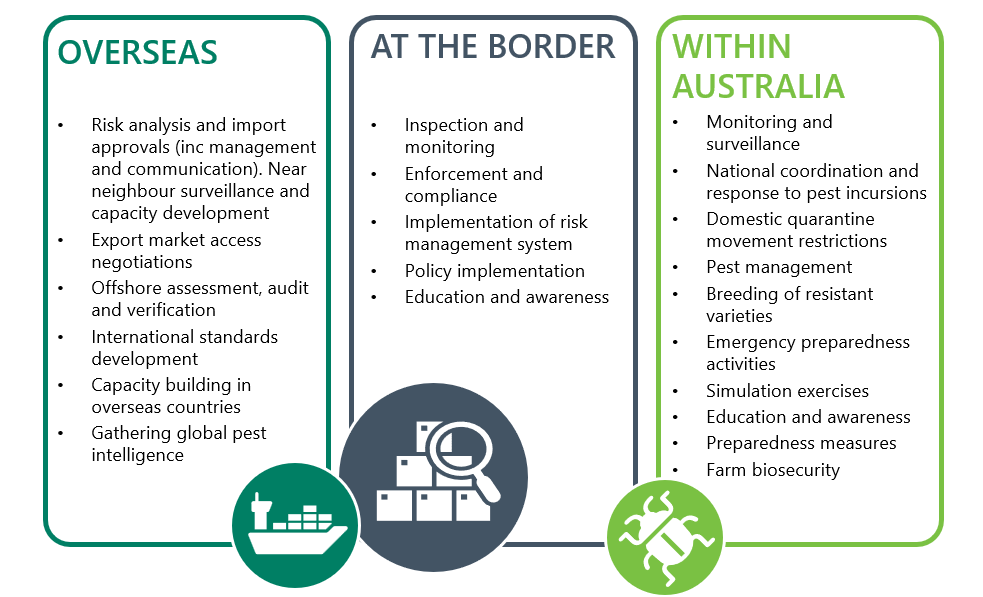
Protecting Australia from plant pests and diseases through activities undertaken overseas, at our borders, and within Australia.
Overseas and at the border
The Department of Agriculture, Fisheries and Forestry works to minimise the likelihood of pests and diseases entering the country pre-border and at the border. Their role is to coordinate national biosecurity policy to reduce the risk of pest entry into Australia and carry out quarantine inspections at the border.
Pre-border activities undertaken in Australia and overseas include:
- undertaking on the likelihood of imported goods hosting exotic pests and diseases
- issuing import approvals to companies and individuals who have met our import requirements
- developing international standards that our trading partners must maintain when importing goods into Australia
- gathering intelligence on global pests that require monitoring
- working with our trading partners to develop agreements to allow our producers to export their goods to international markets.
At border activities undertaken at Australian ports and other authorised quarantine premises include:
- inspecting and if needed treating goods, equipment and vehicles entering the country for unwanted pests and diseases
- inspecting people and their luggage for unauthorised goods and those that may be carrying unwanted pests and diseases
- prioritising exotic pests with targeted inspection and monitoring activities
- educating incoming passengers about the importance of biosecurity.
Within Australia
Within Australia, prevention and detection is the role of every Australian and we all have a responsibility to report unusual pests and diseases.
Activities undertaken within Australian borders include:
- ongoing surveillance for pests and diseases
- movement restrictions on certain high risk plant material to stop the spread of pests and diseases
- preparing for a biosecurity emergency through education and planning
- an agreed national coordination strategy when responding to pest and disease incursions.
The Australian government, state and territory governments and industry work together to reduce the risks of exotic pests and diseases impacting Australia.
Responding to a national biosecurity incident
Australia’s biosecurity system is robust, but it is not infallible. When a plant pest or disease biosecurity incident does occur, it is managed through a partnership agreement between the Australian government, state and territory governments, national plant industry bodies and Plant Health Australia.
An essential part of our biosecurity system is being able to respond effectively to eradicate or contain a pest or disease. In Australia we have established agreements to support national response measures to pest and disease detections, increasing the likelihood of successful containment and eradication.
What are the ’arrangements’?
Response arrangements are agreements between parties that outline decision making and cost-sharing arrangements to enable a coordinated, effective and efficient response.
There are three national biosecurity response agreements in Australia:
- The Emergency Plant Pest Response Deed (EPPRD). The Australian government, all state and territory governments and peak plant industries are signatories. The EPPRD covers exotic insects, mites, pathogens (disease), nematodes and snails that have potential to impact on our crop, bee, and edible fungi industries. Plant Health Australia is the custodian.
- The Emergency Animal Disease Response Agreement (EADRA): The Australian government, all state and territory governments and peak animal industries are signatories. The EADRA covers diseases that have a significant impact on livestock. Animal Health Australia (AHA) is the custodian.
- The National Environmental Biosecurity Response Agreement (NEBRA) is an agreement amongst government signatories and covers pests that impact our environment and way of life. Non-government entities may participate in incidents covered by the NEBRA on an incident-by-ident basis, subject to the requirements of the agreement. The custodian is the Department of Agriculture, Fisheries and Forestry.
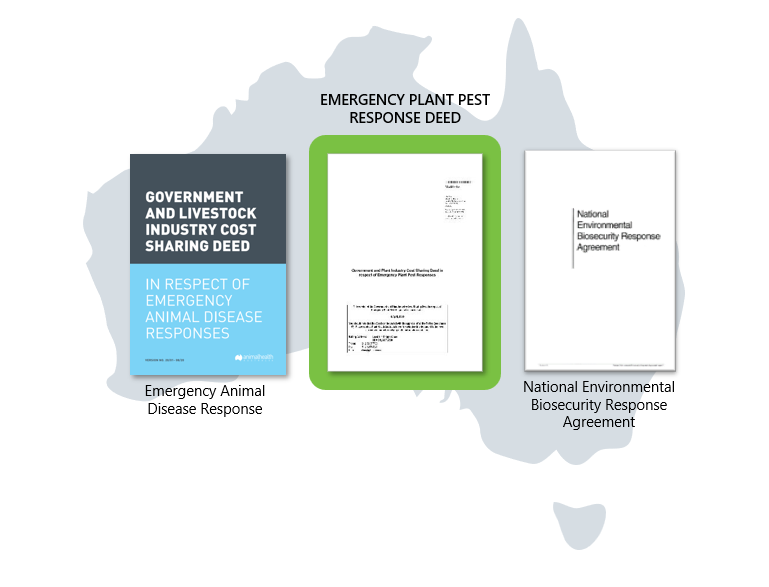
There are three national biosecurity response agreements in Australia
Emergency Plant Pest Response Deed
So, what is the EPPRD? In short, it:
- is a legally binding agreement between the signatories which (as at Aug 2026) are the Australian government, all the state and territory governments, 37 national plant industry bodies and Plant Health Australia
- outlines the shared role signatories play in managing and funding emergency responses
- ensures there is accountability and transparency in decision making
- outlines the potential for growers who are affected by response actions to be reimbursed for defined losses and costs
- commits all signatories to implement processes to reduce the risk of a biosecurity incident and maintain trained personnel, technical expertise and capacity to respond.
What is an Emergency Plant Pest?
Any pest or disease that isn’t native to or established in Australia may be considered exotic. However those exotic pests and diseases with the potential to cause significant damage across Australia’s primary production, environmental or amenity landscapes are considered an Emergency Plant Pests (EPP). This is also relevant for pests and diseases that may affect European Honey Bees (Apis mellifera), which many of Australia’s plant industries rely on for pollination of different plants.
Determining whether a pest or disease is an EPP is important as the EPPRD is only applied where the pest or disease has been identified as an EPP. If an exotic pest doesn’t meet the criteria of an EPP, it doesn’t signify inaction allowing it to become established. The state or territory where the pest is detected may work with their industries to eradicate the pest in order to retain their proof of freedom for market access. However, this work is not carried out under a national coordinated response plan.
In brief, for an exotic pest or disease to be identified as an EPP, it must have a nationally significant impact, whether economically or environmentally, and must also meet one or more of the following criteria:
- a known plant pest not previously detected (or previously eradicated) in Australia
- a variant form of an established plant pest that can be distinguished by appropriate investigative and diagnostic methods
- a newly identified plant pest of unknown or uncertain origin
- a plant pest already found in Australia that:
- is restricted to a defined area through regulatory measures to prevent further spread of the pest; and
- has been detected outside the defined area; and
- is not a native of Australia; and
- is not the subject of any instrument for management which is agreed to be effective risk mitigation and management at a national level.
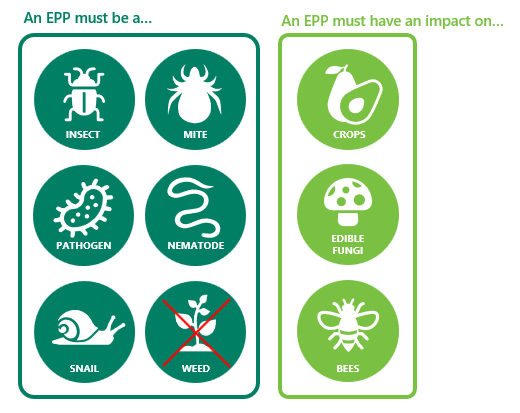
The EPPRD is only applied where the pest or disease has been identified as an Emergency Plant Pest.
Role of growers in the national biosecurity system
As a grower, you play a key role in protecting Australia’s agricultural industries from pests and diseases by detecting potential threats and decreasing the risk of a new plant pest or disease entering and establishing on your property.
Minimising biosecurity risks
There are actions you can take every day to minimise the risk of plant pests and diseases entering and establishing on your property. Prevention, as they say, is better than a cure.
Here are a few simple ways you can keep your property pest-free:
- monitor people, vehicles and equipment that go on and off your property, making sure they are clean and free from dirt and weeds
- implement good farm hygiene practices such as controlling weeds and feral animals, monitoring water sources, using and storing chemicals according to their labels, and keeping production and storage areas clean and tidy
- make biosecurity a part of your day-to-day business by educating yourself and your staff on how to implement good biosecurity practices
Report anything unusual
All states and territories have a legal obligation requiring you to report potential biosecurity risks as soon as possible. The Exotic Plant Pest Hotline 1800 084 881 will link you directly to the state or territory agriculture department in the location you are calling from and advise you on the next steps. Reporting early is critical in increasing our chance of eradication and supporting a return to business as usual as quickly as possible.
What you can do now
- Familiarise yourself with the high-priority pests for horticulture. Visit Plant Health Australia’s resource centre to find out more.
- Prepare a biosecurity plan for your property.
This content has been developed in collaboration with Plant Health Australia to increase awareness of national response arrangements under the Emergency Plant Pest Response Deed (EPPRD).
Resources
Read: Want to learn more?
Watch: View videos online to find out more
- Australia’s Biosecurity system
- Department of Agriculture, Fisheries and Forestry’s Detect and Protect podcast series
- Biosecurity Bite: At the Border