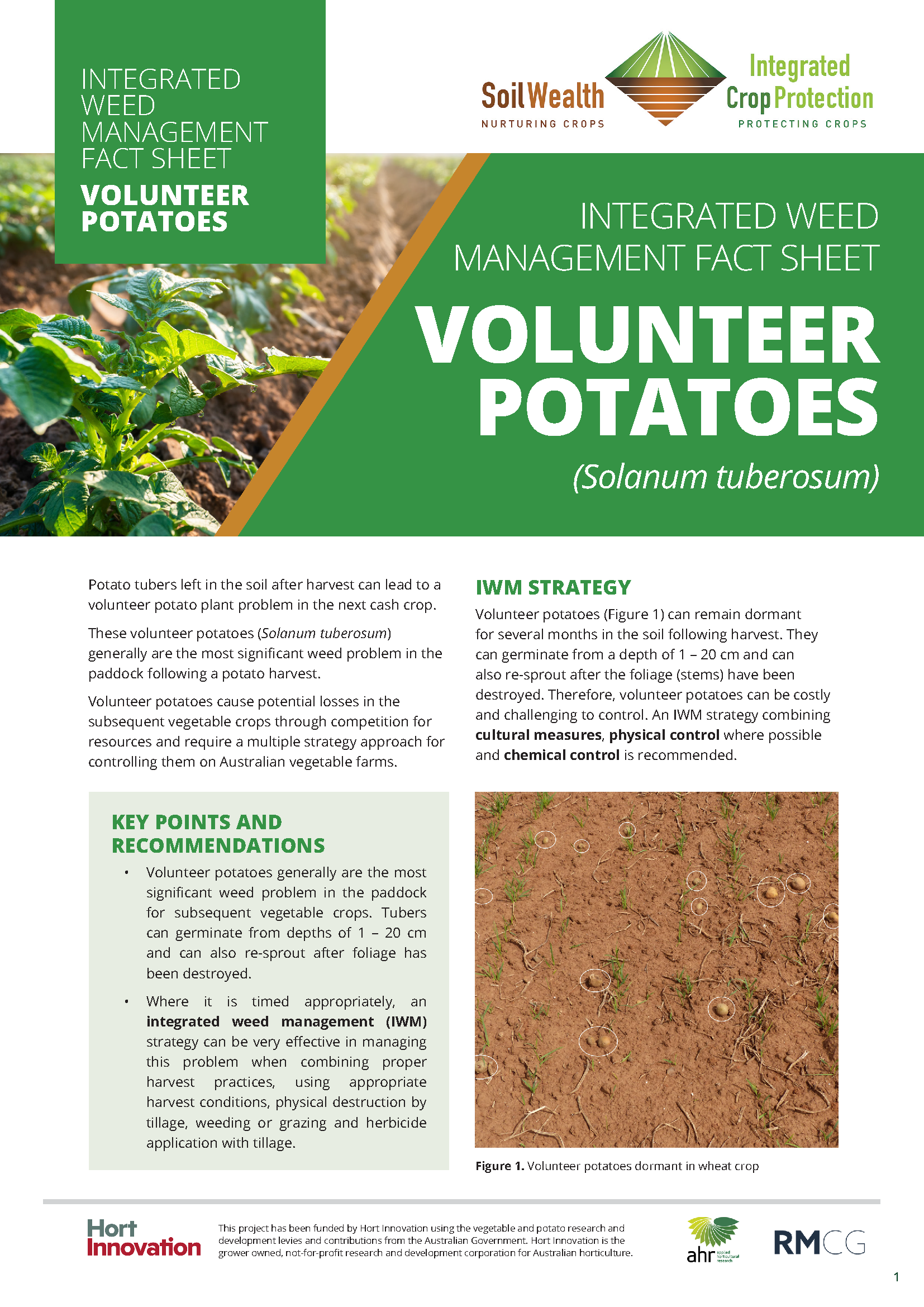
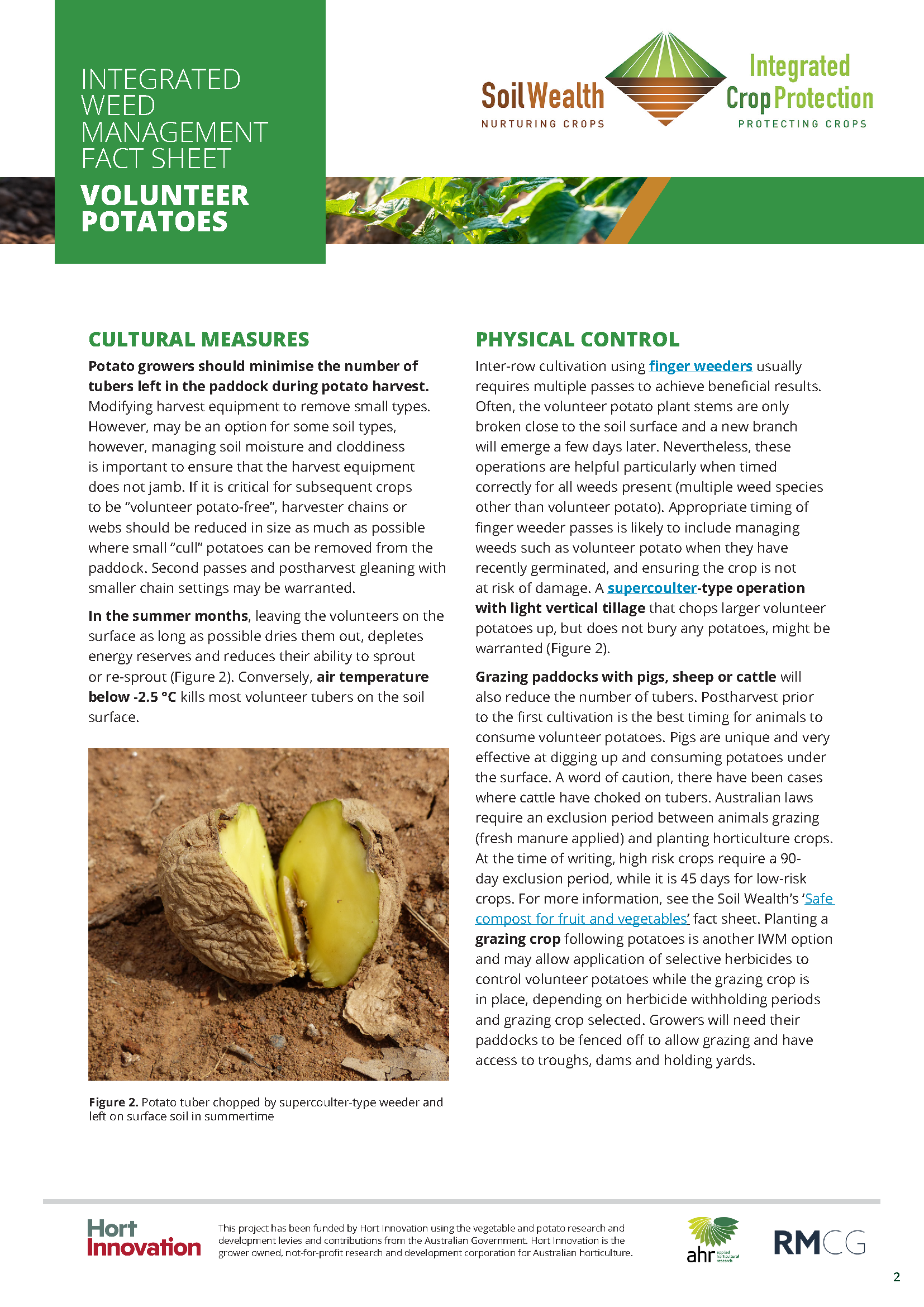
Volunteer potatoes (Solanum tuberosum) generally are the most significant weed problem in the field following a potato harvest.
Where it is timed appropriately, an integrated weed management (IWM) strategy can be very effective in managing this problem when combining proper harvest practices, using appropriate harvest conditions, physical destruction by tillage, weeding or grazing and herbicide application with tillage.
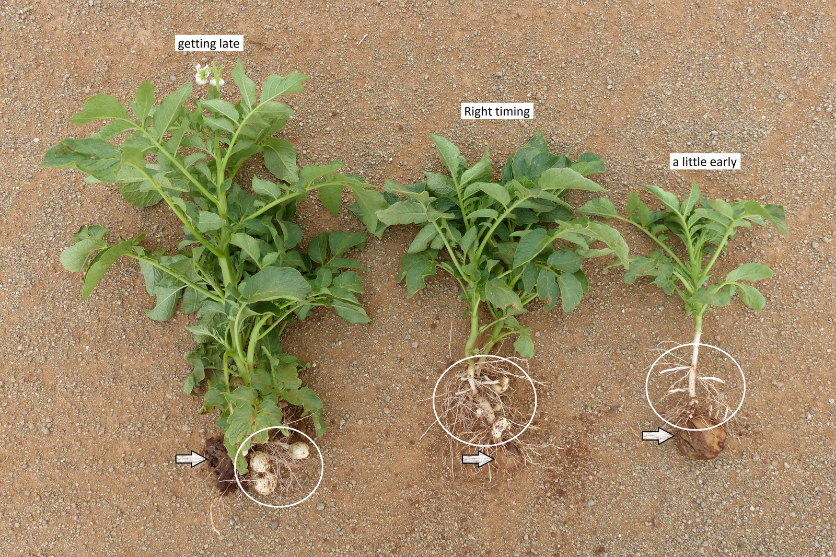
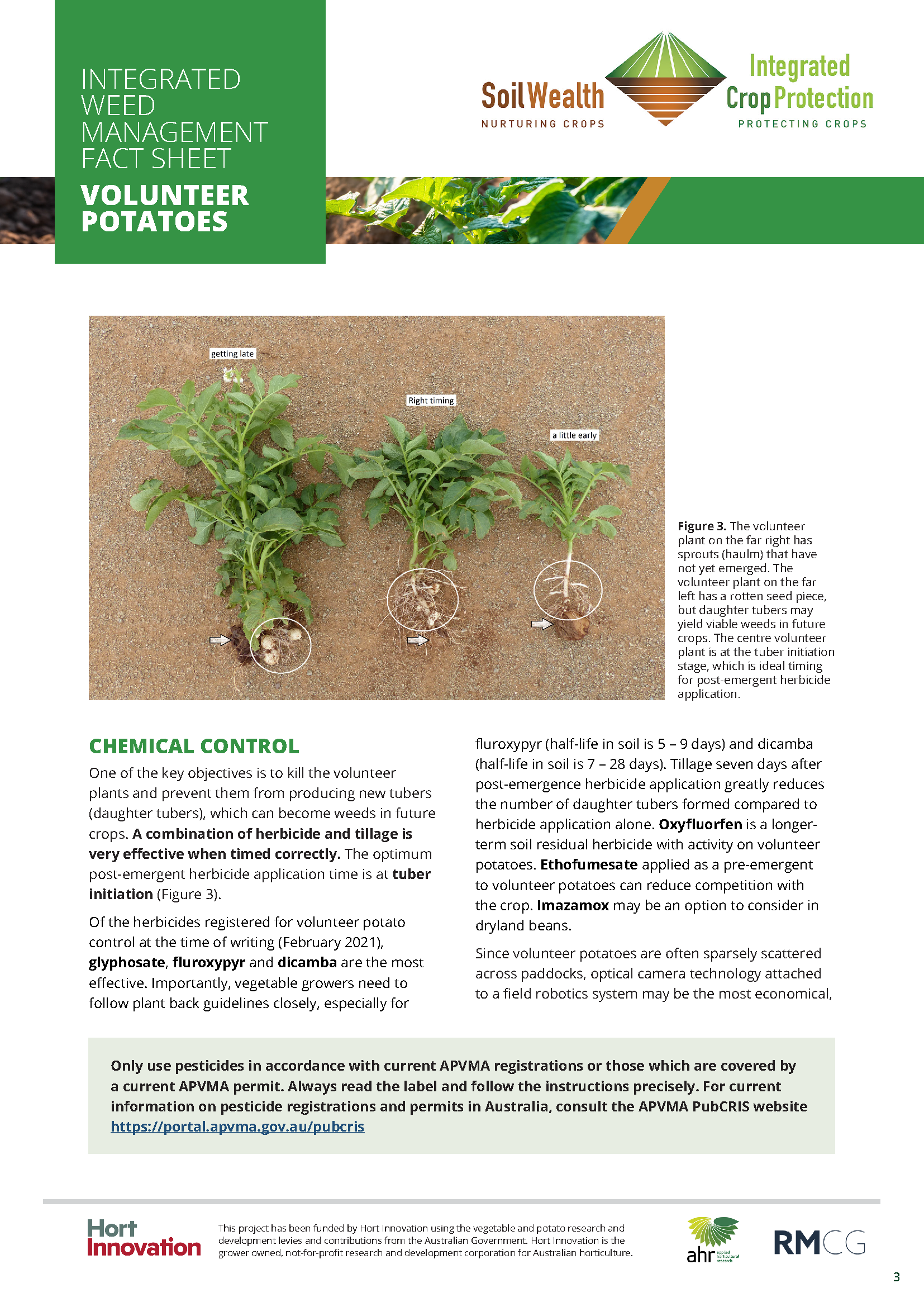
The volunteer plant on the far right has sprouts (haulm) that have not yet emerged. The volunteer plant on the far left has a rotten seed piece, but daughter tubers may yield viable weeds in future crops. The centre volunteer plant is at the tuber initiation stage, which is ideal timing for post-emergent herbicide application.
This resource has been produced by the Hort Innovation-funded Soil Wealth and ICP project – jointly delivered by RM Consulting Group and Applied Horticultural Research.
This project has been funded by Hort Innovation, using the research and development levies listed below and contributions from the Australian Government. Hort Innovation is the grower-owned, not-for-profit research and development corporation for Australian horticulture.
This project has been funded by Hort Innovation, using the research and development levies listed below and contributions from the Australian Government. Hort Innovation is the grower-owned, not-for-profit research and development corporation for Australian horticulture.