


Exotic Pest Fact Sheet: Spotted Cucumber Beetle
28 April 2026Fact Sheet: Stemphylium leaf blight in onions
30 April 2026
Reading Time: 2 minutes
 What would happen if an exotic pest turned up in the region where you farm? Who would you call? Could you continue to move your produce? How long before you could get back to business if a quarantine zone was imposed?
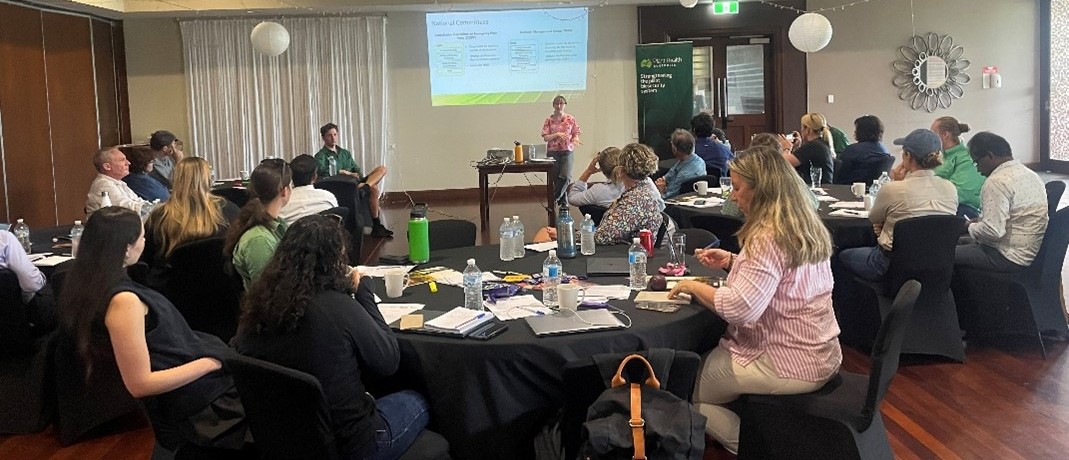
These are the kinds of questions that a recent biosecurity workshop in Bowen set out to answer.
Organised by AUSVEG in collaboration with the Bowen Gumlu Growers Association, Melons Australia, and Australian Mangos, the workshop brought together local vegetable and melon growers, mango producers, and agronomists for an interactive session facilitated by Plant Health Australia.
The core of the session was a hypothetical scenario: a new pest, not currently present in Australia, has been detected in the Bowen-Gumlu region. Working through this step by step, participants discussed what happens when a suspect pest or disease is reported, who holds responsibility at each stage of the response, how decisions get made, and, critically, what the real-world impact on growers and their businesses might look like. It’s one thing to know biosecurity matters in theory; it’s another to discuss with your peers and work through what a regional incursion would actually mean for your farming or agronomy business.
Participants came away with a clearer picture of the national response framework, where growers fit within it, and what they can do right now to protect themselves and the broader industry. The workshop also highlighted areas where biosecurity preparedness could be strengthened, including better sign-in procedures, equipment sanitation, staff training, and ensuring everyone knows how to report something unusual when they see it.
Because the bottom line is this: early detection saves industries. And that starts with growers on the ground. What would happen in your region if a new pest was found?