


VegNET Lockyer Valley: Looking forward
8 September 2025
VegNET FNQ: One year of the Fall Armyworm National Surveillance Program
8 September 2025
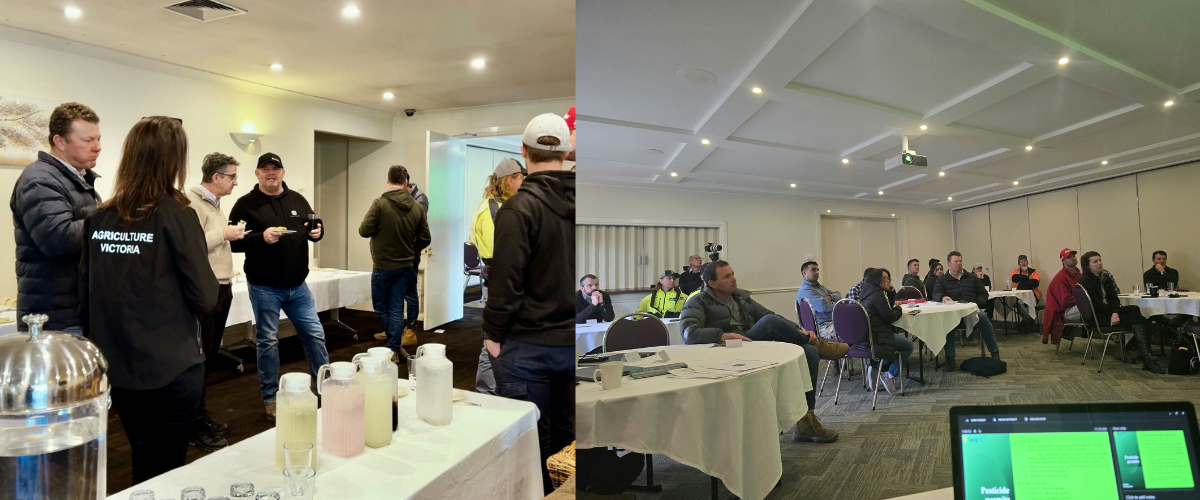
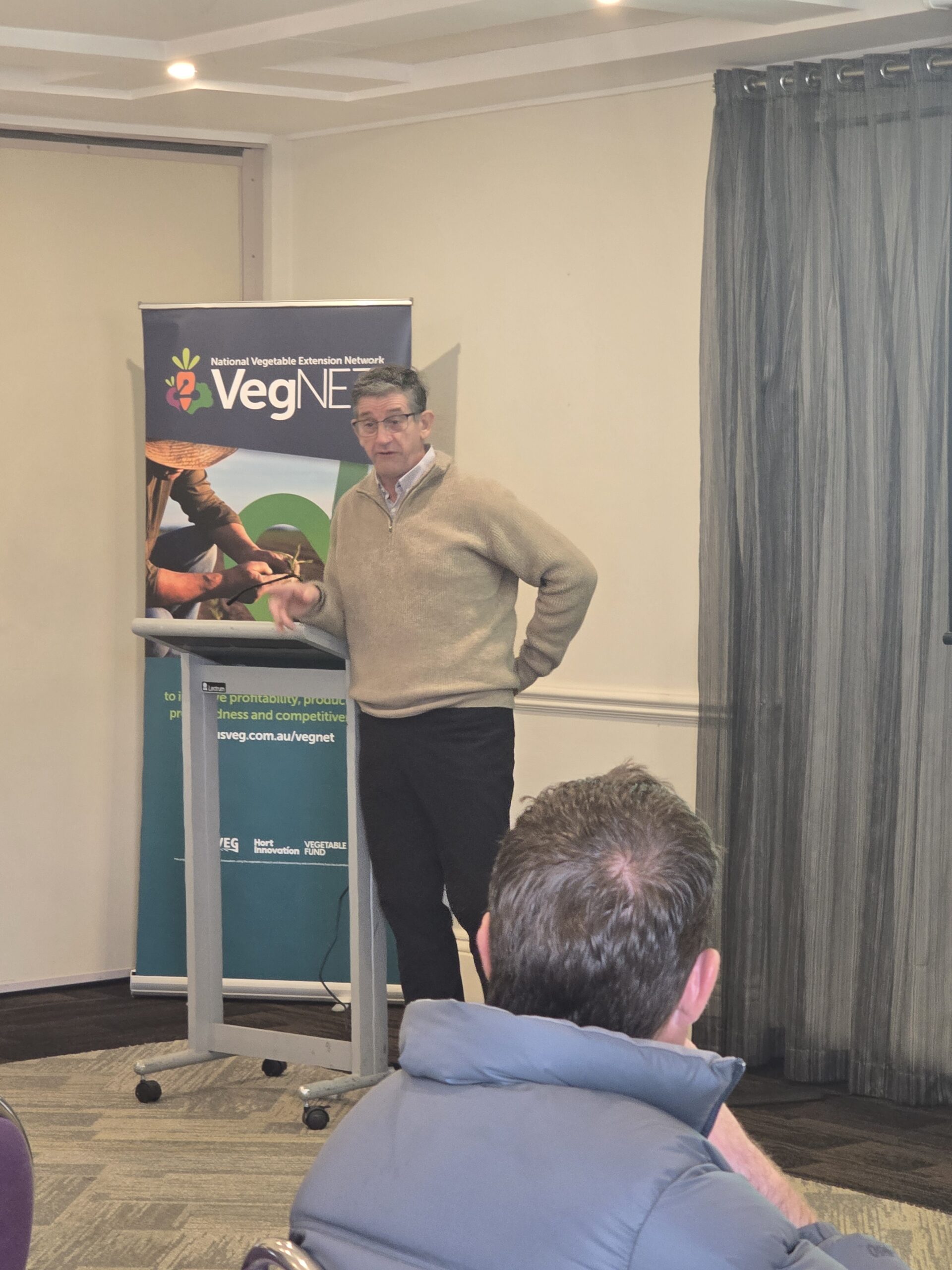 The session was led by consultant Peter Dal Santo from AgAware Consulting, who brought his decades of experience in pesticide regulation, compliance, and agricultural extension to the room. Peter’s down-to-earth delivery and practical examples made complex regulatory and chemical management topics accessible and relevant to growers and industry service providers alike. Also joining the day was David Daniels, National Agrichemical Manager at AUSVEG, who gave a concise presentation on current initiatives being led nationally to support vegetable growers with access to safe and effective crop protection tools.
A deep dive into crop protection
Key pests of vegetables
Peter opened the session by walking the group through the common and emerging pests impacting vegetable production in Australia. From chewing and sucking insects to diseases like downy mildew and powdery mildew, understanding the pest pressure on crops is vital for making informed chemical decisions.
Pesticide requirements & product registration
Participants gained valuable insight into how crop protection products are registered and regulated by the Australian Pesticides and Veterinary Medicines Authority (APVMA). Peter demystified the registration process and explained why some products are available for certain crops but not others.
MRLs (maximum residue limits)
The importance of observing MRLs, particularly for fresh produce destined for domestic and export markets—was a strong theme. Attendees learned how MRLs are determined, the role they play in food safety, and the implications of residue breaches on market access.
Permits for off-label use
Peter outlined how growers can access legal use of products on crops not specified on a label via APVMA-issued minor use and emergency use permits. Knowing when and how to apply for a permit—and how to find existing ones— was a key takeaway for many in the room.
Victorian legislation
The session explored relevant state-based legislation, including recordkeeping requirements, buffer zones, and the obligations of licensed chemical users under the Agricultural and Veterinary Chemicals (Control of Use) Act 1992. There was discussion around the role of Agriculture Victoria in compliance and enforcement.
Vegetable crop permits
A special focus was given to the vegetable industry’s unique reliance on minor use permits due to the diversity and relatively small scale of many vegetable crops. David Daniels shared updates on national permit priorities and encouraged growers to report any emerging needs through VegNET or AUSVEG channels.
Major vs. minor crops
The distinction between major and minor crops under regulatory definitions has major implications for agrichemical access. Many vegetable crops are considered ‘minor’ due to their limited growing area, even if they’re economically significant to certain regions like Gippsland.
Pesticide reviews – Australia & overseas
Peter provided a timely update on the current and upcoming chemical reviews being undertaken in Australia and internationally. Participants were briefed on what happens when a product is under review and how decisions made overseas can influence local use patterns.
Compliance & best practice
A critical part of the workshop was understanding the importance of on-farm compliance— from storage and mixing to application and disposal. Peter reinforced the value of accurate recordkeeping, staff training, PPE use, and following label directions to avoid breaches and ensure safety.
Secondary standards & stewardship
The group was introduced to the role of secondary standards—such as industry-developed guidelines, QA schemes, and retailer protocols—which often go beyond legal minimums. These frameworks help growers maintain access to markets while promoting best practice in agrichemical use.
Real-world relevance & local context
A hallmark of the masterclass was Peter’s ability to tailor technical content to the local Gippsland context. Participants appreciated the focus on regionally relevant crops such as leafy greens, brassicas and root vegetables, and the discussion often circled back to practical applications such as how to interpret a label or when to seek technical advice. David Daniels’ contribution further strengthened the session’s value by connecting local concerns to national efforts. His update on the current SARP (Strategic Agrichemical Review Process) priorities and advocacy for increased label access highlighted the importance of collaboration across the industry.
Feedback & future sessions
Attendees rated the masterclass highly, and came away with a clearer picture of how to navigate the complex agrichemical landscape. As regulation continues to evolve and market expectations tighten, events like this provide an invaluable platform for knowledge sharing, upskilling, and building confidence in safe spray use practices.
FIND OUT MORE
Please contact Amanda Gould on 0474 500 380 oremail amanda.gould@foodandfibregippsland.com.au