


VegNET WA: Supporting innovation across the Western Australian vegetable industry
3 March 2026VegNET SEQ: Introducing the new Regional Development Officer for South East Queensland growers
3 March 2026
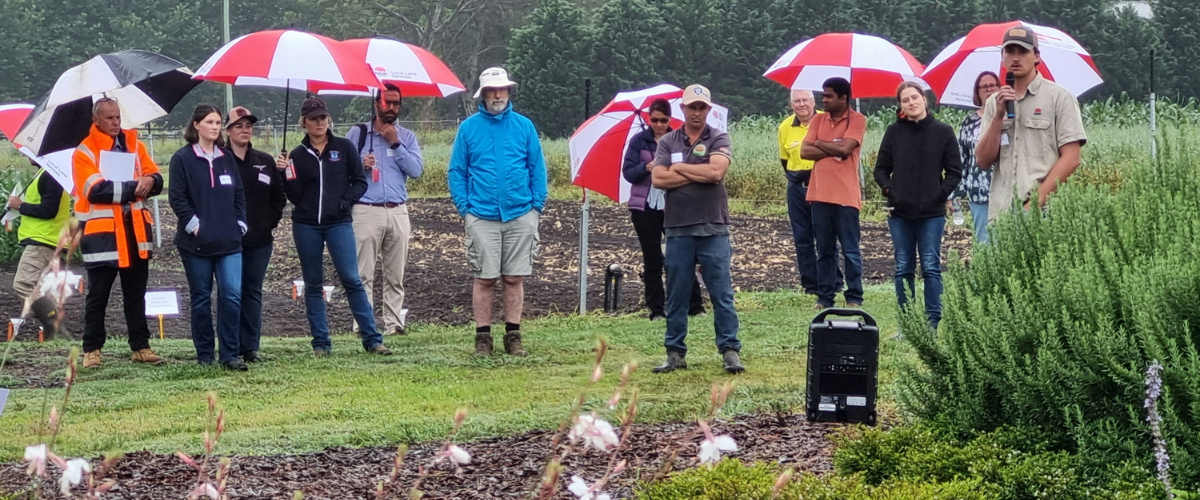
What better way to celebrate National Agriculture Day (Friday 21 November) than at the Greater Sydney Local Land Services (GS LLS) Demonstration Farm with an event supported by VegNET NSW and the National Heritage Trust (NHT).
Organised by NSW VegNET Regional Development Officer, Sylvia Jelinek, the program’s topics included an update on fall armyworm (FAW) research, how to attract pollenating insects using a variety of flowering plants, a discussion on irrigation assessment and updates on the Level Up Hort project and the Soil Wealth Integrated Crop Protection (ICP) GS LLS demonstration site.
Bringing people together
An unseasonal cool and showery day didn’t keep the attendees away as 60 people experienced the day at GS LLS Demonstration Farm including vegetable growers, agricultural students, teachers, the ‘Young Horties’, local industry representatives and researchers.
Local committee members from Young Horties, Earl Yandall, Sales Manager NSW from AgNova, and Amberley Brady, founder of Realfoodprice and co-founder of Harmonia, attended the celebratory networking lunchtime barbecue. Young Horties is Australia’s first national network created specifically for all young people working across the horticultural supply chain.
Members of this group share a passion for plants, produce and people, offering a community for people under 40 working in the industry.
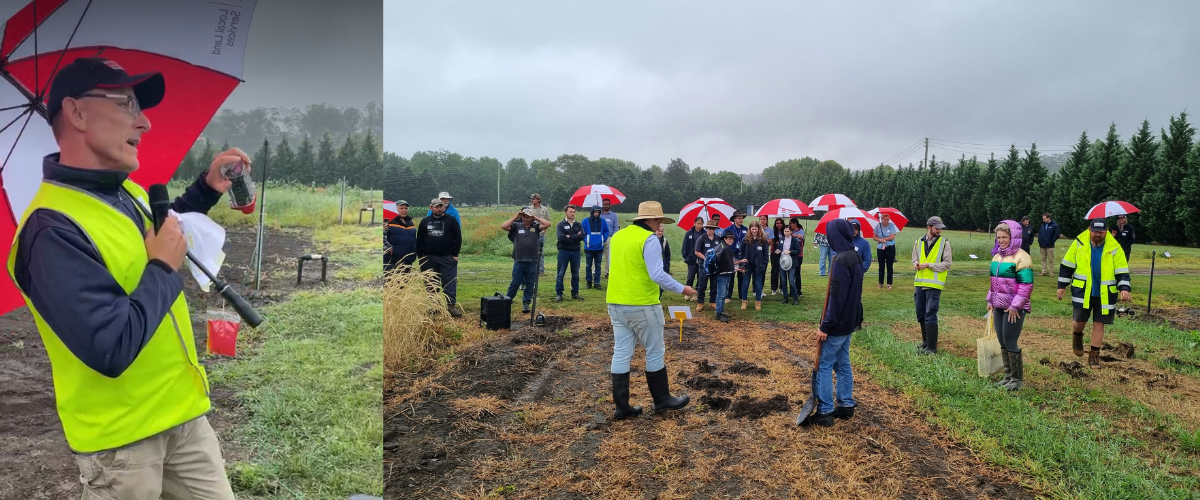
L-R. Matthew Plunkett discussing Irrigation in the field. Umberto Calvo talking through soil improvement results.
Research in the future of FAW management
A highlight of the event was a presentation from researchers Dr Vivian Mendez and Dr Rehan Silva from Macquarie University, with an update on their Hort Innovation funded project, Effective fall armyworm pheromone blends for improved monitoring and population estimation in Australia (AS21000). Dr Vivian described how FAW adults’ attraction to specific pheromone lure was dependent on the region around Australia, with a clear east and west coast variant. Dr Rehan Silva’s project involves assessing the potential of spotted ladybird against FAW larvae, and identifying sweetcorn compounds that attract predators and repel FAW adults. The research is evaluating spotted ladybird, white collared ladybird and lacewing larvae as suitable FAW larvae predators and the compounds these predators may be attracted to, shining a light on positive outcomes in battling this pest.
In field walk and talks
Umberto Calvo from Applied Horticultural Research discussed the findings of the Soil Wealth ICP demonstration site, showing the differences between low till and conventional cultivation. Ryecorn cover crops were planted prior to the field day, with one of the experimental areas mowed while the other was sprayed with a knockdown herbicide and crimped. Results showed that the low till area had good porosity, root penetration, soil fauna present and a crumbly structure compared to the conventionally treated area, which had no soil structure, no stability and showed signs of compaction. A video showcasing the results 18 months into the commencement of this site can be viewed on the Soil Wealth ICP website.
Matthew Plunkett from GS LLS presented an infield talk about irrigation in sweetcorn and explained what the NHT WaterWise project is all about and how growers can get involved.
This was followed by GS LLS’ Hugh Littlefield taking attendees through the farm’s pollinator-attracting plants display, where he discussed how to improve fruit pollination now that European honeybee numbers are declining due to the spread of Varroa mite.