


A 150 year Lockyer Valley legacy continues
18 May 2026
Pioneering White Asparagus in Tasmania
18 May 2026
Reading Time: 3 minutes
VEGNET
Northern Territory
REGIONAL UPDATE
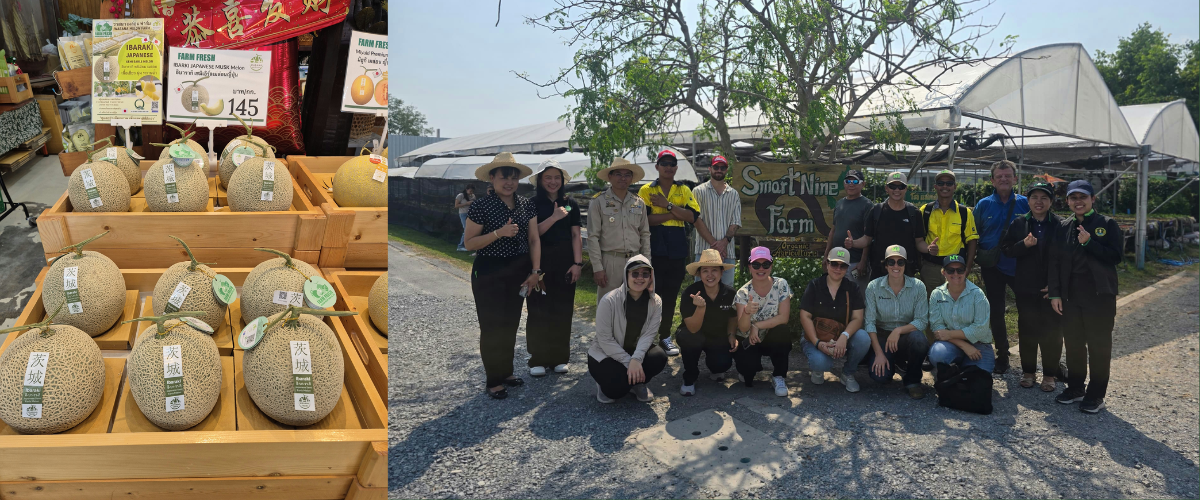
In February, a group of growers undertook a weeklong study tour in Thailand, exploring advancements in vegetable and tropical fruit production across key growing regions.
The group – comprised of seven vegetable and mango growers, an agronomist and two representatives from NT Farmers – travelled to Thailand on 21 February as part of an industry-focused learning initiative. The tour was made possible through the long-standing relationship between NT Farmers and the Department of Agriculture Extension (DOAE) in Bangkok, which facilitated access to a range of farming operations participating in the Young Smart Farmer program.
Site visits spanned multiple regions and included organic farms and operations specialising in melon, finger root, mango and a variety of tropical vegetables. While each commodity presented its own insights, several overarching themes emerged – particularly around practices that are driving improvements in production, sustainability and profitability across Thailand’s agriculture sector.
The art of adding value
Across nearly every farm we visited, one theme stood out: a commitment to value added products. Some growers leaned into the charm of on farm stores and cafes, while others expanded their reach with online shops. Many combined both approaches to create a steady, diversified income stream.
This strategy was most striking at a coconut farm we visited. Selling raw coconuts alone brought only modest returns, often barely offsetting the production costs.
But by transforming their harvest into oils, creams, snacks and other speciality goods, the farm unlocked a far more profitable market.
Their vision also stretched beyond products, embracing agritourism by shaping the property into a serene, almost dreamlike retreat where visitors could stroll through coconut groves, purchase freshly made goods and unwind in hammocks or shaded benches to soak in the quiet beauty of the landscape.
It was a compelling reminder that sustainability in agriculture often flourishes where creativity takes root.
Where precision meets profit
One of the most noteworthy examples of innovation came from a melon farm producing premium rock melons priced at an extraordinary $60 AUD each. This level of value was achieved by growing them in a meticulously controlled hydroponic environment and pairing that precision with a clever, confidence-building marketing strategy.
Technology was also transforming production on a nearby coconut farm. Through the use of weather stations, moisture probes and VPD monitoring, growers were able to refine and optimise their irrigation practices with remarkable precision. The results were astonishing: a staggering 49 percent increase in production over just three years. This was driven not by expanding land or labour but by embracing data as a quiet, powerful partner in the growing process.
Where nothing goes to waste
Another defining theme across the sites visited was a deeply circular approach to production. This was most vividly brought to life at Nine Smart Farm, where a remarkably complete circular economy has been carefully cultivated. Even the food scraps from its cafe are folded back into the system as compost, ensuring that little goes to waste.
As Trista explained, they look after ‘the nurture’. Fertilisers are made on-site using leaves and animal waste, while fallen foliage is never burned. Instead, it becomes part of a regenerative cycle that supports both the environment and the farm’s productivity.
Trees are planted not only for shade but as natural windbreaks, their fallen leaves gathered and fed into the composting cycle, which in turn nourishes the farm’s growing areas. It’s a closed loop rhythm that feels both intentional and effortless, a reminder that sustainability isn’t just a philosophy here, it’s woven into the daily life of the farm itself.