



VegNET South East Queensland: Looking beyond our borders Bringing new ideas back to SEQ
1 September 2026
TPP roadshow brings New Zealand insights to Australian potato growers
7 September 2026
Reading Time: 5 minutes
Over the past decade, VegNET SA has strengthened South Australia’s vegetable industry by connecting growers with research, innovation and practical support. Delivered by AUSVEG SA, the program has helped growers adopt new technologies, respond to challenges and build more productive, resilient businesses through collaboration across industry, research and government.
Celebrating 10 years of VegNET
The challenges facing vegetable growers have evolved over the past decade. New pests and diseases have emerged. Labour shortages have reshaped business decisions. Rising input costs have placed pressure on profitability, while changing consumer expectations and market requirements have demanded continual improvement. Through it all, one thing has remained consistent – growers need access to practical, trusted resources to help them make informed decisions on farm.
For the past ten years, VegNET SA has been delivering exactly that.
As the national vegetable industry’s extension network, VegNET exists to bridge the gap between research and commercial production, ensuring new ideas don’t remain confined to reports and research papers but are translated into practical solutions that growers can use in their own businesses.
Looking back over the past decade, the success of VegNET SA isn’t measured simply by the number of workshops held or projects completed. Its legacy is found in the businesses that have adopted new technologies, improved production systems, strengthened their resilience and embraced innovation with confidence.
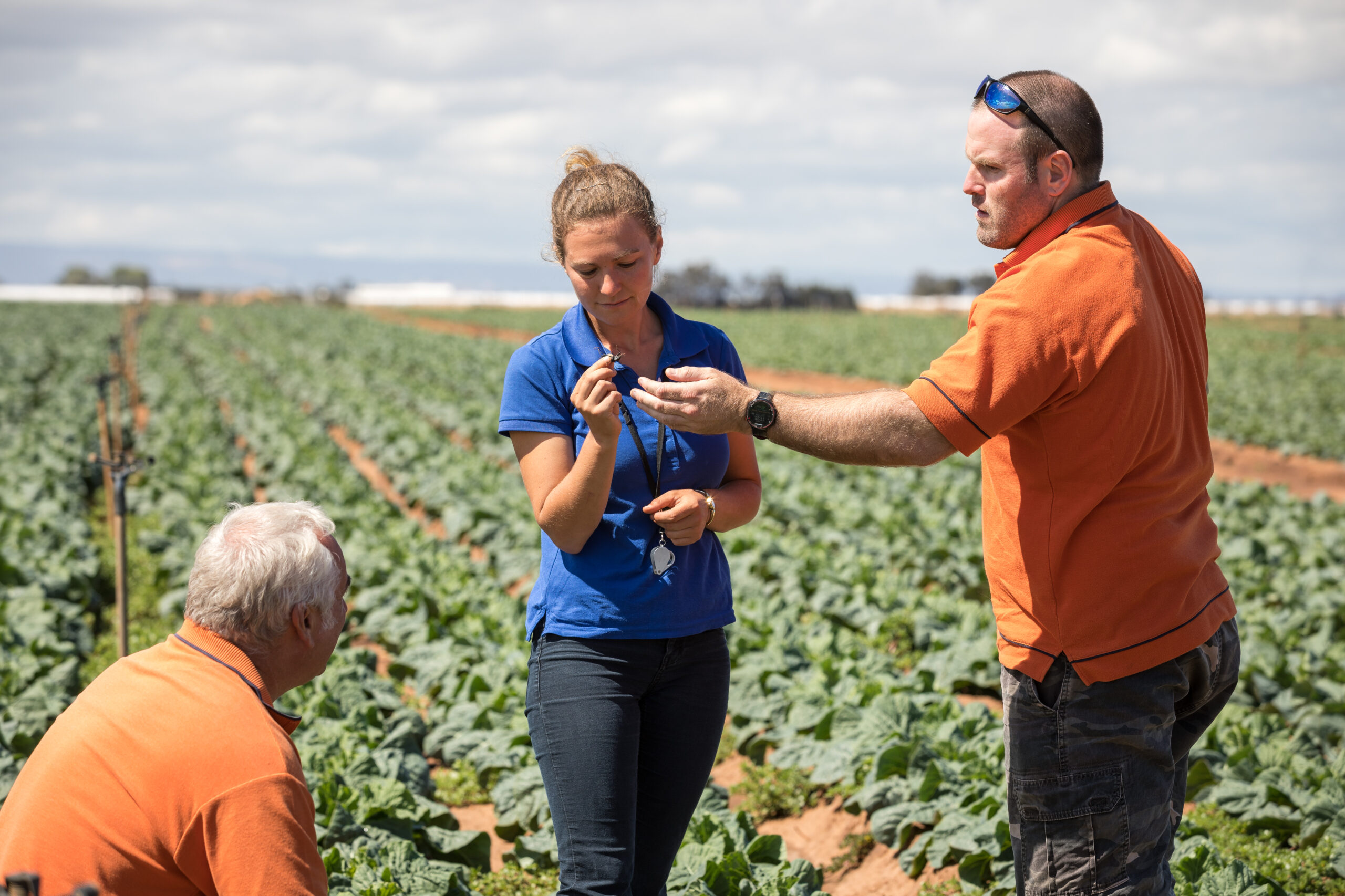
IPM Project on the Northern Adelaide
Plains.
Turning research into results
One of VegNET SA’s biggest priorities is translating complex research into practical solutions. Rather than telling growers what they should do, the program has worked alongside them – testing ideas on commercial farms, demonstrating technologies under local conditions and allowing growers to see the results for themselves.
A key example is South Australia’s Integrated Pest Management (IPM) program, funded by Hort Innovation. What began as a series of grower trials has become one of the state’s most significant production success stories. The program has helped transform pest management across the brassica industry, with more than 70 percent of field brassica growers now incorporating IPM into their production systems. Protected cropping businesses have also embraced biological control options, reducing reliance on chemistry while improving long-term resistance management.
Importantly, the learning hasn’t stopped with those directly involved. Farm walks, workshops, demonstration videos and grower case studies have ensured the knowledge continues to spread throughout the industry, allowing growers to learn directly from one another.
The same collaborative approach has driven projects investigating compost use, soil health and nutrient management. Rather than promoting a one-size-fits-all solution, VegNET SA has worked with growers to understand how different soil amendments perform under commercial conditions and how improved soil monitoring can lead to better crop outcomes.
Those projects naturally evolved into more advanced work on fertiliser efficiency, culminating in practical nitrogen use efficiency calculators and crop nutrition tools developed specifically for South Australian vegetable production. These resources are helping growers ask better questions, make more informed fertiliser decisions and improve nutrient use efficiency at a time when input costs continue to rise.
Standing beside growers during industry challenges
Over the past decade, South Australian growers have faced some of the most significant biosecurity threats in recent memory, and the program has played an important role in ensuring businesses had access to timely information and practical support.
Whether responding to Tomato brown rugose fruit virus to support an industry worth in excess of $60 m to our state, monitoring for serpentine leaf miner which underpins $200 m in trade with WA, or tackling the growing threat of beet cyst nematode to help protect $10 m in brassica crops, VegNET SA has brought together researchers, government agencies and growers to develop practical responses based on science and collaboration.
The development of Australia’s first DNA test for beet cyst nematode is one example of this approach. What began as a grower-identified problem evolved into an innovative diagnostic tool that now enables growers and advisers to accurately measure nematode populations and make informed management decisions. Further work is now focused on refining management strategies and investigating additional nematode species affecting vegetable production.
Similarly, the Clean Your Farm initiative and Greenhouse Biosecurity Toolkit have provided practical resources that growers can implement immediately, reinforcing the principle that prevention is always better than cure.
Helping businesses, not just crops
Successful vegetable businesses require efficient systems, skilled people and strong business management. Recognising this, VegNET SA has expanded its focus over the years to include projects that improve business performance as well as production outcomes. Growers have received support to improve export capability, investigate automation opportunities, streamline packhouse operations and prepare for changing market demands.
The Lean Efficiency Project demonstrated how relatively simple changes in workflow and automation planning could improve productivity while reducing costs. More recently, the Quality Assurance Support Service has helped businesses navigate increasingly complex certification requirements through personalised support, internal audits and practical recommendations that reduce paperwork while strengthening compliance.
These initiatives recognise that every hour saved on administration is another hour growers can spend managing crops, developing markets or planning for the future.
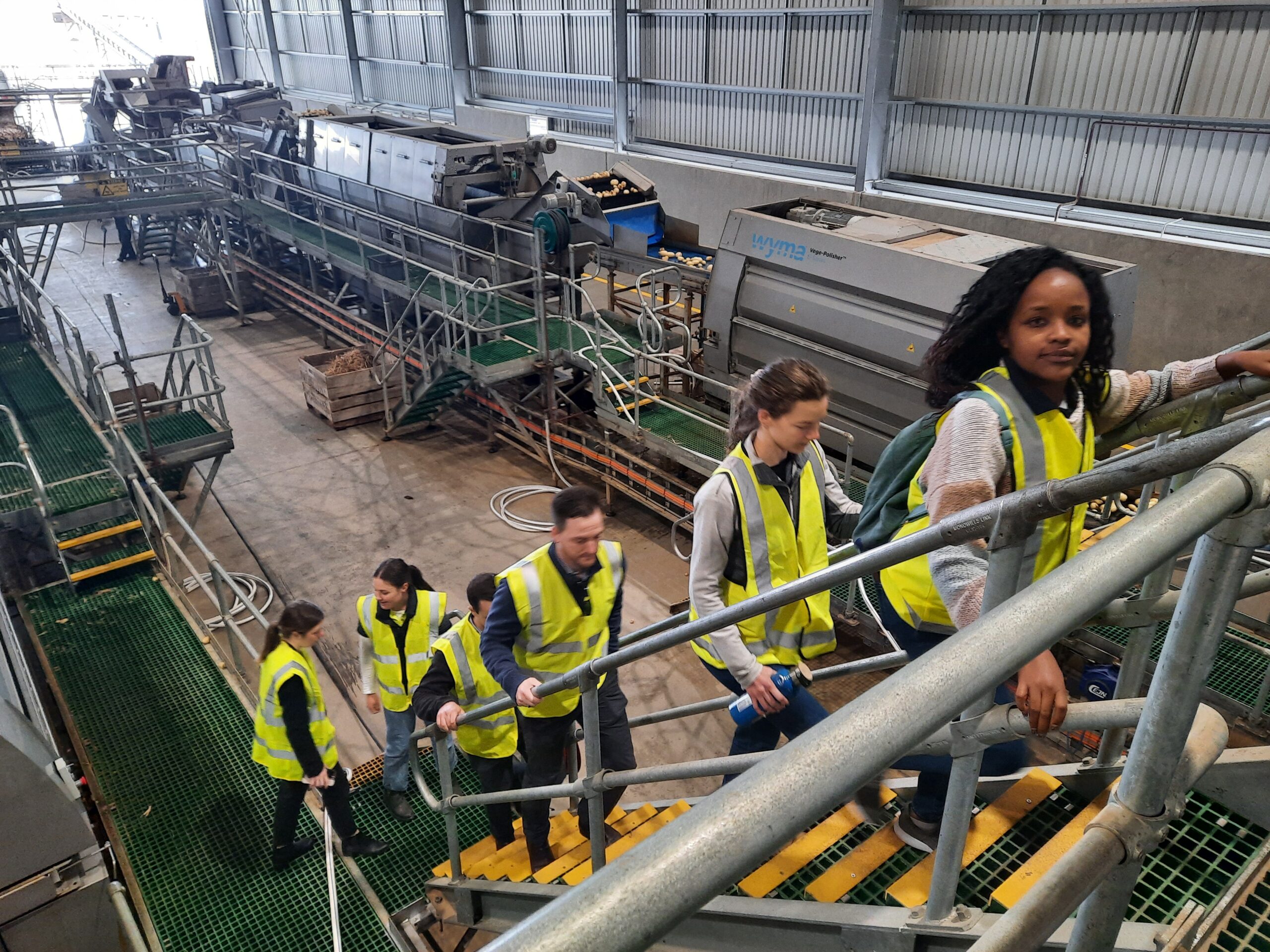
Emerging Leaders tour to Parilla Premium
Potatoes.
Building a stronger industry
Perhaps VegNET SA’s greatest achievement over the past decade has been the connections it has created.
International visitors have introduced South Australian growers to global AgTech developments. Interstate study tours have encouraged fresh thinking and exposed growers to different production systems. Workshops, masterclasses and field days have created opportunities for growers to exchange ideas, challenge conventional thinking and build relationships that continue long after the events conclude.
The Emerging Leaders Program has invested in the industry’s future by supporting young growers and horticultural professionals to build networks, develop leadership skills and better understand the broader supply chain.
Today’s participants will become tomorrow’s industry leaders, ensuring the knowledge, relationships and collaborative spirit developed through VegNET SA continues well into the future.
Looking ahead
After 10 years of delivery, VegNET SA’s greatest success isn’t a single project or headline achievement. It’s the culture of collaboration that now exists across South Australia’s vegetable industry.
Growers are more connected to researchers. Researchers better understand commercial production challenges. New technologies are adopted faster. Practical knowledge is shared more openly. Businesses are increasingly willing to trial new ideas because they know they are supported by a network focused on helping them succeed.
The challenges facing vegetable production will continue to evolve. Climate variability, labour availability, market access, biosecurity and emerging technologies will all shape the next decade of Australian horticulture.
If the past ten years have demonstrated anything, it is that South Australia’s vegetable industry is strongest when growers, researchers, advisers and industry organisations work together. That collaborative spirit has been the hallmark of VegNET SA’s first decade – and it will remain the foundation for everything that comes next.