


Video: Managing Herbicide Resistant Ryegrass
TPP roadshow brings New Zealand insights to Australian potato growers
VegNET SA: Ten years of growing together
VegNET South East Queensland: Looking beyond our borders Bringing new ideas back to SEQ
VegNET Gippsland: Five trends shaping the future of vegetable growing
VegNET NSW: Grower Sam Micallef in focus A harvest of achievement for Alandale Produce
VegNET VIC: VegNET working with climate-conscious farmers
VegNET Far North Queensland: National fall armyworm surveillance project leaves a lasting legacy for Australian horticulture
VegNET NT: From grower to RDO Seeing the industry through a different lens
VegNET Wide Bay Burnett: Spray Optimisation Roadshow Australia Making every drop count
Every spray application is an investment. Effective spray coverage is essential for achieving reliable pest and disease control while maximising the performance of crop protection products. Through the Spray Optimisation Roadshow Australia (SORA), VegNET is providing vegetable growers with practical, on-farm support to improve spray application efficiency and make every spray pass count.
The roadshow has now commenced, with the Wide Bay Burnett delivering the first round of activities ahead of a national rollout across the remaining nine VegNET regions through to September. SORA is the first VegNET Innovation Fund project to be delivered collaboratively across all 10 VegNET regions, creating a truly national extension initiative for the Australian vegetable industry.
Coordinated nationally by Bundaberg Fruit & Vegetable Growers (BFVG), with VegNET Regional Development Officer Jessy Logan leading project delivery, SORA brings together VegNET teams from across Australia to deliver consistent, practical spray optimisation support to vegetable growers. Don Thorp from Horticultural Spraying Specialists has been engaged to provide the project’s technical expertise, while BFVG is also coordinating the development of the national webinar, DIY Spray Coverage Assessment Kits and Spray Optimisation Guide to ensure the project’s benefits continue well beyond the roadshow.
The first round of activities in the Wide Bay Burnett focused on personalised one-on-one spray checks, giving growers the opportunity to evaluate the performance of their spray equipment under real operating conditions. Using water-sensitive paper and other practical diagnostic tools, growers could clearly see how effectively spray droplets were reaching the target crop and identify opportunities to improve application performance.
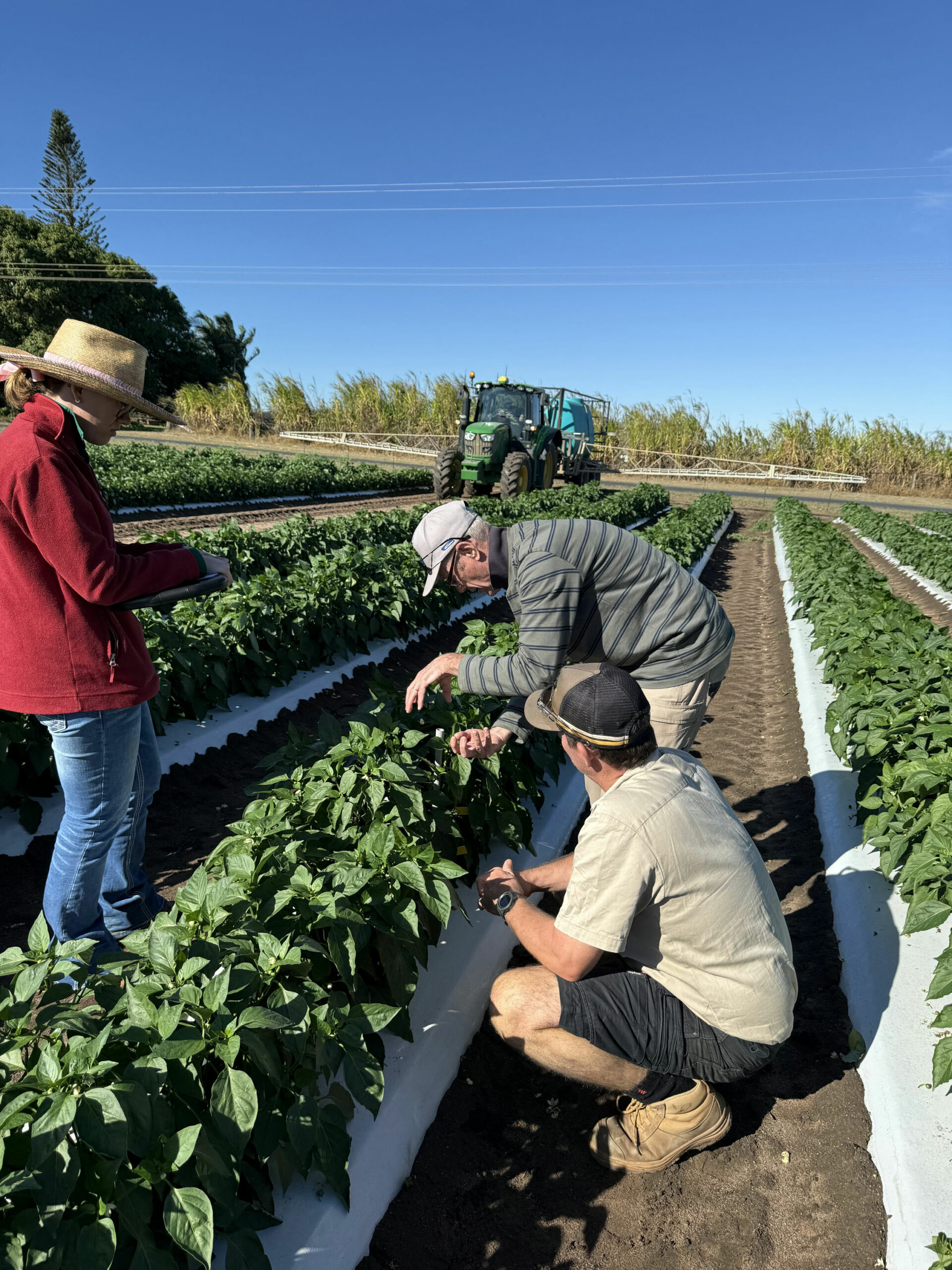
In field coverage checks with Lilly, Don & Brent at Swan Ridge Farms
Each assessment reviewed the complete spray system, including:
- Nozzle selection and droplet size Operating pressure and water volumes
- Travel speed and boom height
- Spray coverage throughout the crop canopy
- Equipment calibration and maintenance
- Weather conditions influencing spray performance.
While every farming operation is different, the early assessments highlighted a common theme: small adjustments can often deliver significant improvements in spray coverage and efficacy without the need for costly equipment upgrades.
These improvements are particularly important in modern vegetable production, where accurate spray application underpins successful management of insect pests, foliar diseases and crop nutrition. Poor spray coverage can reduce product performance, increase the need for repeat applications, contribute to chemical resistance and elevate the risk of off target spray drift.
By optimising spray application, growers can:
- Improve pest and disease control
- Maximise the performance of crop protection and foliar nutrition products
- Reduce input costs through more effective applications
- Minimise spray drift and off target losses
- Support integrated pest management (IPM) and resistance management strategies
- Strengthen environmental stewardship and responsible chemical use.
One of the greatest benefits reported by participating growers has been the ability to visualise spray performance firsthand. Comparing water-sensitive paper before and after making simple adjustments to nozzle selection, operating pressure, boom height, travel speed or even adding droppers clearly demonstrated how these small changes can dramatically improve spray distribution throughout the crop. These practical demonstrations have challenged long-held assumptions and reinforced that improving spray application doesn’t always require investing in new equipment, it often starts with understanding how existing equipment is performing.
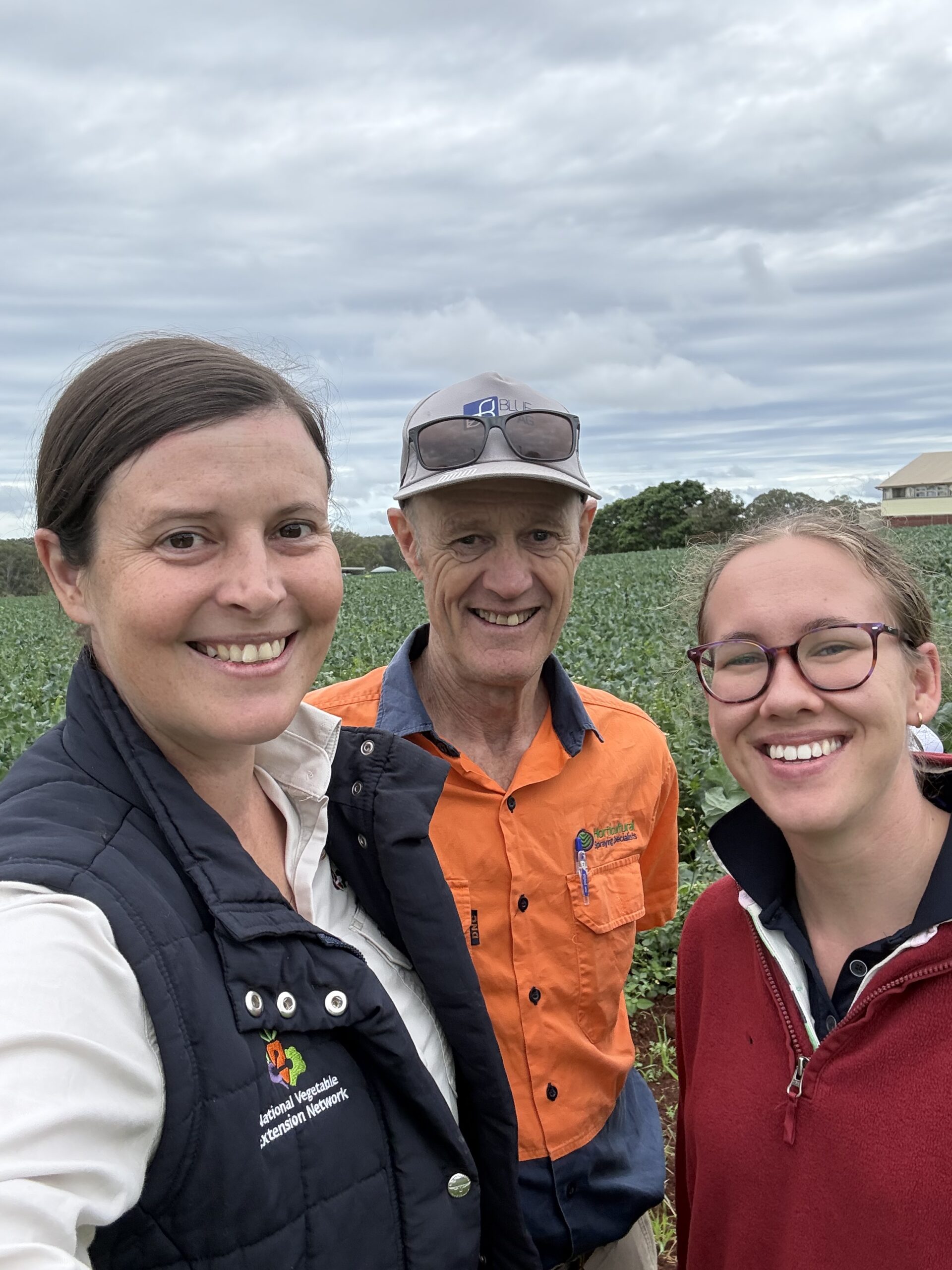
In field shot with Project
Lead VegNET RDO Jessy Logan, Spray Specialist Don Thorp & Industry Support Officer Lilly Rehbein.
Small adjustments can often deliver significant improvements in spray coverage and efficacy without the need for costly equipment upgrades.
Recognising that not every grower will be able to participate in activities delivered across the regions, the roadshow also includes a suite of practical resources to ensure the learnings are accessible to the broader vegetable industry. A national webinar will be delivered later this year, sharing practical tips and tricks for improving spray application, common issues identified throughout the roadshow, and simple changes growers can make to optimise their spray programs.
To further support on-farm adoption, DIY Spray Coverage Assessment Kits will be made available, enabling growers to undertake their own spray coverage assessments using water-sensitive paper and supporting guidance to evaluate and improve their spray performance. A Spray Optimisation Guide will also be developed, capturing the key learnings from the roadshow and providing growers with a practical reference covering best practice spray application, equipment setup, calibration, nozzle selection, spray coverage and maintenance.
Together, these resources will ensure the knowledge generated through SORA continues to benefit vegetable growers well beyond the completion of the roadshow.
Conclusion
With the first activities successfully completed in the Wide Bay Burnett, SORA will continue visiting vegetable-growing regions across the country over the coming months. By combining the technical expertise of Don Thorp from Horticultural Spraying Specialists with local knowledge from VegNET RDOs, the roadshow is providing growers with practical, science-based solutions they can implement immediately on-farm.
As the first VegNET Innovation Fund project to involve all 10 VegNET regions, SORA demonstrates the strength of national collaboration in delivering consistent extension outcomes for vegetable growers. BFVG, led by VegNET RDO Jessy Logan, is proud to be supporting the national coordination of the project, including the development of the national webinar, DIY Spray Coverage Assessment Kits and Spray Optimisation Guide, ensuring the benefits of the roadshow extend well beyond the regional visits.
Delivered through the VegNET Innovation Fund, the Spray Optimisation Roadshow Australia is funded by the vegetable and onion research and development levies and the Australian Government’s co-investment through Hort Innovation. By combining expert advice, practical demonstrations and accessible resources, SORA is helping vegetable growers across Australia make every spray application count while supporting more productive, profitable and sustainable vegetable production systems.