


VegNET NT: Key takeaways from the 2026 Thailand Vegetable Industry Study Tour
18 May 2026
What Europe is teaching Australia about protected cropping
18 May 2026
Reading Time: 3 minutes
Tasmanian White Asparagus in Brighton, Tasmania is the first in the area to grow white asparagus – a vegetable widely celebrated in Europe, but relatively obscure in Australia.
A simple conversation with a friend about a local high-end chef’s desire for white asparagus was the spark that led Tasmanian grower Richard Weston into one of the most unusual horticultural ventures in Australia. When he secured a Nuffield Scholarship a few weeks later, Richard selected white asparagus as the focus of his research, setting out to investigate whether the crop could be successfully grown in Australia.
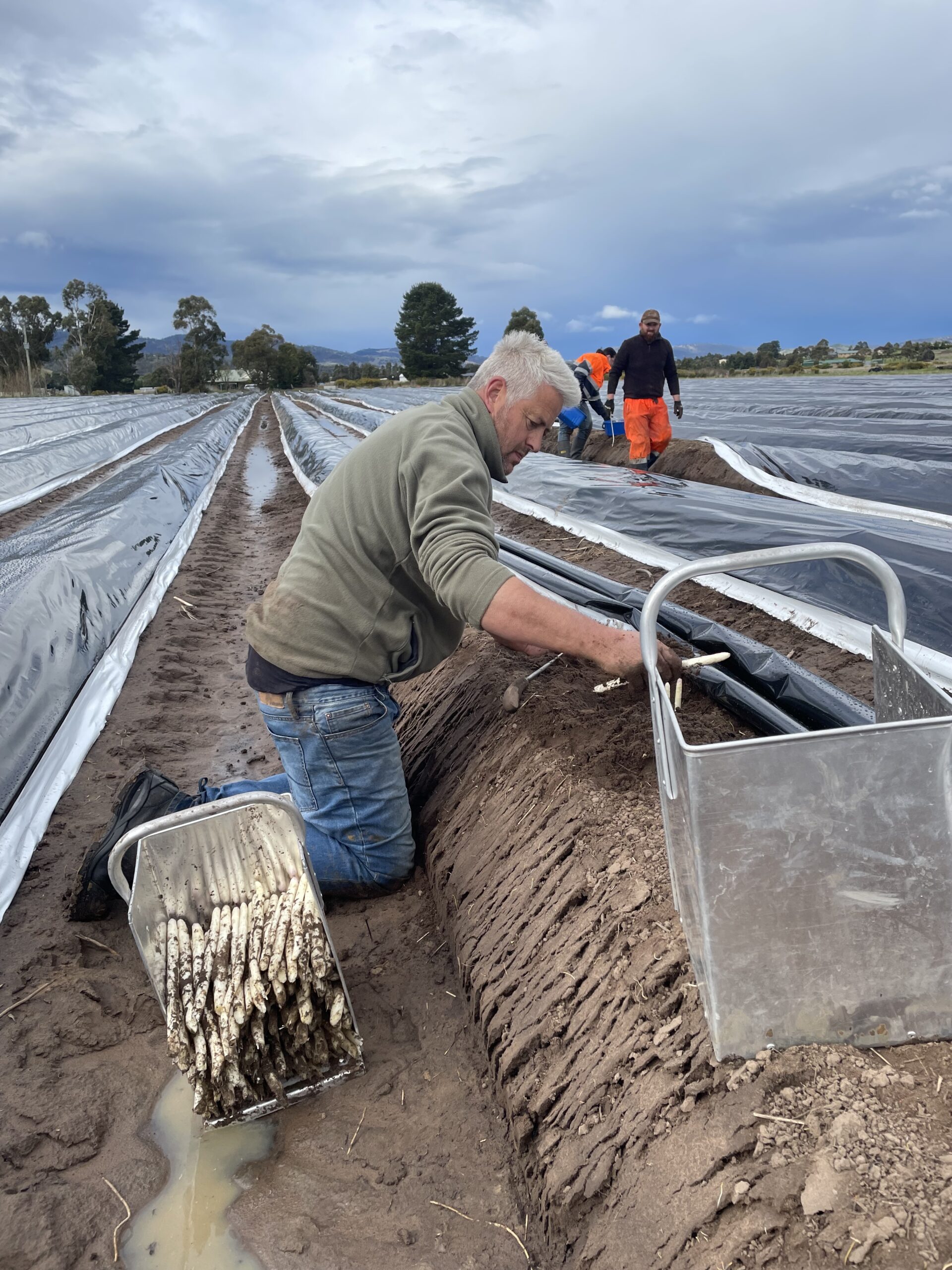
Richard harvesting white asparagus in Tasmania
In the years since, Richard has successfully established white asparagus at his farm in Tasmania with his wife, Belinda Weston, and partners Tom Barham and Jenna Howlett. The ambitious idea came with a bit of trial and error, but the team have found that the island’s cooler climate more closely resembles traditional European growing regions than mainland Australia, making it better suited to the crop’s requirements.
Even so, growing a European crop in Australian conditions has presented significant challenges. Unlike green asparagus, white asparagus is grown without exposure to sunlight. Farmers cover the rows with white plastic sheeting, preventing chlorophyll from forming in the developing spears. Without chlorophyll, the asparagus remains pale and develops a tender texture and delicate flavour that has made it a prized seasonal delicacy in countries such as Germany, Belgium, and the Netherlands.
However, Tasmania sits in the path of the Roaring Forties – powerful westerly winds that regularly sweep across the island. These winds can lift or tear the plastic coverings, forcing the growers to constantly repair and reposition them throughout the season. Tasmania also experiences fluctuating temperatures and occasional extreme heat spikes, which means managing this crop through unpredictable conditions requires adaptability and a willingness to experiment.
Despite the difficulties, the crop offers a remarkable reward during harvest. White asparagus has an exceptionally fast growth rate, with spears capable of growing up to 10 cms per day under favourable conditions. This rapid growth means the harvest window is intense and highly time-sensitive – growers must monitor the beds closely to ensure the spears remain beneath the plastic to prevent exposure to sunlight.
The harvest period itself is short, typically lasting around eight weeks in early spring. This timing also positions the crop as a counter-seasonal offering compared to the northern hemisphere’s spring harvest.
When Richard first began producing white asparagus, the primary market was Australia’s fine dining restaurants. The vegetable’s rarity and brief availability make it particularly appealing to chefs eager to showcase seasonal ingredients and experiment with new flavours and textures – an endeavour Richard admires and finds rewarding to assist with.
Over time, interest has expanded beyond the fine dining scene. Richard has increasingly sold white asparagus directly to customers, with strong demand emerging from Australia’s European communities. For many people with ties to Europe, the vegetable carries deep cultural significance and nostalgia, making its local availability a welcome discovery.
“They know exactly what it is,” Richard said. “We get a lot of people asking when it’s available and how they can get it.”.
What began as a simple idea has grown into a distinctive Tasmanian product, bringing a taste of European spring to Australian soil.