

VegNET Gippsland: Five trends shaping the future of vegetable growing
31 August 2026
VegNET SA: Ten years of growing together
1 September 2026
Reading Time: 3 minutes
One of the greatest opportunities in my role as the South East Queensland VegNET Regional Development Officer is connecting with growers, researchers and industry leaders from across Australia. Recently, I had the privilege of attending VicVID in Victoria and Hort Connections in Adelaide – two events that reinforced just how valuable it is to step outside our own region and learn from others.
As VegNET RDOs, we spend a lot of time working alongside growers in our own regions, but there is also tremendous value in seeing how vegetable production is evolving across the country. Every region has its own challenges, whether it’s climate, labour, water availability or production systems, yet many of the solutions being developed have the potential to benefit growers nationwide.
VicVID in Victoria was an outstanding field-based event that brought growers, agronomists, researchers and industry suppliers together to see innovation in action across two days. With field demonstrations, trial sites, machinery displays and practical discussions, the event showcased how new technologies are being tested and adopted on commercial vegetable farms. More than just a showcase of products, it was an opportunity to have genuine conversations with growers about what is working on farm and what challenges they continue to face.
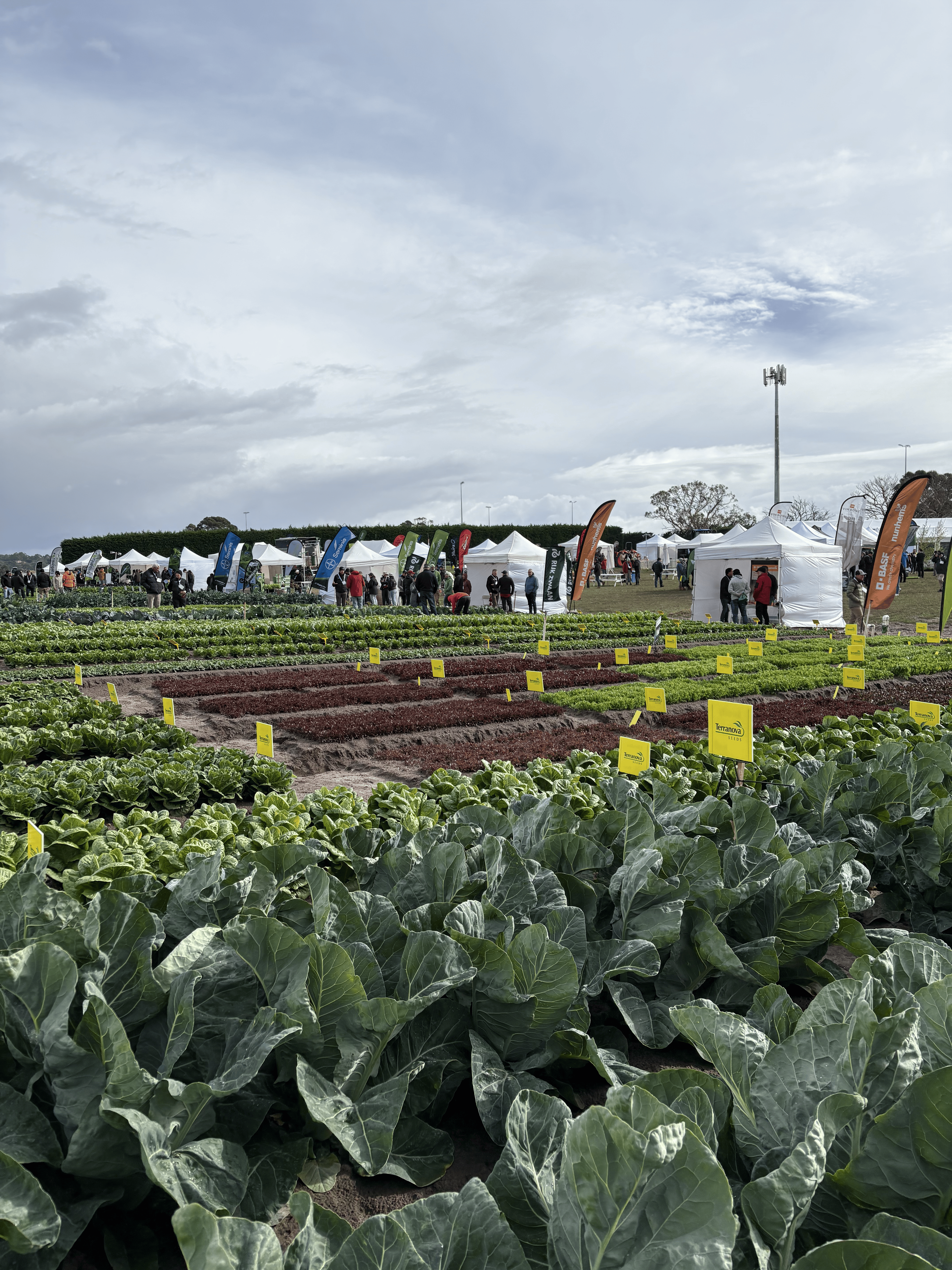
VicVID in Victoria
Shortly afterwards, I attended Hort Connections in Adelaide, my first experience at Australia’s largest horticulture conference and trade exhibition. Bringing together growers, researchers, retailers, service providers and industry organisations from across Australia, the event highlighted the strength of collaboration within our industry.
One of the standout experiences was participating in the organised farm tours. There’s something uniquely valuable about walking through another grower’s operation and seeing firsthand how they approach production. While every farm is different, many of the challenges are surprisingly similar.
What really stood out to me was the pace at which technology continues to evolve. Across both events, there were demonstrations of precision agriculture tools, automation, improved farming systems and data-driven technologies designed to improve efficiency while reducing costs. It’s exciting to see these innovations becoming increasingly practical and accessible for vegetable growers.
I also found it fascinating to observe the different approaches to water management and waste reduction on the farms we visited. Every region has different environmental conditions, but many of the principles are transferable. Whether it was capturing and reusing water more effectively, improving drainage, or finding smarter ways to manage vegetable waste and by-products, there were plenty of ideas that could be adapted for SEQ businesses.
Perhaps the biggest takeaway wasn’t a single piece of technology or farming practice – it was the importance of connection. Being able to speak directly with growers from interstate allowed me to better understand the challenges they face, hear how they’re adapting to change and learn from their experiences. Those conversations often provide just as much value as any formal presentation. They remind us that while growing conditions may differ, we’re all working towards the same goals of producing high-quality vegetables sustainably and profitably.
Since returning home, I’ve also continued connecting with our local industry through field days, on-farm technology demonstrations, industry events and regular grower visits. These activities are an important part of ensuring new ideas don’t simply stay at conferences – they’re brought back, discussed locally and explored within the context of SEQ production systems.
As RDOs, that’s one of our key roles: connecting growers with information, research and each other. Attending events like VicVID and Hort Connections reinforces how much we can learn by sharing experiences across state borders.
I’m looking forward to continuing these conversations with our SEQ growers and exploring how some of the ideas and innovations I observed interstate might help support local businesses into the future.