


Jan to Dec 2025 Australian potato performance overview
18 May 2026Jan to Dec 2025 Australian Vegetable and Onions Performance Overview
18 May 2026
Reading Time: 4 minutes
Over the next several issues of Australian Grower, we will explore what happens when a hypothetical plant pest enters Australia, and what that means for the Australian vegetable, onion and potato industries.
Why biosecurity matters
For many vegetable growers, crop advisors and farm staff, biosecurity can feel like another layer of red tape in an already complex business. In reality, implementing biosecurity practices is one of the simplest and most cost-effective ways to protect a farm’s productivity, profitability and long-term viability.
In an industry where margins are tight and crop cycles are short, even a single pest or disease incursion can cause major disruption, not just to an individual business, but to neighbouring farms, regional supply chains and broader market access. The stakes are high, and the risks are shared. This shared risk reaffirms that biosecurity is a shared responsibility, requiring everyone in the supply chain to play their part.
Importantly, biosecurity is something the vegetable, potato and onion industries can directly influence. By being prepared and developing risk mitigation strategies, farm businesses can meaningfully reduce their exposure to pest risks and help support the resilience of the wider industry.
Learnings from plant pest incursions
The potential impacts of exotic plant pest incursion are well demonstrated through global and domestic examples. Exotic plant pests are fungi, bacteria, nematodes, viruses, insects or weeds that are not present in a given region or country and have the potential to establish and become invasive if introduced.
Current global examples highlight the scale of this risk. Ongoing outbreaks of Xylella fastidiosa continue to impact olive production in southern Europe, particularly in Italy. brown marmorated stink bug (BMSB) remains a significant challenge for horticultural producers across Europe and North America due to its wide host range and mobility. Huanglongbing, spread by the Asian citrus psyllid, has caused sustained decline in citrus production in regions across the United States.
More recently, Tomato brown rugose fruit virus (ToBRFV) has spread rapidly through global tomato and capsicum production regions, with many transitioning from eradication efforts to long-term management. This virus caused major disruptions to nursery and tomato production when it was detected in South Australia in 2024.
In each of these instances, affected horticultural production areas are under severe stress and are declining significantly due to either the disease pressures or the cost of control.
Huanglongbing (HLB)
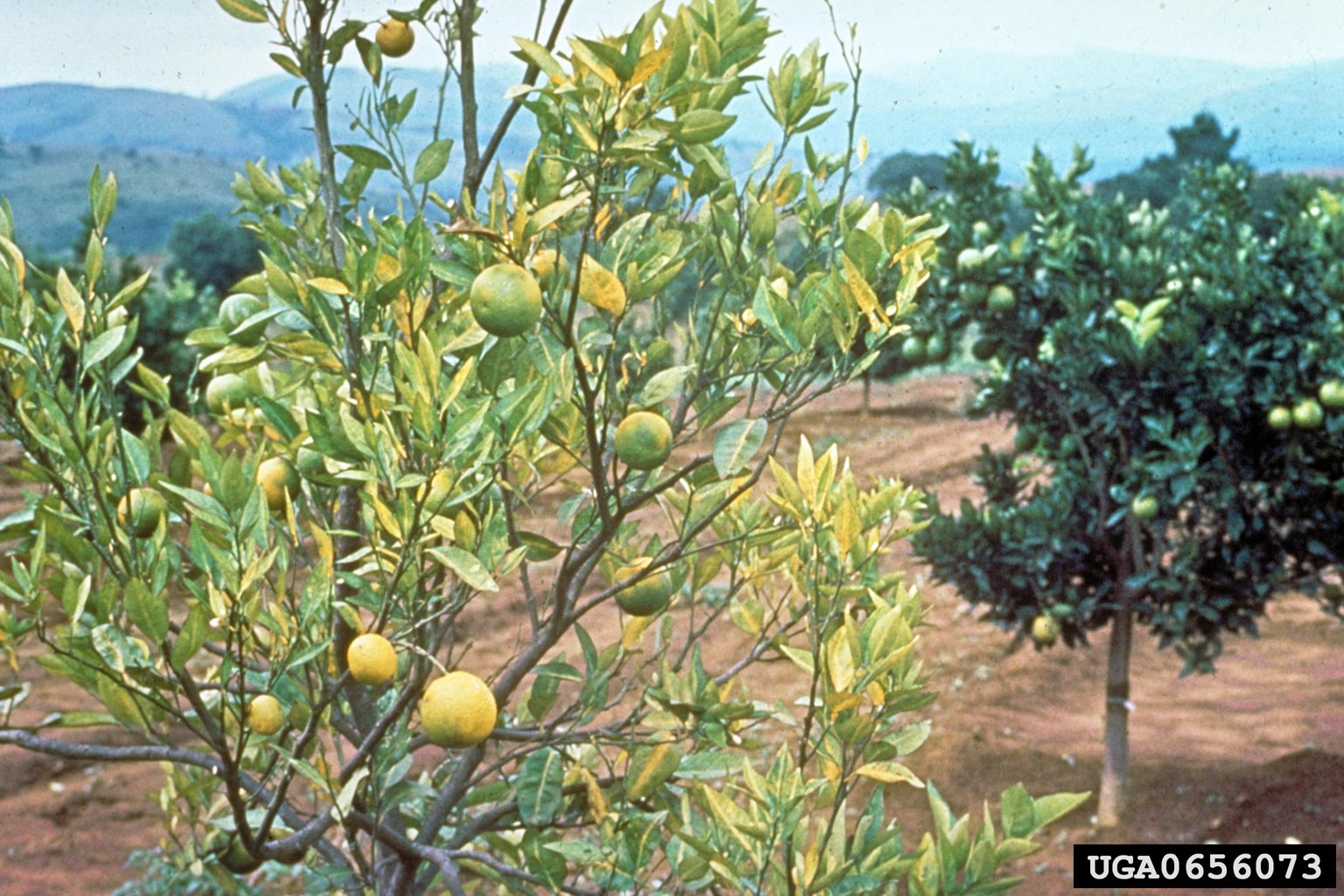 also known as citrus greening, has decimated citrus industries worldwide, demonstrating the potential devastating long-term production and economic consequences of an established pest or disease.
Since the initial 2005 incursion in Florida, USA, the citrus grove-bearing area has declined by 30 percent along with a 74 percent decline in production. The disease, caused by the bacterium Candidatus Liberibacter asiaticus, is vectored by the Asian citrus psyllid, Diaphorina citri, and results in misshapen fruit, blotchy mottling, leaf drop and leads to tree decline and death.
Prior to the spread of HLB, Florida was the largest citrus producer in the USA. However, since 2016–2017 California has become the largest producer, producing over 80 percent of national orange production.
Tomato Brown Rugose Fruit Virus (ToBRFV)
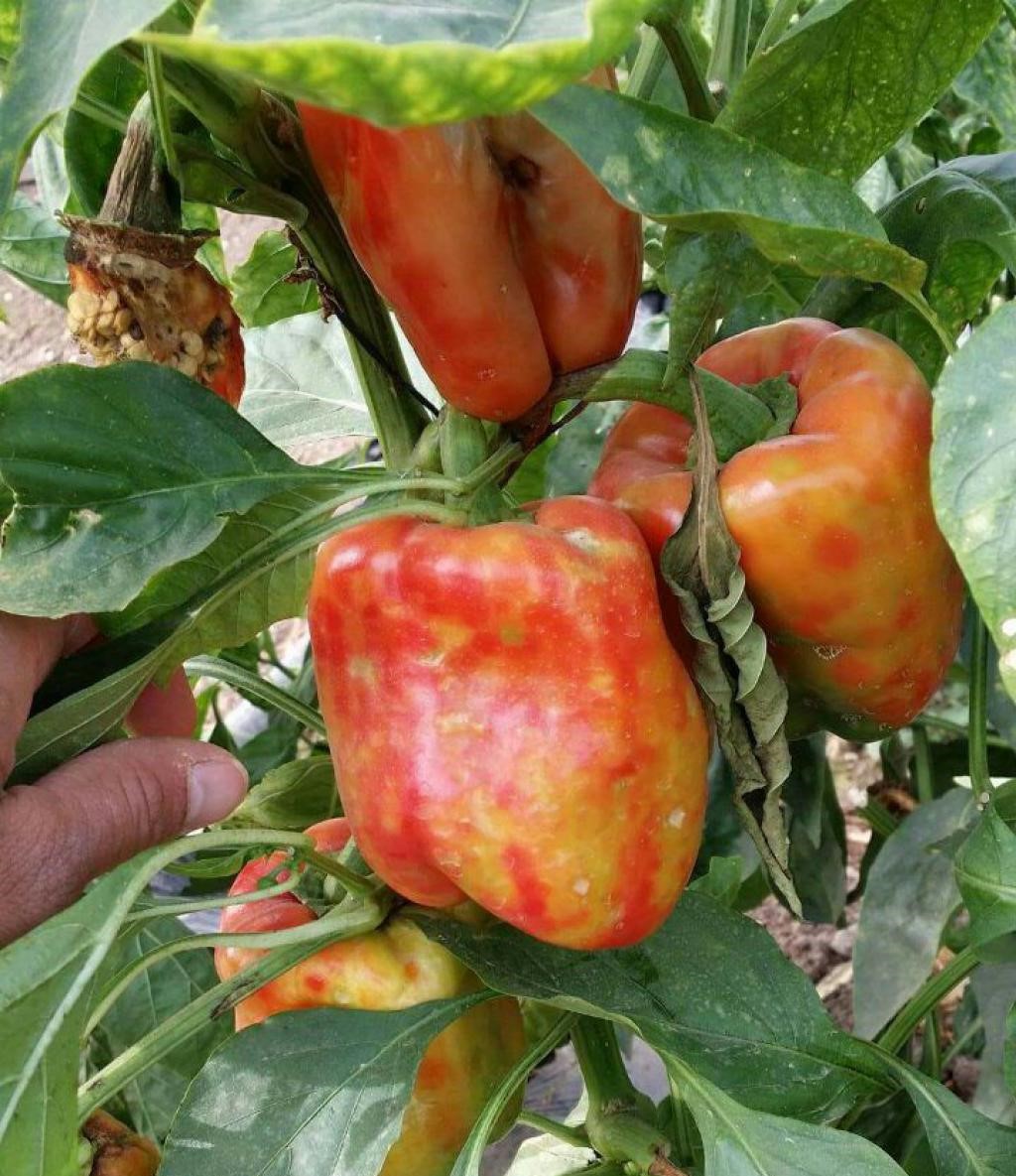
Tomato Brown Rugose Fruit Virus (TOBRFV). ©gd.eppo.int/ – Symptoms on pepper fruits (Palestine, 2016) Dr Raed Alkowni.
The detection of ToBRFV in South Australia in 2025 had implications far beyond the initial detection site, impacting not only on the infected businesses, but also affecting movement of produce domestically, as well as the export of tomatoes and capsicum to New Zealand and other countries in the Pacific.
Within Australia, responses to incursions highlight key lessons for the vegetable industry. These include:
- Knowing how the biosecurity system operates empowers those involved to make informed decisions, reduce uncertainty and anxiety, and support stronger, more resilient business continuity.
- Accurate record keeping is essential for claiming Owner Reimbursement Costs.
- Understanding what is needed at the farm business and regulatory levels in advance is important to support trade.
- Knowing where producers are and what they grow is vital in managing an outbreak.
- Regulators need to know, quickly, how and what the standard industry practices are when determining control measures.
- Scientific research data and evidence is important in driving accurate decision making.
- Regional industry personnel need to be trained to perform their functions as part of any response.
- Emergency responses, although run by the ‘host state,’ are national, and decisions must consider both national and regional interests.
- The social and personal cost to affected individuals can be very high and people involved need support.
- Even if the pest is not a problem for the crop you grow, you may still be affected.
- It is important to be prepared by having biosecurity measures and a plan in place.
How to mitigate plant pest incursion risks
Biosecurity planning is essential to enable farms to implement best management practices and reduce their risk profile in the face of a potential incursion.
While plant pest incursions cannot be eliminated entirely, we can retain some level of control through preparation and practical on-farm measures to actively manage biosecurity risks.
AUSVEG’s biosecurity manual and interactive planner help growers identify and manage key biosecurity risks across the farm. The diagram below highlights six common biosecurity risk pathways.
- Vehicles and equipment
- Staff and farm visitors
- Farm inputs
- Waste and weeds
- Packaging, bins, and pallets
- Weather
By learning from past incursions and strengthening preparedness, the vegetable industry can minimise the impact of future pest events and improve resilience at both the farm and industry level.
AUSVEG can support your business to develop a biosecurity plan. If you would like support in developing a biosecurity plan for your business, please email info@ausveg.com.au