


This year, VegNET turns 10!
18 May 2026The protein transition: A growing opportunity for Australian vegetable growers
18 May 2026
Reading Time: 2 minutes
VEGNET SOUTH EAST QUEENSLAND
REGIONAL UPDATE
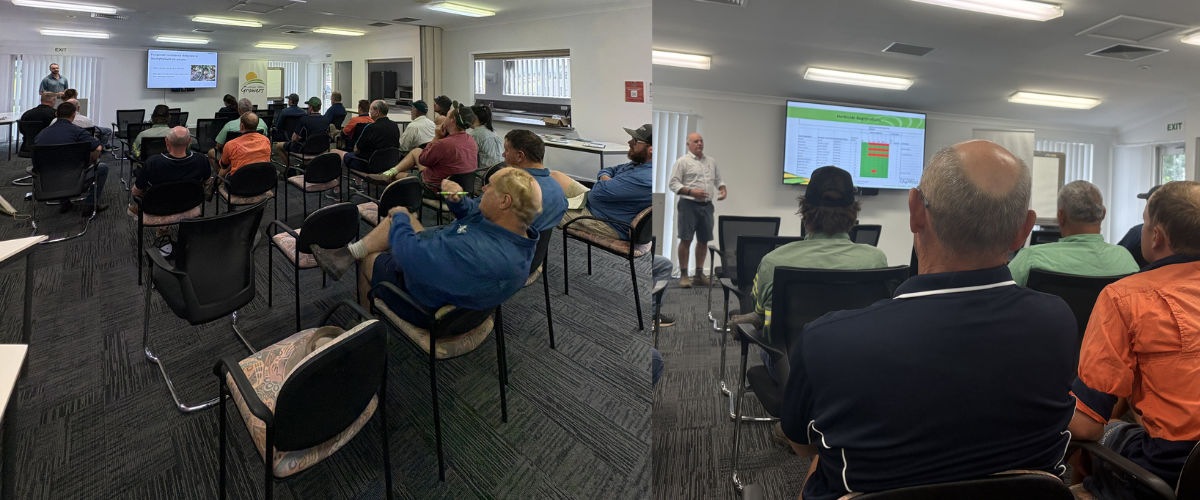
A recent breakfast workshop delivered key updates on current research, industry projects, disease management developments and changes impacting onion production systems.
For growers across South East Queensland, sessions like this play a critical role in bridging the gap between research and on-farm application. The region’s high intensity production systems, along with variable weather conditions and increasing regulatory pressures, require growers to continually adapt in order to maintain productivity and stay competitive. Access to timely, locally relevant information allows growers to make more confident decisions around crop management, input use, and risk mitigation.
Expert insights with local relevance
This session fostered collaboration between researchers, technology providers and industry professionals while equipping attendees with practical, science-based strategies to enhance productivity, sustainability and crop performance.
Dr Noel Knight from the University of Southern Queensland provided insights into research and agronomic considerations relevant to onion production, with a focus on strategies to improve crop performance under local growing conditions.
Dr Ben Evert from Metagen presented on a project currently being delivered for Hort Innovation, outlining its objectives, methodology, and the anticipated benefits for growers.
His presentation highlighted the importance of soil and plant health data in supporting informed management decisions, particularly by helping growers better understand variability within their production systems and target inputs more effectively.
Omer Zehavi from BioScout shared emerging research from New Zealand relating to Downy mildew, offering valuable insights into disease monitoring and early detection technologies. The discussion emphasised the role of improved surveillance and data-driven approaches in strengthening disease management strategies, including the potential for ‘joint ownership’ across the Lockyer Valley region. This concept reinforces the value of a coordinated approach, where shared data and collective awareness enable more timely and effective responses to disease threats.
Scott Sheppard from Agnova addressed recent changes within the chemical landscape affecting onion production, particularly the removal of a key herbicide previously relied upon by growers. This prompted discussion around alternative management strategies and the need for adaptive weed control practices moving forward, highlighting the importance of staying ahead of regulatory and market-driven changes.
Collaboration and industry impact
This collective approach strengthens the industry’s ability to respond to emerging issues such as pest and disease threats, changes in chemical availability, and the adoption of new technologies. For South East Queensland growers operating in a highly productive yet increasingly complex environment, access to these insights is critical.
The ability to learn from both research outcomes and peer experiences is invaluable in supporting more informed decision-making, improving on-farm efficiency, and building resilient, sustainable production systems into the future.