


VegNET FNQ: Labour, leadership, and the land Securing the future of farm workforce in North Queensland
18 May 2026
This year, VegNET turns 10!
18 May 2026
Reading Time: 6 minutes
BY
DR JAMES CAMAC, Centre of Excellence for Biosecurity Risk Analysis, School of BioSciences, The University of Melbourne
DR TIM HURST, Agriculture Victoria Research, Department of Energy, Environment and Climate Action
AVA DORRI, Biosecurity and Extension, AUSVEG
DR ROSALIE DANIEL, Biosecurity and Extension, AUSVEG
When a new pest or disease arrives, timely detection is critical. Early identification enables rapid decision-making on appropriate responses – be it containment, eradication, or adaptation of production systems – and allows affected farming businesses to access support and resume trade as quickly as possible.
Beyond immediate response activities, monitoring and surveillance also play a vital long-term role. Demonstrating that a threat is absent from a region or country provides the robust evidence base required to support market access and maintain trade agreements.
The challenge is that searching for an exotic pest or disease that has not yet established is inherently difficult to motivate. Growers and crop advisors are often time constrained, and the value of looking for something that may not be present is not always clear.
There is also a widely acknowledged concern that growers may be reluctant to report a new detection for fear of quarantine, loss of income and business disruption. Building a surveillance program that people trust and willingly participate in is, therefore, as much a social challenge as a technical one, and it is a challenge the VegWatch program is actively addressing.
Just as monitoring for pests and diseases on farms supports timely application of management options, detecting a new pest threat sooner gives government and industry the greatest chance for eradication or control. That’s why surveillance networks are one of the most powerful tools industry and government have. Timely pest detection is most effective when supported by a systematic and trusted surveillance framework. This is exactly what the VegWatch program, led by AUSVEG and delivered collaboratively by industry, government, universities, and research organisations, with funding from Hort Innovation, is designed to establish.
Modelling for smarter pest monitoring
A key strategy within VegWatch has been the development of pest hazard maps to inform where to target surveillance activities. Using Tomato potato psyllid (TPP) as a model, the Centre of Excellence for Biosecurity Risk Analysis (CEBRA) has used jurisdictional and industry surveillance data, seasonal population dynamics and biological, climatic, vegetation and demographic information to develop hazard maps that identify the locations where TPP is most likely to spread, and therefore where targeted surveillance efforts should be focused.
Tomato potato psyllid was selected as a model organism because it represents a realistic and current domestic biosecurity challenge for the Australian vegetable industry. It has already established in some regions, while continuing to spread, making it well suited to test and refine surveillance approaches under real-world conditions.
This hazard map was developed and hosted on the Biosecurity Commons platform, based at CEBRA, and is currently being piloted for use in transforming surveillance from a resource-intensive exercise into a targeted, evidence-based activity.
While these models provide a powerful tool for targeting surveillance, they are inherently subject to uncertainty, particularly where data is limited or assumptions are required. Their effectiveness also relies on strong participation from growers, agronomists and the broader community to generate the data needed to continuously refine and improve the system.
Putting it into practice
Drawing on the nationally recognised Technical Reference Guide (TRG) for TPP surveillance to identify the most effective monitoring tools, along with the hazard maps on Biosecurity Commons, VegWatch is piloting a multifaceted program to monitor TPP and develop a comprehensive vegetable pest surveillance framework. Together, the TRG and the hazard mapping approach provide a complementary framework for surveillance. The TRG defines what surveillance methods to use, while the hazard maps determine where those methods should be applied to achieve the greatest impact.
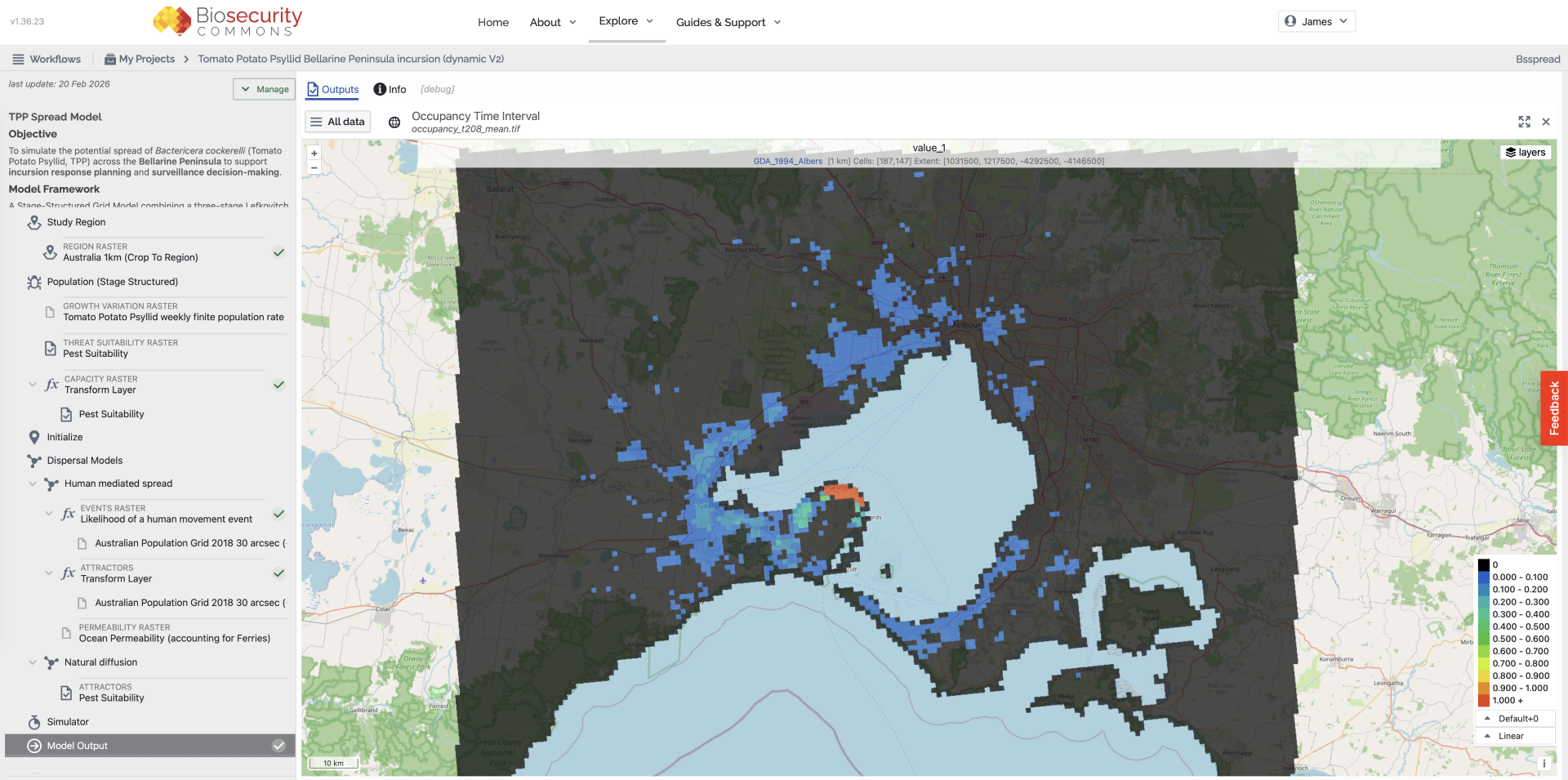
Predicted spread of TPP in Victoria on Biosecurity Commons. Incorporating seasonal population dynamics, driven by temperature that reflect the reality that TPP populations fluctuate with the seasons, gives a more realistic picture of how and when TPP could move and establish across Australian growing regions if it arrived there. Image courtesy Biosecurity Commons.
“For the first time, we’re not just reacting to pest incursions – we’re anticipating them. That changes how industry prepares, responds, and ultimately recovers.”
The Victorian example
Agriculture Victoria has trialled a variety of surveillance approaches under its network, including targeted jurisdictional surveillance, enhanced public reporting (known as biosecurity blitzes), community-led adopt-a-trap programs and a partnership with Bunnings Warehouse.
CEBRA has developed a suite of TPP hazard maps based on different spread and establishment assumptions. These assumptions are largely informed through the TPP – TRG being developed under the VegWatch Program, as well as expert elicitation with program partners.
These hazard maps were initially used in Victoria to guide the placement of an evidence-based restricted area and inform subsequent surveillance activities for TPP. Now that TPP is considered established in Victoria, Agriculture Victoria is using spread modelling to guide the selection of sites for delimitation surveillance, with the aim of demonstrating the absence of the associated pathogen, CLso.
The data generated through this surveillance is then used to refine and improve underlying model assumptions, leading to more accurate predictions and more effective surveillance design over time. In addition, the surveillance results can be used to quantify confidence that CLso remains absent from Victoria despite having its vector.
“These models don’t just tell us where TPP might go, they tell us where to look, and how much surveillance effort is needed to be confident TPP is absent from Tasmania. That is a game changer for an industry-led program operating with finite resources.” – DR JAMES CAMAC, CEBRA
In Simple Terms:
Data -> Model -> Surveillance -> New Data -> Improved Model
Insights from the Victorian experience and the subsequent improvements to the model have enabled the program to pilot this approach in Tasmania, marking the first vegetable industry-led implementation. This pilot uses modelling to inform the development of a timely detection surveillance network. CEBRA has also developed a range of optimised surveillance designs for the Tasmanian context, tailored to different budget scenarios, so that surveillance resources can be deployed where they will be the most effective.
Monitoring in Tasmania
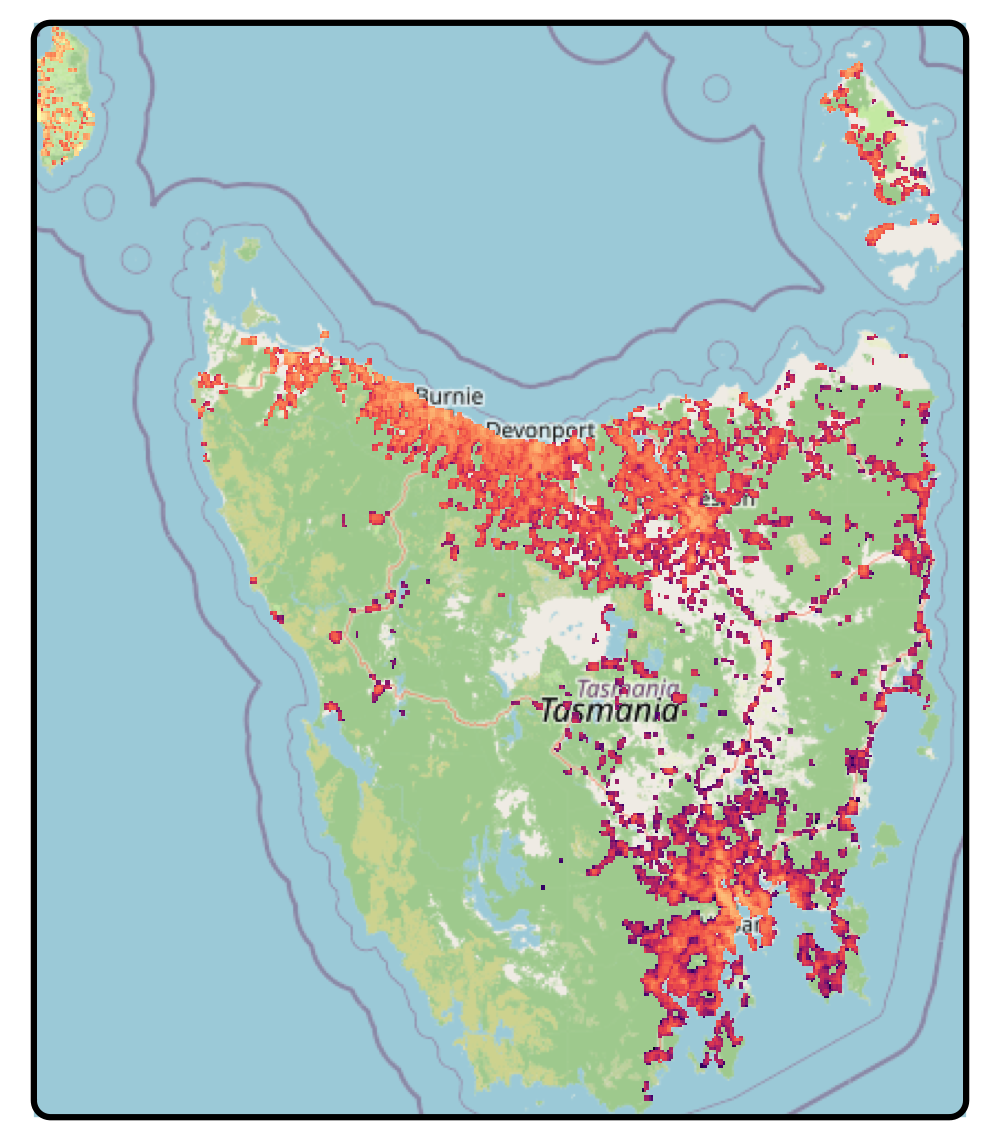
Hazard map for TPP in Tasmania. Relative risk of TPP establishment in Tasmania based on climate suitability, land use and proximity to established populations on mainland Australia (Warmer colours = regions of higher risk of TPP establishment). Image courtesy Biosecurity Commons.
The VegWatch team is working closely with industry and Biosecurity Tasmania to deploy traps to monitor for TPP. In February 2026, a workshop was held for growers and crop advisors to raise awareness of the program and encourage participation. The Tasmanian public were also invited to opt-in to broaden the monitoring network into home gardens and community growing spaces.
Tomato potato psyllid has not been detected on traps as part of this pilot. The data being collected through these trapping networks is collated into AUSPestCheck, the national platform for biosecurity pest monitoring data. Monitoring network participants also receive feedback on their individual traps.
For industry, this approach delivers practical benefits beyond early detection. By focusing surveillance in the highest-risk areas, it supports more efficient use of limited resources, reduces unnecessary monitoring costs, and enables faster, evidence-based decision making. Over time, the ability to demonstrate pest absence through structured surveillance data may also help reduce trade risks and support continued market access.
Tomato potato psyllid prefers warmer temperatures, so the program will pause over winter, starting up again to continue over the spring and summer of 2026-2027.
In Tasmania, the focus is on collecting zeroes to support absence of TPP providing growers and biosecurity regulators with confidence that TPP is not present, and in the longer term to demonstrate that this data could be used to support market access and trade. The surveillance also supports early detection and evidence-based decision making to enable a more rapid response.
AUSVEG continues to work with Biosecurity Tasmania and others to determine what a detection of TPP in the state means for growers and to support market access. Currently, TPP would not impact on movement of potatoes from Tasmania to the mainland.
Why zeros matter
Zeroes indicate that a pest was not detected during surveillance. This absence data is increasingly required to support interstate market access and is important for quantifying confidence that a threat is truly absent, while recognising that surveillance methods are not always 100 percent effective.
The goal for VegWatch is to collect pest absence data to support market access for growing businesses or regions. By using TPP in the pilot and to develop the framework, the goal is, that should TPP be detected, we are able to demonstrate the use of pest absence data (zeroes) to support return to trade and reduce the short- to medium-term impacts on vegetable growers.
Building a national framework for the long term
The pilot pest surveillance programs in Tasmania and Victoria are the first steps toward a national framework allowing industry to play an active, coordinated and vital role in vegetable biosecurity surveillance. When a new pest arrives, that framework could mean faster, evidence-based decision making, smoother adjustment to a changed production environment, and a supported path back to market access.
Tomato potato psyllid (TPP)
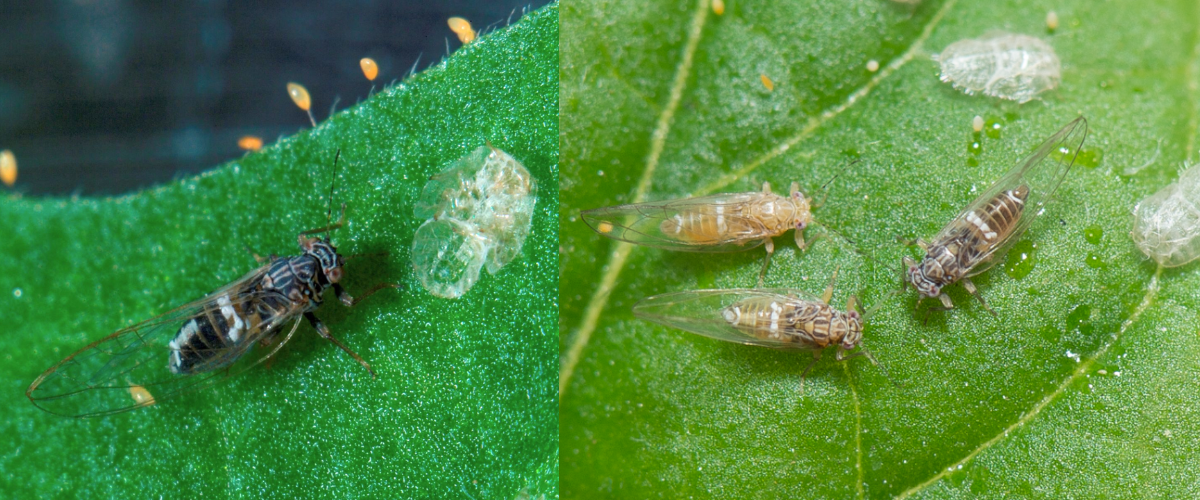
Native to North America, TPP is a small sap-sucking insect that can devastate solanaceous crops including tomatoes, capsicums and potatoes, both through direct feeding damage and by transmitting the destructive pathogen Candidatus Liberibacter solanacearum (CLso), which causes Zebra chip disease in potatoes.
The pest was first reported in Western Australia in 2017, and since 2025 is considered established in Victoria. It was chosen as the model organism to pilot the development of a surveillance framework for the vegetable industry as it is already present in some states.
Tomato potato psyllid in Australia is not known to carry CLso. TRGs have informed the use of sticky traps for monitoring of TPP in Tasmania and Victoria.