


Improving soil health and nutrition in Murray Bridge with Joel Williams
18 May 2026
Protected cropping in action
18 May 2026
Reading Time: 6 minutes
VEGNET
Western Australia
REGIONAL UPDATE
It’s been a busy and rewarding period for VegNET WA over the last month, with plenty happening across the state to support our growers, connect people, and showcase new ideas and technologies. From demonstration days and study tours to regional roadshows and on-farm visits, the focus has remained the same – making sure growers have access to practical, relevant information and the opportunity to be part of industry conversations.
One of the highlights has been the Open Weed Locator (OWL) demonstration day, which brought together growers, researchers, and industry to see this exciting technology in action. OWL is a low-cost, open-source system that uses cameras and artificial intelligence to detect and target weeds, rather than spraying entire paddocks
Seeing it operate in a real-world setting really helped bring the concept to life and sparked plenty of discussion about how tools like this could fit into different farming systems. It was also a great example of how innovation doesn’t always have to come with a high price tag – something that really resonated with growers.
We also had the opportunity to attend the Gatton Drone Demo Day, where the focus was on the growing role of drones in agriculture. From crop monitoring and mapping to targeted spraying, it’s clear that drone technology is evolving quickly.
Events like this are invaluable for getting a better understanding of what’s possible and how these tools could be adapted for WA conditions. It’s one thing to hear about new technology, but seeing it in action makes a big difference. There are other demonstration days locked in for the next few months across WA.
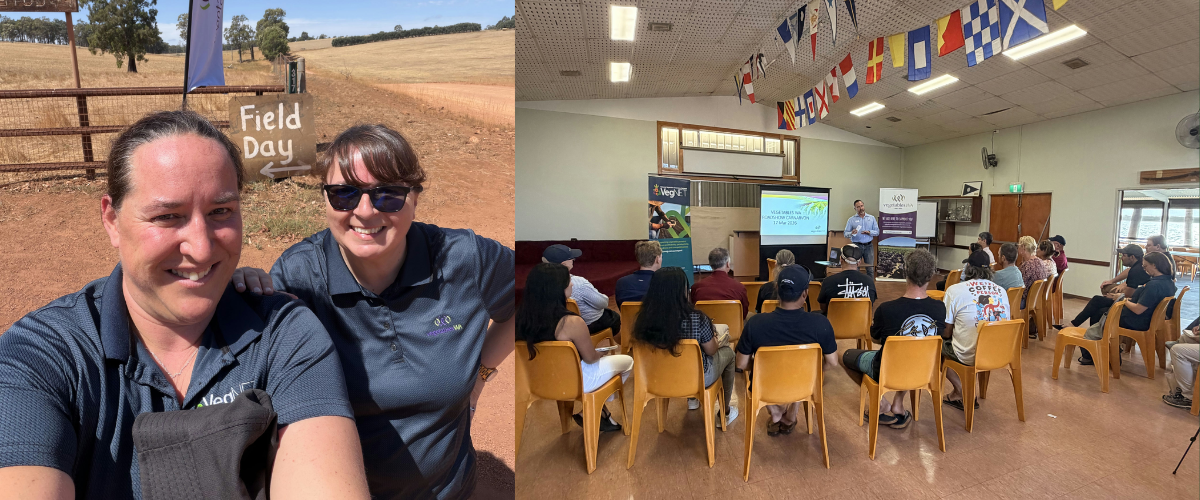
Closer to home, the Carnarvon and Geraldton roadshows were a fantastic chance to connect directly with growers in regional areas. These sessions are always a highlight, providing a space for open conversations about what’s happening on the ground – what’s working, what’s challenging, and where there are opportunities for improvement. Every region is different, and these roadshows are an important way to make sure extension activities are relevant and tailored to local needs.
Alongside these larger events, a big part of VegNET WA’s work happens through on-farm visits and one-on-one conversations. Getting out to farms, meeting growers, and seeing operations firsthand is invaluable. It helps build strong relationships and ensures that the support we provide is grounded in real-world challenges. It’s also a great way to connect people – whether that’s linking growers with new ideas, research, or each other.
What stands out across all of these activities is the willingness of growers to engage, share their experiences, and explore new approaches. Whether it’s trialling new technology, attending an event, or simply having a conversation, that openness is what drives the industry forward.
Looking ahead
There’s plenty more to come, and we’re particularly excited for the upcoming Myalup roadshow in May. It’s shaping up to be another great opportunity to connect with growers, share updates, and continue the conversations around innovation and industry development.
If you’re keen to get involved or want to stay up to date with what’s happening, keep an eye on the VegetablesWA and AUSVEG socials for more information on upcoming events and activities.
Beyond extension
Delivering real outcomes for WA growers
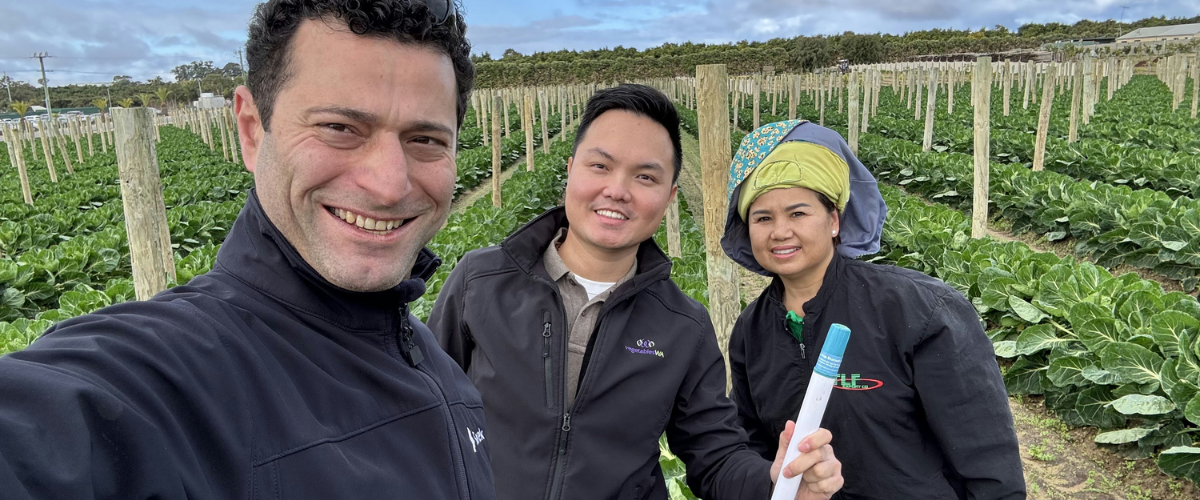
RDO Chi Nguyen during an on-farm trial.
Vegetable growers across Western Australia are facing increasing pressure from rising input costs, water constraints and pest challenges, reinforcing the need for practical, targeted extension that delivers real on-farm outcomes.
Delivered as part of the Hort Innovation funded project Partnering with Vegetables Western Australia to strengthen VegNET engagement of culturally and linguistically diverse communities (VG25001), these activities focused on improving engagement with culturally and linguistically diverse (CALD) growers, particularly Vietnamese speaking communities. They also strengthened access to information, training and industry support through regional roadshows, on-farm engagement, trials and bilingual training.
Turning engagement into action
A key focus of the project is to move beyond information sharing and deliver practical outcomes for growers.
Through ongoing engagement, growers have been connected with the WA Government’s Horticulture Water Use Efficiency Grants, supporting investment in infrastructure and practices that improve water efficiency and resilience. With support from VegetablesWA, several growers have secured funding to implement changes such as installing permanent netting, upgrading irrigation systems, improving water quality, and transitioning to protected cropping.
For many growers, this was the first time accessing funding support, turning awareness into real on-farm change.
These investments are already delivering results. One capsicum grower reduced water use by up to 60 percent after installing netting, while also improving crop quality. In another case, irrigation upgrades helped reduce heat stress and improve performance during summer.
Alongside this, on-farm trials are supporting more informed, data-driven decisions on irrigation and soil management. A soil moisture probe demonstration trial is tracking moisture, salinity and temperature in real time, helping growers fine-tune irrigation practices.
Early results are promising. A Brussels sprout trial improved irrigation efficiency over the summer, with the work now continuing in spring onions to extend learnings across crops. In parallel, a soil amendment trial in cherry tomatoes, delivered with DPIRD, is testing bentonite clay to improve soil health and moisture retention.
The project is also strengthening grower capability through bilingual training. Accredited chemical training delivered in English and Vietnamese has engaged 44 growers across Carnarvon and Perth, improving confidence in chemical use, safety and compliance. It has created a supportive learning environment where growers can share experiences and learn from each other.
“Prices keep going up, and it’s getting harder to plan. But coming to events like this helps; we get the latest information and know we’re not dealing with it alone.” CARNARVON GROWER
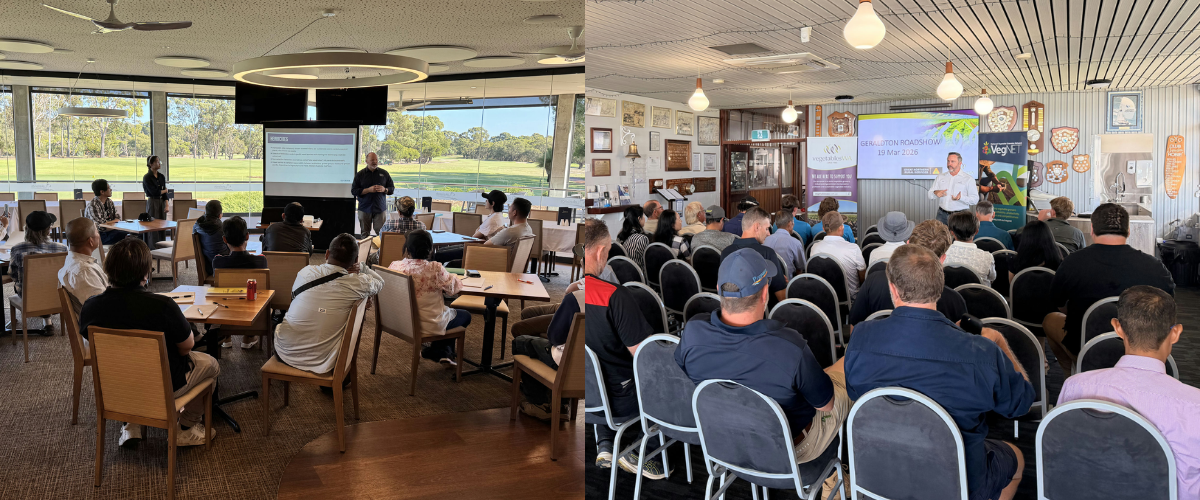
L-R. Bilingual training in progress. VegetablesWA’s Geraldton roadshow
Carnarvon and Geraldton roadshows
VegetablesWA’s Carnarvon and Geraldton roadshows, coordinated by Regional Development Officer Chi Nguyen in March 2026, highlighted the impact of targeted, inclusive extension, particularly for CALD growers.
Delivered at a critical time for the industry, the roadshows provided an opportunity to reconnect with growers face-to-face while delivering practical, regionally relevant information. The program covered key topics including fall armyworm (FAW) management, regional updates, vegetable research, crop nutrition, postharvest innovation and soil-borne pest management. Just as importantly, the events created space for open discussion, giving growers the chance to ask questions, share experiences and connect directly with the industry.
A standout feature was the extension beyond the meeting room and into the paddock. On-farm visits focused on FAW, one of the most pressing pest challenges currently facing the sector. These visits enabled real-time identification and discussion, particularly around distinguishing FAW from similar pests such as cluster caterpillar and helicoverpa. This hands-on approach reinforces the value of the VegNET model, supporting growers not just with information, but with practical, on-ground application.
Seeing pests in the field builds confidence, and accurate identification is the first step to effective management.
Accessibility remained a strong focus throughout the roadshows. Vietnamese language resources were provided, along with translation and interpretation support during presentations and discussions. This ensured growers could fully engage with the content and participate in conversations. For many CALD growers, this removed a long-standing barrier to extension and helped build trust.
Across both events, more than 70 people attended, with growers making up over 40 percent of participants. Despite ongoing uncertainty, the overall sentiment was one of resilience.
Just as important as delivering information is listening. Across both regions, growers spoke openly about the pressures they are facing. While pest pressure, water availability and production costs were all raised, one issue stood out: rising fuel and fertiliser costs. These insights ensure extension remains relevant, responsive and grounded in the real needs of growers.
Looking ahead
As the vegetable industry continues to navigate rising input costs, water constraints and increasing pest pressure, the need for practical, well-connected extension has never been greater.
This project highlights what effective extension looks like, bringing together on-farm support, access to funding, data-driven decision-making and targeted capability building to deliver real outcomes. It also reinforces the importance of a more inclusive approach, ensuring CALD growers are not only reached but actively engaged as part of the broader industry.
Looking ahead, VegetablesWA will continue to build on this momentum through VegNET, strengthening regional engagement, expanding on-farm trials and scaling bilingual training. A key priority will be developing local capacity and partnerships to support a more sustainable, grower-led model of extension.
Importantly, the learnings from this work extend beyond Western Australia, contributing to a broader national effort to support a more inclusive, responsive and effective approach to grower engagement across Australia.