


VegNET NSW: Establishing a soil health demonstration site to benefit growers
18 May 2026
Growing demand from the ground up: Why vegetable consumption matters more than ever
18 May 2026
Reading Time: 7 minutes
BY ALEXANDRA LASHCHUK
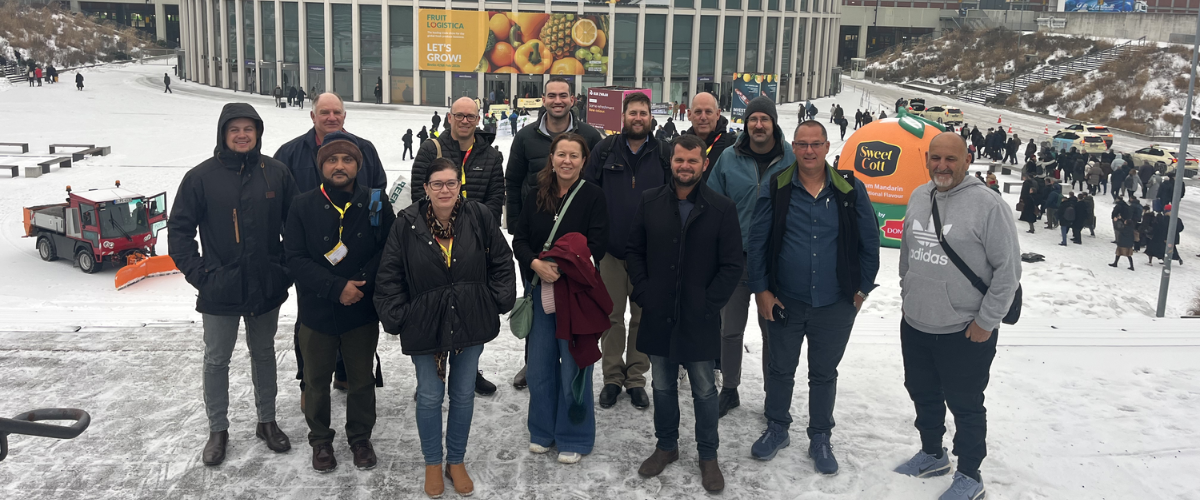
Earlier this year, a group of Australian vegetable industry representatives travelled across Europe as part of the AUSVEG Europe Study Tour.
In February, the tour brought together growers from across Australia for an intensive program that included the Fruit Logistica trade show, farm visits, research demonstrations, industry meetings and global networking opportunities across Germany and Spain.
The aim of the tour was to expose Australian growers to emerging technologies, innovative production systems and international market trends, while creating opportunities to exchange knowledge with growers, breeders and agribusiness leaders from around the world.
For the participants, the trip offered more than just a chance to see how vegetables are grown in other parts of the world. It provided an opportunity to step away from the day-to-day pressures of running a farming business to gain a broader understanding of where the industry is heading and how innovation, technology and collaboration are shaping the future of vegetable production globally.
Across 10 days, the group travelled from Berlin to Spain’s Murcia region, one of Europe’s most productive vegetable growing areas, visiting seed companies, growers, technology providers and research centres along the way.
The tour highlighted both the similarities and the differences between Australian and European vegetable production and offered plenty of insight for growers seeking to improve efficiency, reduce costs and stay competitive in an increasingly challenging operating environment.
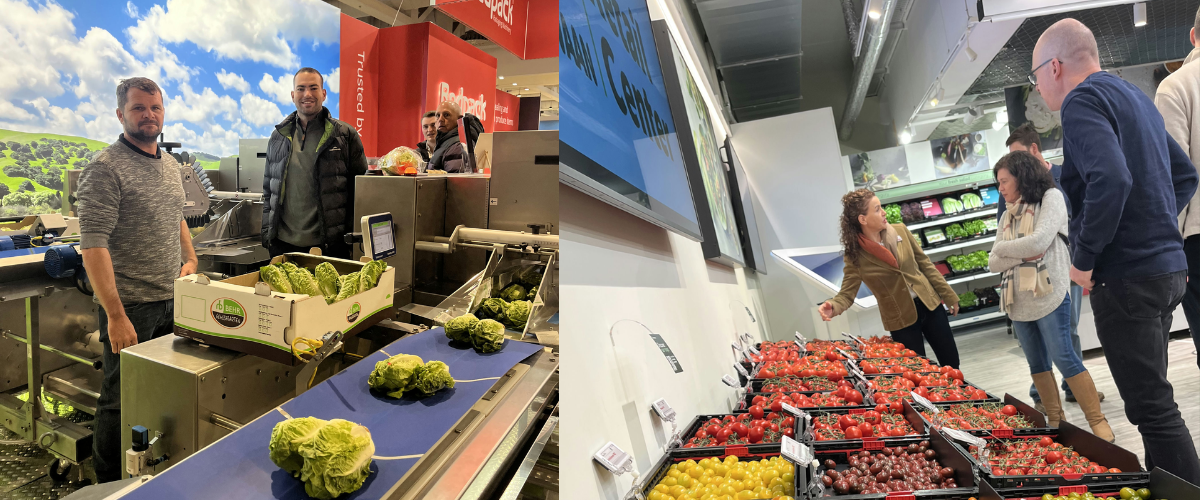
L-R. Nick Blair (Rugby Farm) and Rohan Drummond (Barden Farms) looking at the latest packing line equipment on offer at Fruit Logistica.
Understanding interaction between consumer preferences and vegetable breeding priorities at the Rijk Zwaan Retail Centre, Berlin.
A global stage for fresh produce
The first stop of the study tour was Berlin, where participants attended Fruit Logistica, one of the largest fresh produce trade exhibitions in the world.
Each year the event attracts thousands of exhibitors and tens of thousands of visitors from across the globe, bringing growers, retailers, exporters, technology companies, logistics providers and seed companies together under one roof. For many tour participants, it was the first time seeing such a large cross-section of the international horticulture sector in one place.
For the Australian delegation, Fruit Logistica provided an unparalleled opportunity to explore the latest developments in horticultural technology and supply chain innovation.
Automation and labour-saving technologies were a major theme throughout the exhibition. Many companies are now developing systems designed to reduce reliance on manual labour, which continues to be one of the biggest challenges facing horticultural producers worldwide.
Participants observed a wide range of automated solutions designed to handle repetitive or physically demanding tasks in packing sheds and production facilities. Systems for automated crate erection, palletising, grading and packing were prominent throughout the exhibition.
Another key trend was the increasing use of machine vision and artificial intelligence in sorting and grading produce. These technologies are capable of analysing produce characteristics such as size, colour and external defects at high speed, helping growers improve consistency and efficiency while reducing labour requirements.
Several exhibitors also demonstrated emerging weed-detection technologies that use cameras and laser systems to identify and eliminate weeds with high precision. Such tools have the potential to reduce reliance on herbicides while maintaining productivity – an area of growing interest for growers navigating regulatory pressures around chemical use.
The opportunity to speak directly with equipment manufacturers, seed companies and technology developers provided valuable insight into how new tools are being developed and applied in production systems around the world.
Seeing vegetables through the eyes of the retailer
Before diving into Fruit Logistica, the group visited the Rijk Zwaan Retail Centre in Berlin – an innovative facility designed to simulate real retail environments and study how consumers interact with fresh produce.
The centre allows breeders, retailers and growers to test new vegetable varieties, packaging formats and merchandising strategies under realistic supermarket conditions. Everything from lighting and shelf layouts to packaging designs and product positioning can be analysed to understand how consumers respond.
For Australian growers, the visit was a powerful reminder that success in horticulture is not determined solely in the paddock.
Consumer preferences, visual presentation and retail strategy all play an increasingly important role in determining whether a product succeeds or fails in the marketplace.
Participants learned how breeders and retailers collaborate to test factors such as colour, texture, shelf life and packaging formats. These trials help inform decisions about which varieties are likely to succeed in particular markets.
The centre also highlighted how consumer preferences can vary significantly between countries and regions, influencing the types of varieties that are developed and marketed.
For growers accustomed to focusing primarily on agronomic performance and yield, the visit offered valuable insight into how marketing and consumer behaviour shape the modern fresh produce supply chain.
From Berlin to the vegetable heartland of Spain
After several days in Berlin, the study tour group travelled south to Spain, where the second half of the program focused on production systems and field-level innovation.
The Murcia region, located in southeastern Spain, is one of Europe’s most significant vegetable growing areas. The region’s climate allows year-round production of a wide range of crops, supplying supermarkets across Europe during the northern hemisphere winter.
Murcia’s intensive production systems, strong research infrastructure and close integration with European retail supply chains make it an ideal location for exploring new technologies and production practices.
Over several days, the group visited major growers, seed companies and technology providers, gaining insights into how European producers are managing productivity, quality and sustainability challenges.
Large-scale production at G’s Fresh
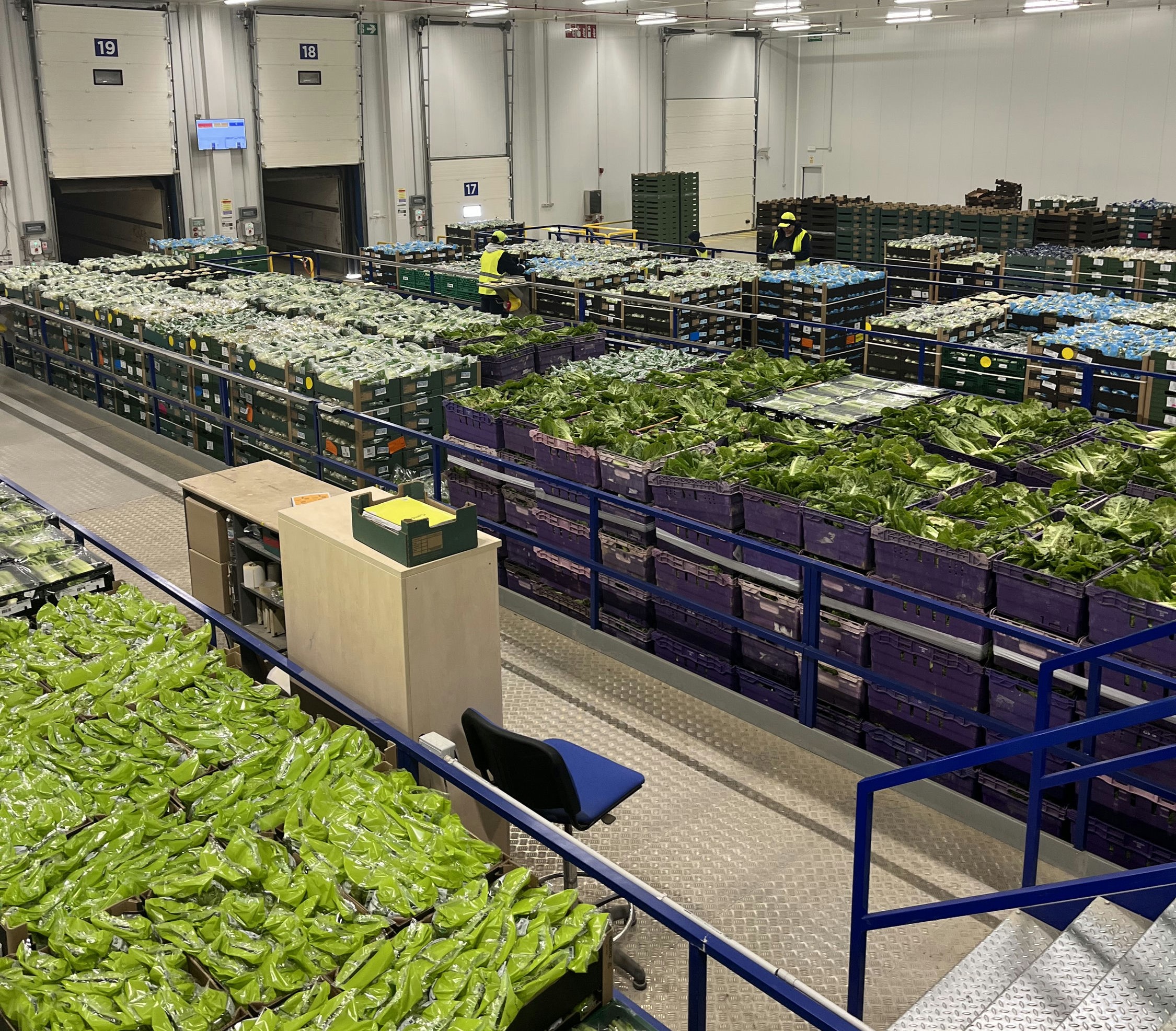
G’s Fresh post-harvest rapid colling facility.
One of the highlights of the Spanish leg of the tour was the visit to G’s Fresh, a major fresh produce company with operations spanning nursery production, field growing, harvesting, and packing.
The visit offered a rare opportunity to observe a highly integrated vegetable production system operating at scale.
Participants toured the company’s nursery facilities, where seedlings are produced before being transplanted into field production systems. Trials were underway exploring different growing media and cell designs aimed at improving root development and seedling performance.
From the nursery, the group moved into field operations, where large-scale planting and harvesting systems demonstrated the efficiency required to supply major European retail chains.
One of the most interesting aspects of the visit was the level of automation integrated throughout the production and packing process. In some cases, harvesting equipment was designed to combine multiple steps into a single operation – harvesting, packaging and preparation for transport occurring within the same workflow.
Participants also visited the company’s internal engineering and workshop facilities, where specialised harvesting equipment is designed and maintained. The ability to develop customised machinery in-house allows the business to adapt quickly to new challenges and optimise operations for specific crops.
For many of the Australian growers on the tour, seeing the scale and integration of these systems was particularly valuable.
While Australian operations may differ in scale, the principles of reducing handling, improving workflow and integrating technology to improve efficiency are universally relevant.
Seed innovation and varietal development
Another key component of the study tour involved visits to seed company field trials and demonstration sites. Participants attended field days hosted by Syngenta, Rijk Zwaan and Enza Zaden, where they were able to view extensive trial plots showcasing new lettuce, brassica and leafy vegetable varieties.
These trials play a crucial role in developing new varieties capable of meeting evolving market demands and production challenges. Participants were able to observe how breeders are working to improve characteristics such as disease resistance, shelf life, flavour and visual appearance to align with consumer preferences.
For example, varieties designed to enhance texture and eating experience are being developed in response to consumer demand for more appealing fresh produce.
Participants also had the opportunity to speak directly with plant breeders and research teams about the breeding process and the challenges involved in developing varieties suited to different climates and markets.
Scale and collaboration at Unica Group
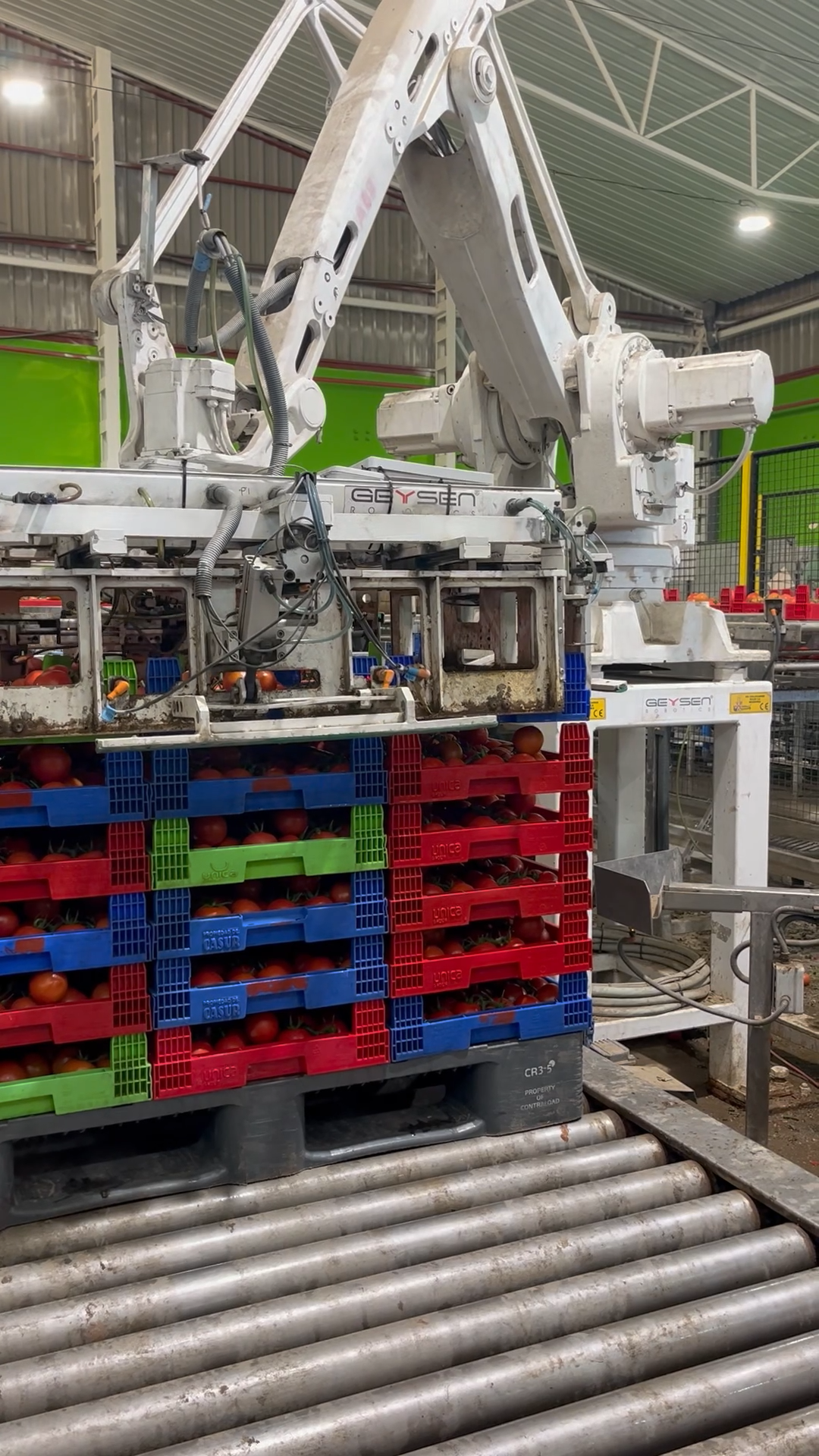
Visit to Unica’s organic packing shed, demonstrating the adoption of robotics
Another visit that stood out for participants was Unica Group, one of Spain’s largest horticultural marketing cooperatives. The organisation brings together a network of cooperatives and growers to collectively market fruit and vegetables across international markets.
For many growers on the tour, the scale of the operation was striking. Unica exports produce to millions of consumers across Europe each day, demonstrating how cooperative structures can allow growers to access large international markets while maintaining farm-level production.
Participants were particularly interested in the way Unica coordinates production and marketing across its member cooperatives. By aggregating supply from multiple growers, the organisation is able to meet the volume, quality and consistency requirements of major retailers.
Several growers also noted the strong focus on sustainability and integrated pest management across Unica’s farms, including the use of beneficial insects and biological controls to reduce reliance on chemical pesticides.
For Australian participants, the visit provided insight into how collaboration between growers can create scale and market power while supporting long-term farm profitability. Seeing how Unica operates helped spark discussions among participants about the role that cooperative models and stronger supply chain coordination can play in strengthening horticultural industries.
Retail insights from supermarket visits
To complement the farm and research visits, the tour also included a series of supermarket and market visits across Murcia.
Participants visited several retail chains and fresh food markets, analysing how vegetables are presented and marketed to European consumers. These visits provided insight into pricing, packaging formats and merchandising strategies used by retailers.
For many participants, seeing how vegetables are displayed in European supermarkets highlighted the importance of presentation, branding and packaging in influencing consumer choices. Different packaging approaches, product segmentation and premiumisation strategies were evident across the stores visited.
Understanding these retail dynamics helps growers better appreciate how their products move through the supply chain and ultimately reach consumers.
Looking ahead
Across the ten-day journey, participants were exposed to a wide range of ideas – from cutting-edge technologies and new crop varieties to different approaches to labour, infrastructure and supply chains.
While not every innovation will translate directly to Australian conditions, the tour provided growers with valuable perspective on how the global vegetable industry is evolving and the many ways producers are adapting to similar challenges around labour, efficiency and sustainability.
Just as importantly, the tour created space for growers to step back from day-today farm operations and reflect on the bigger picture. Seeing how producers and businesses in other parts of the world approach similar challenges sparked conversations, ideas and new ways of thinking that participants will take back to their own operations.
In an industry that is constantly changing, opportunities to learn from global experience remain invaluable. As several participants reflected, seeing new systems in action and discussing them with fellow growers can often spark the ideas that lead to meaningful improvements at home.