


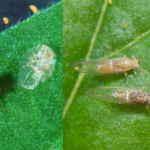
Two decades of learning: How New Zealand’s TPP experience can help Australia prepare
31 August 2026Staying ahead of antimicrobial resistance (AMR): Protecting Australian levy vegetable crops and markets
31 August 2026
Reading Time: 4 minutes
BY AVA DORRI
BIOSECURITY AND EXTENSION, AUSVEG
Beyond models and frameworks, the VegWatch program, led by AUSVEG, operates through a coordinated, step-by-step system linking participants, traps, diagnostics and national data platforms to support surveillance of Tomato potato psyllid (TPP).
TPP is an important biosecurity pest of tomatoes, potatoes, capsicums, chillies and other solanaceous crops. Although TPP is present in Western Australia and Victoria, the zebra chip pathogen, Candidatus Liberibacter solanacearum (CLso), is not known to occur anywhere in Australia.
From growers and agronomists to community members and diagnostic laboratories, each part of the system plays a role in generating reliable data to support the early detection of TPP and provide evidence of pest absence. This is what surveillance looks like in practice.
A coordinated surveillance network
VegWatch operates through two complementary participation streams.
The first is a public participation (citizen science) stream, where home gardeners and community groups can opt in to contribute to surveillance. The second is a targeted industry stream delivered in collaboration with commercial growers and industry partners in priority locations.
In some cases, targeted trapping is deployed in locations just outside production areas, such as along farm boundaries or nearby roadsides, where pest movement may be more likely to occur. These traps are typically managed in coordination with growers and project partners, and data may be handled through more controlled reporting pathways, reflecting the need for confidentiality in certain industry-led surveillance activities.
Together these streams allow the program to scale across regions while also focusing effort where surveillance is most needed.
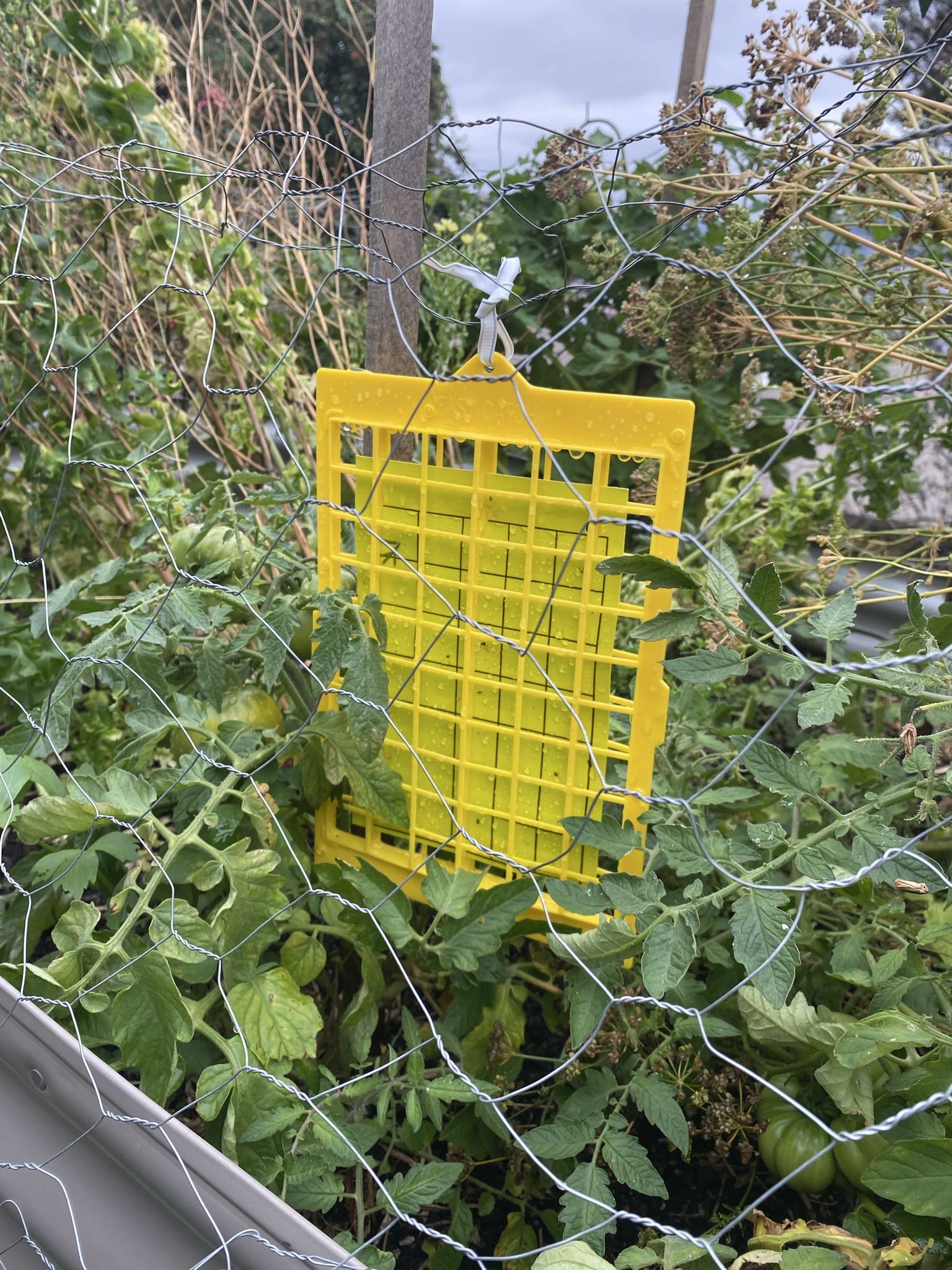
A sticky trap among tomato plants at a public participation surveillance site
Getting traps into the field
Participants sign up through a simple online form and are then provided with a standardised trapping kit prepared by AUSVEG.
Each kit includes:
- A yellow sticky trap
- A protective cage with a plastic tie
- A unique AUSVEG barcode
- Instructions for deployment
- A return envelope to the diagnostic laboratory
The barcode is the backbone of the entire system. It links every step of the surveillance process – from registration and field reporting through to laboratory diagnostics and national data systems. Participants install the trap at a nominated location, where it remains in place for approximately 14 days. During this time, flying insects, including potential pest species such as TPP, are captured on the sticky surface.
Surveillance timing is also important, as TPP activity is influenced by seasonal conditions, with higher activity typically observed during warmer periods.
How VegWatch surveillance works
- Register to participate in VegWatch
- Receive a trapping kit with a unique barcode
- Deploy the sticky trap for 14 days
- Report trap data using MyPestGuide® Reporter
- Return the trap to a diagnostic laboratory
- The laboratory assesses trap contents and records results
- Data is integrated and uploaded to national systems
From trap to laboratory:
How diagnostics works
After the deployment period, traps are returned via post to a diagnostic provider. Each trap arrives with its barcode, ensuring full traceability.
In the laboratory, trained diagnosticians examine trap contents under magnification, identify captured insects, determine whether TPP is present or not detected, and record other pests of interest where relevant. Where suspect TPP specimens are identified, further testing may be undertaken to confirm identification and assess the presence of CLso.
In addition to TPP, traps may capture a range of other pests of biosecurity or production significance. Where required, diagnostic approaches may extend beyond visual identification. For example, molecular techniques such as PCR can be used to confirm species identification or detect associated pathogens when specimens are damaged, ambiguous, or of high biosecurity concern.
Importantly, surveillance traps may also capture exotic pest species that are not yet established in Australia. Early detection of such species, even as incidental findings, can provide critical intelligence for biosecurity responses, enabling faster containment and, where feasible, early eradication, reducing potential impacts, and supporting more effective decisionmaking across industry and government.
Connecting the data:
From observations to intelligence
Surveillance is not just about catching insects – it is about capturing reliable, traceable data. The strength of VegWatch lies in how multiple data streams are brought together.
Three key data sources are integrated:
- Participant registration data
- Field reports from MyPestGuide®
- Diagnostic results from laboratories
Using the barcode as a common key, these datasets are combined into a single, structured dataset managed by the surveillance coordinator.
This dataset includes:
- Participant and location details
- Trap deployment and reporting data
- Diagnostic outcomes (presence/absence)
The integrated data is then uploaded to national systems such as AUSPestCheck and may also support modelling through platforms like Biosecurity Commons.
To support national biosecurity reporting, a defined set of minimum data fields is required for submission to systems such as AUSPestCheck. These typically include a unique identifier, date of activity, pest scientific name, occurrence status, and geospatial coordinates. Ensuring these core data elements are captured allows surveillance data to be standardised, validated, and used confidently across jurisdictions.
Data integrity, confidentiality, and trust
All data collected through VegWatch is managed under strict data governance and privacy requirements.
Identifiable participant data is restricted to authorised personnel, while relevant information may be shared with state biosecurity agencies where required. Deidentified data contributes to national reporting and modelling, and participants may receive updates and feedback to support ongoing engagement. This structured and transparent approach is critical to building trust and encouraging participation across industry and community networks.
A system built for the future
VegWatch is more than a surveillance program – it is an integrated system linking people, data, and science.
From registration and trap deployment through to diagnostics, data integration and national reporting, each step is designed to be:
- Traceable
- Scalable
- Fit-for-purpose for industry
From a single sticky trap in the field to national biosecurity intelligence, VegWatch demonstrates how coordinated, data-driven surveillance can strengthen Australia’s vegetable biosecurity system and support a more resilient vegetable industry.
Why participation matters
Participation underpins the effectiveness of the VegWatch surveillance network. Biosecurity is everyone’s responsibility, and VegWatch reflects this by bringing together industry and community participants in a shared surveillance effort. By combining targeted industry surveillance with broader community contributions, the program expands its reach and strengthens coverage across diverse landscapes. This increases the likelihood of detecting pests early, while also building confidence in surveillance outcomes. Each trap, whether deployed on a commercial farm or in a backyard garden, contributes to a larger, coordinated picture of pest presence – or absence.