



Growing demand from the ground up: Why vegetable consumption matters more than ever
18 May 2026
Managing onion canopy diseases through molecular diagnostics
18 May 2026
Reading Time: 4 minutes
BY THE SOIL WEALTH ICP TEAM
A collaboration between Soil Wealth ICP and a sixth-generation Melbourne market gardener has produced some eye-opening results – and a rethink of how nutrients are managed in the field.
Rick Butler is a sixth-generation grower running Butler Market Gardens at Skye, south-east of Melbourne.
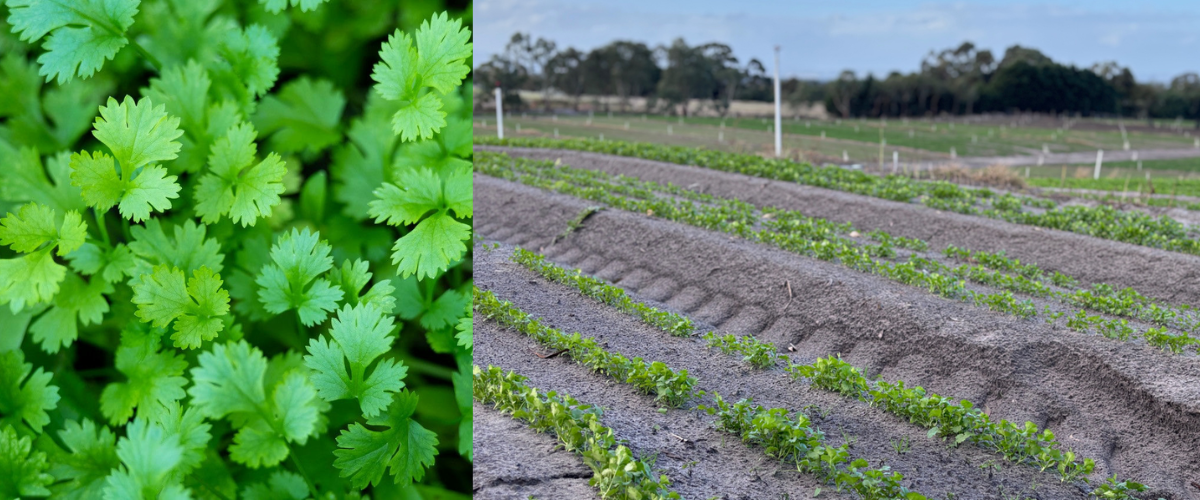
For the past two seasons, Butler Market Gardens has been working with Dr Doris Blaesing and Carl Larsen (RMCG) from the Soil Wealth ICP team on a project to improve soil health and nutrient use efficiency on the farm’s sandy loam soils.
Butler Market Gardens specialises in fresh vegetables and herbs, harvesting, packing and sending produce to market on the same day.
The farm’s sandy loam soils do not hold nutrients well, leaving crops vulnerable to deficiency and growers vulnerable to wasted input costs. The Soil Wealth ICP team set out to address this across two seasons.
Initially, the trial explored cover crops as a way to improve nutrient cycling and organic matter. More recently, the team turned its attention to a more targeted question – the subject of a new case study published in February 2026:
Could a biodegradable polymer coated fertiliser outperform the standard mineral compound blend in supplying nutrients to a coriander crop at the right time?
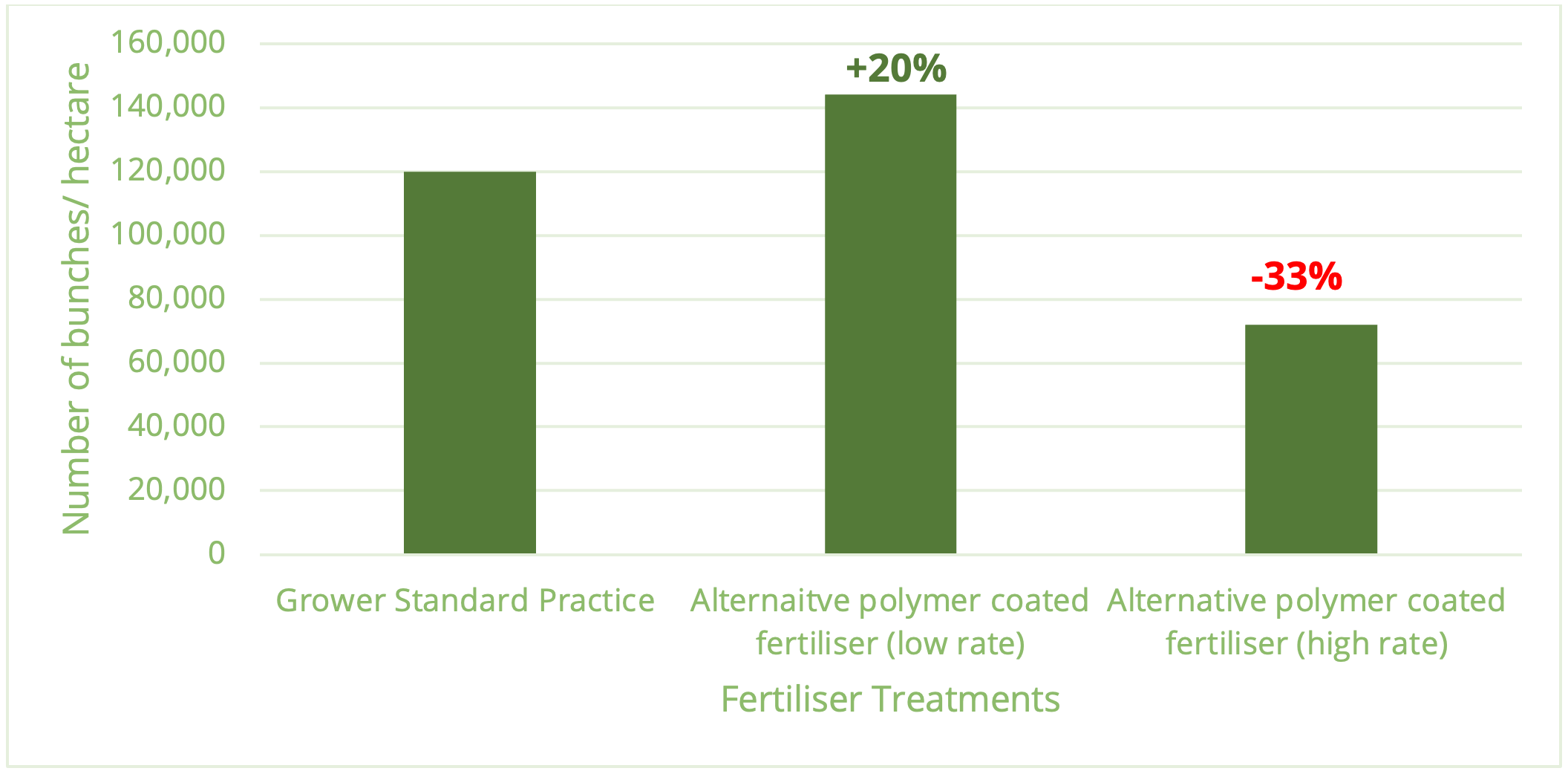
FIGURE 1.
Trend in improved coriander yield by treatment
Timing is everything
The concept behind polymer coated fertilisers is simple in principle but powerful in practice. Rather than quickly releasing nutrients shortly after application, as conventional mineral fertilisers tend to do, coated products are designed to release nutrients gradually, ideally meeting the crop’s demands.
In light soils like those at Skye, conventional fertilisers face an added risk: nitrogen and potassium can leach past the root zone with irrigation water before the plant gets to use them.
The May 2025 trial tested three treatments on neighbouring coriander bays:
- The grower’s standard mineral compound fertiliser at 200 kg/ha
- A polymer coated nitrogen/phosphorus/potassium (NPK) fertiliser at a lower rate of 200 kg/ha, and
- The same polymer coated fertiliser at a higher rate of 300 kg/ha.
Crucially, monitoring was undertaken during crop growth and harvest. Soil solu-SAMPLERS, devices that draw moisture from the root zone via capillary action, were used to measure electrical conductivity (EC) as a proxy for total nutrient concentration in the soil at three points during the crop cycle.
What the data showed
The EC results told an interesting story. About a month after fertiliser application, all three treatments recorded elevated EC levels in the root zone, an early nutrient flush that was highest in the high-rate polymer coated treatment.
By the second and third measurements, the polymer coated fertiliser at the lower 200 kg/ha rate had maintained EC at optimal levels, while the high-rate treatment had declined more sharply. The standard mineral practice showed the lowest EC readings throughout, suggesting nutrients may have already leached below the root zone in the sandy soil and were therefore unavailable to the crop when it needed them most.
The harvest results were even more striking. The lower rate polymer coated treatment produced 20 percent more coriander bunches per bay than the grower’s standard practice – 12,600 bunches compared to 10,500. The nitrogen content in the dry matter was also higher at 4.04 percent, versus 3.74 percent for the standard.
The high-rate polymer coated treatment, meanwhile, significantly underperformed: it yielded only 6,300 bunches per bay, a 33 percent reduction compared to grower standard practice.
The likely explanation? Too much of a good thing. Excess nutrients at the high rate may have suppressed root development – a well-documented response to over-fertilisation which reduces the plant’s ability to access soil water and limits overall growth.
Do the economics stack up? Maybe
The polymer coated fertiliser at 200 kg/ha did cost slightly more at $508 per hectare compared to $470 per hectare for the standard practice, an 8 percent premium. But with a 20 percent lift in marketable yield, the gross margin favoured the polymer coated option.
Dale Creed, the farm’s previous Operations Manager, acknowledged the value of the trial in practical terms.
“It’s a good opportunity to assess current practices and evaluate opportunities to implement growing strategies within growing cycles and move towards a program that is more nutrient efficient,” Dale said.
The team was careful to flag the limits of the data. This was a non-replicated demonstration trial with one treatment per bay and no replication, meaning the results, while encouraging, cannot be treated as definitive proof.
What comes next?
The Soil Wealth ICP team showed the findings were promising enough to warrant follow-on trials, testing polymer coated fertilisers with different nutrient release profiles matched to specific crops and soil types.
For Australian vegetable and herb growers grappling with volatile input costs and increasing pressure to minimise nutrient runoff, the Skye trial offers a valuable proof of concept: that matching nutrient supply to crop demand, rather than simply applying more, can improve both yield and profitability.
Acknowledgements
The team extends its thanks to the team at Butler Market Gardens for their engagement and support in hosting the demonstration site.
FIND OUT MORE
The Soil Wealth and Integrated Crop Protection (Soil Wealth ICP) project provides research and development (R&D) extension and communication services on improved soil management and plant health to the Australian vegetable and melon industries.
For further information, contact project leaders
Dr Gordon Rogers | gordon@ahr.com.au and Carl Larsen | carll@rmcg.com.au